


Some error occured while loading the Quick View. Please close the Quick View and try reloading the page.
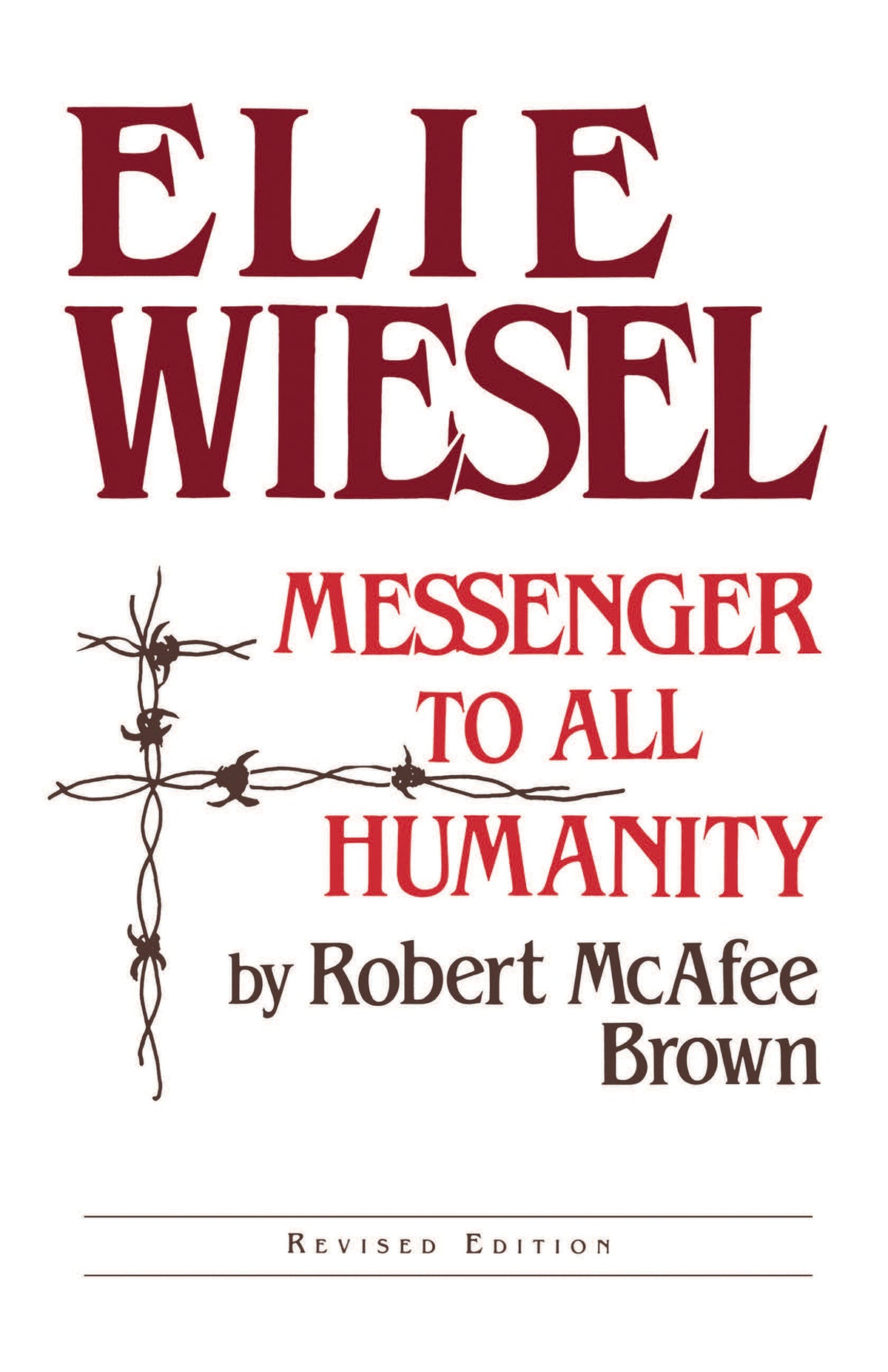
Elie Wiesel: Messenger to All Humanity is a call to both Christians and Jews to face the tragedy of the Holocaust and begin again.
Robert McAfee Brown was a friend of Wiesel and wrote Elie Wiesel: Messenger to All Humanity to process his own thoughts, engage with Wiesel’s thinking, and inspire others to read and engage with Wiesel’s own works. First published in 1983, this book grapples with the horrors of the Holocaust without overshadowing or speaking over Jewish survivors. Brown writes with care and sensitivity and does not shy away from the true magnitude of the tragedy and suffering. As he says in the introduction, “Although we cannot enter Elie Wiesel's world, we can let him enter ours.” This text lets Wiesel enter our world and allows us to learn from him through the eyes, ears, and heart of a friend.


"Brown, a Protestant theologian, ecumenical, versatile, and sympathetic, approaches his subject well aware of the paradoxes and impossibilities involved: the inadequacy of language to convey the experience and the impossibility of remaining silent about it; the persistence of hope and faith in defiance of reason and experience; the meaning of madness and laughter." —Choice
"[A]n insightful and often impassioned account of Elie Wiesel's themes, preoccupations and development. . . .Traces his moral and spiritual journey as it is reflected through his work and his biography." —The New York Times
“Brown’s excellent concept of story… adds to his analytical understanding of what Wiesel means. His new book about Wiesel is a treasure.” —National Catholic Reporter
"Professor of Theoloy and Ethics at the Pacific School of Religion and Protestant member of the U.S. Holocaust Memorial Council, Robert McAfee Brown uses his excellent literary and theological skills to lead the reader on a series of challenging journeys through and beyond the complex world of Wiesel." —Theology Today
"...Brown asserts the centrality of the Holocaust to any modern theology. No theology that ignores Auschwitz is relevant. What kind of God is it Who could allow such events to occur? How can we conceive of a God Who permits the burning of children? Especially in the second half of his book, we see that Brown and Wiesel are engaged in a similar struggle, to maintain belief while eschewing comfortable pieties and confronting the worst horrors of our time." —American Jewish History
Robert McAfee Brown (1920—2001) was professor of religious studies at Stanford University and a Protestant member of the U.S. Holocaust Memorial Council.
List of Abbreviations
Acknowledgments
Introduction
1. Becoming a Messenger: An Impossible Necessity (a journey of the self)
2. Darkness That Eclipses Light (a moral journey - 1)
3. Light That Penetrates Darkness (a moral journey - 2)
4. From Auschwitz to Mount Moriah - And Return (an historical journey)
5. The Silence of God, and the Necessity of Contention (a theological journey)
6. Birkenau and Golgotha (challenges to a Christian journey)
7. The Ongoing Struggle of Light Against Darkness; or, "What Is There Left For Us To Do?" (a human journey)
8. "And Yet, And Yet ..." : A Small Measure of Victory (an unlikely journey)
Notes
Bibliography
Appendix I
Appendix II
Index