


Some error occured while loading the Quick View. Please close the Quick View and try reloading the page.
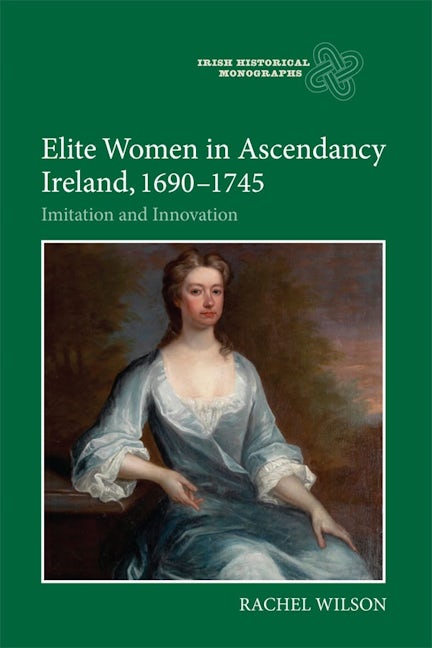
Provides a thorough examination of the role of women in Ascendancy Ireland.
The late seventeenth and early eighteenth century was a period of great social and political change within Ireland, as the Protestant Ascendancy gained control of the country, aided by the English government and aristocracy, withwhom the ruling class in Ireland mixed through marriage and travel. The resulting Anglo-Irish elite, with its distinct transnational identity, differed markedly from the preceding Irish elite, but, at the same time, because of itsIrish dimension, was very different also from the contemporary English and Scottish upper classes. Women played key roles in this Anglo-Irish elite, and the nature of the Protestant Ascendancy can only be completely understood byconsidering women's roles fully.
This book provides a thorough examination of the role of women in Ascendancy Ireland. It discusses marriage, family and social life; explores women's roles in economic and political life and in charitable activities; and places Irish elite women of this period in their wider historiographical context. The book is based on extensive original research, including among the papers of aristocratic families in Ireland and Britain, and provides a wealth of detail on elite women's lives in this period.
Rachel Wilson completed her doctorate in modern history at Queen's University, Belfast.
The late seventeenth and early eighteenth century was a period of great social and political change within Ireland, as the Protestant Ascendancy gained control of the country, aided by the English government and aristocracy, withwhom the ruling class in Ireland mixed through marriage and travel. The resulting Anglo-Irish elite, with its distinct transnational identity, differed markedly from the preceding Irish elite, but, at the same time, because of itsIrish dimension, was very different also from the contemporary English and Scottish upper classes. Women played key roles in this Anglo-Irish elite, and the nature of the Protestant Ascendancy can only be completely understood byconsidering women's roles fully.
This book provides a thorough examination of the role of women in Ascendancy Ireland. It discusses marriage, family and social life; explores women's roles in economic and political life and in charitable activities; and places Irish elite women of this period in their wider historiographical context. The book is based on extensive original research, including among the papers of aristocratic families in Ireland and Britain, and provides a wealth of detail on elite women's lives in this period.
Rachel Wilson completed her doctorate in modern history at Queen's University, Belfast.

Price: $120.00
Pages: 222
Publisher: Boydell & Brewer Inc.
Imprint: Boydell Press
Publication Date:
17 September 2015
Trim Size: 9.21 X 6.14 in
ISBN: 9781783270392
Format: Hardcover
BISACs:
HISTORY / Europe / Ireland, European history, HISTORY / Modern / 18th Century, HISTORY / Europe / Great Britain / General, General and world history

Makes an important contribution in highlighting the significant place of elite women in Irish society.
Introduction
The making and breaking of a marriage
Mothers and children
The lady of the house
Widows, guardians and estate managers
Society queens
Political players
Institutional philanthropy
Conclusion
Appendices: family trees
Bibliography
The making and breaking of a marriage
Mothers and children
The lady of the house
Widows, guardians and estate managers
Society queens
Political players
Institutional philanthropy
Conclusion
Appendices: family trees
Bibliography