


Some error occured while loading the Quick View. Please close the Quick View and try reloading the page.
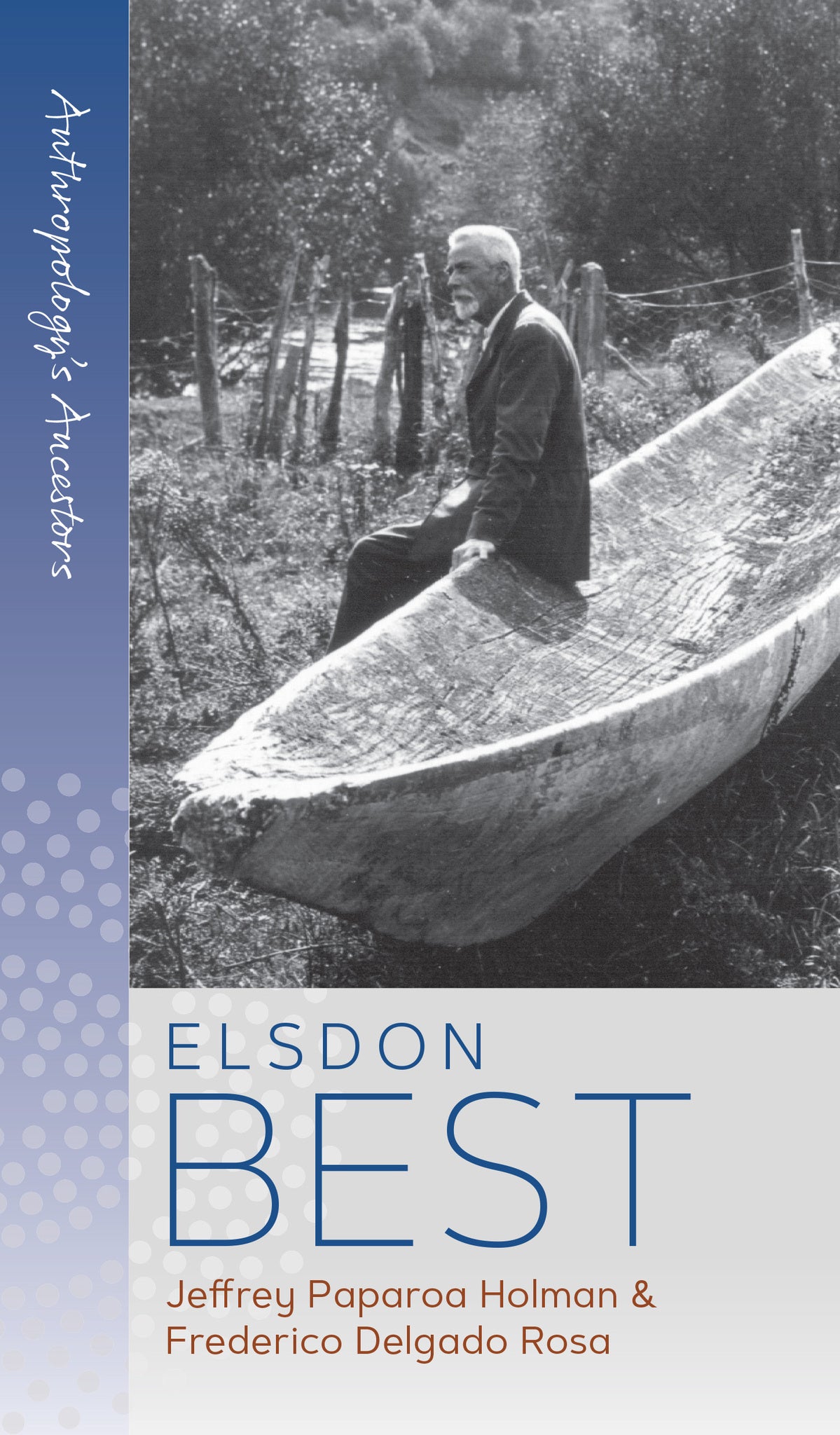
New Zealander ethnographer, Elsdon Best is a key figure in the history of anthropology due to his involuntary triggering of a fundamental and long-lasting anthropological debate on the Māori concept of hau. This volume is dedicated to this important scholar, who at the same time was shadowed by metropolitan anthropology and became an excluded ancestor, along with his Māori interlocutors and ethnographic collaborators. By recentering his place as one of anthropology’s ancestors, the volume contributes to a new perception of the discipline’s past.


Jeffrey Paparoa Holman has published several books including Best of Both Worlds (Penguin, 2010) , a memoir, and several collections of poetry. His most recent publication is Lily, Oh Lily: Searching for a Nazi Ghost (Canterbury University Press, 2025).
List of Illustrations
Acknowledgments
Foreword
Tipene tu te Maungaroa Ohlson
Chapter 1. The Life of a Frontier Man, Salvage Ethnographer, and Museum Anthropologist
Chapter 2. “I shall tell you about hau . . .”:At the Roots of an Anthropological Debate
Chapter 3. Anachronistic and Modern Motives in Searching the “Mythopoetic Māori”
Chapter 4. Indigenous Authorities and the Hybrid Construction of the Archive
Chapter 5. Writing “Tribal” History: Tuhoe: The Children of the Mist (1925)
Chapter 6. Tapu, Mana, and Social Organization
Chapter 7. “A World of Pathos”: Ethnography, Despondency, and Colonialism
Chapter 8. Decolonial Critique, Indigenous Research, and Best’s Legacy
Conclusion
Afterword
References