


Some error occured while loading the Quick View. Please close the Quick View and try reloading the page.
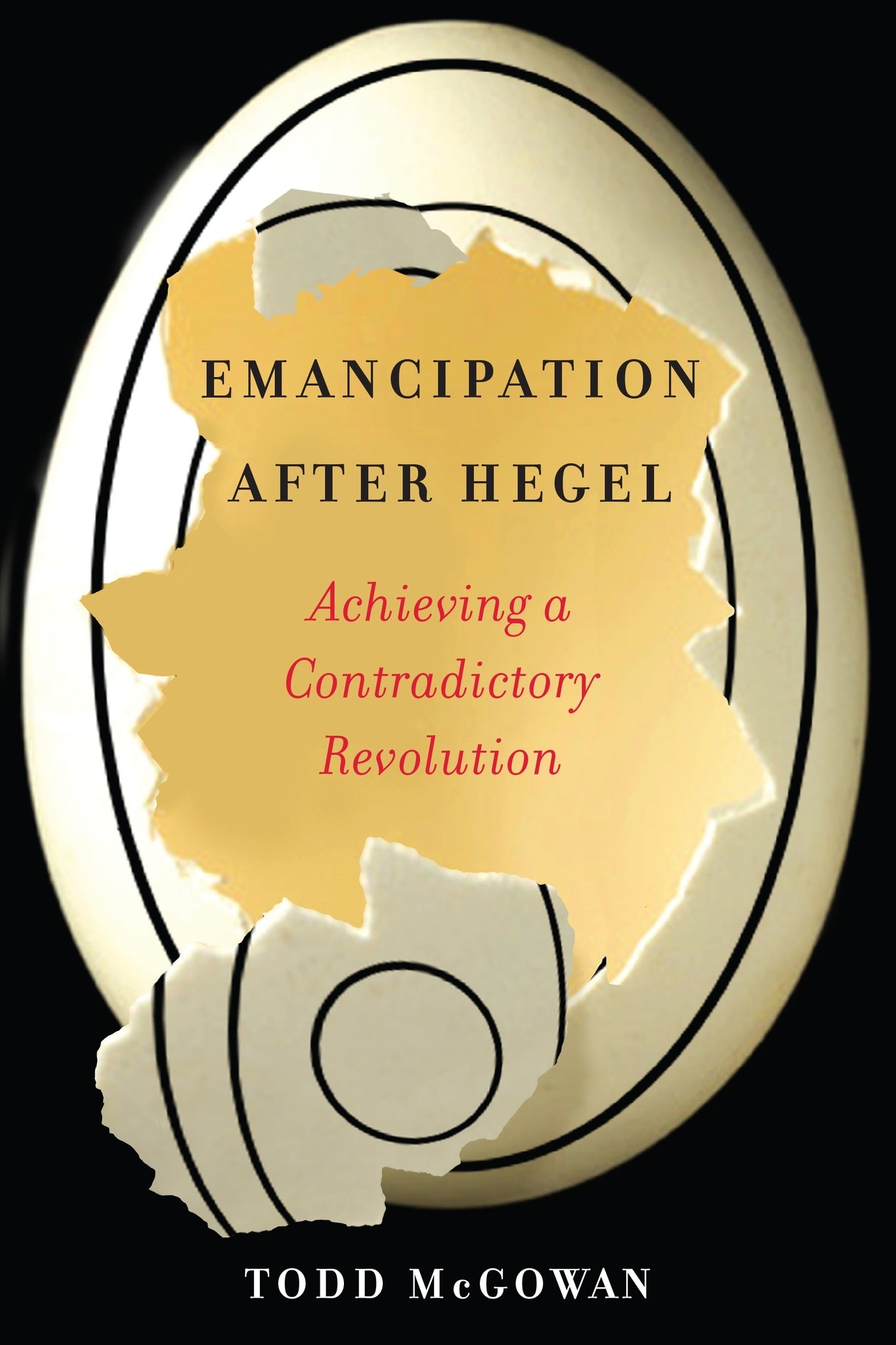
Hegel is making a comeback. After the decline of the Marxist Hegelianism that dominated the twentieth century, leading thinkers are rediscovering Hegel’s thought as a resource for contemporary politics. What does a notoriously difficult nineteenth-century German philosopher have to offer the present? How should we understand Hegel, and what does understanding Hegel teach us about confronting our most urgent challenges?
In this book, Todd McGowan offers us a Hegel for the twenty-first century. Simultaneously an introduction to Hegel and a fundamental reimagining of Hegel’s project, Emancipation After Hegel presents a radical Hegel who speaks to a world overwhelmed by right-wing populism, authoritarianism, neoliberalism, and economic inequalities. McGowan argues that the revolutionary core of Hegel’s thought is contradiction. He reveals that contradiction is inexorable and that we must attempt to sustain it rather than overcoming it or dismissing it as a logical failure. McGowan contends that Hegel’s notion of contradiction, when applied to contemporary problems, challenges any assertion of unitary identity as every identity is in tension with itself and dependent on others. An accessible and compelling reinterpretation of an often-misunderstood thinker, this book shows us a way forward to a new politics of emancipation as we reconcile ourselves to the inevitability of contradiction and find solidarity in not belonging.


— Slavoj Žižek, author of Less Than Nothing and Absolute Recoil
Todd McGowan's Emancipation After Hegel could not come at a more appropriate time: the time when we truly need to carefully (re)think and reestablish the idea of emancipation. The book does this in a brilliant and compelling way, taking contradiction—as understood by Hegel—as the key to the understanding of emancipation and its relationship to freedom.
— Alenka Zupančič, author of What Is Sex?
In Emancipation After Hegel, Todd McGowan forges an unprecedented type of left Hegelianism. From Marx and Engels onward, leftist defenders of Hegel either downplay or repudiate Hegel's accounts of Christianity and the state. McGowan's distinctive achievement is to prove that Hegelian freedom would not exist without both the Christian legacy and the modern state. McGowan opens up new horizons precisely by venturing where traditional left Hegelianisms have feared to go.
— Adrian Johnston, author of A New German Idealism: Hegel, Žižek, and Dialectical Materialism
The ten chapters canvass a wide range of topics—logic, reason, history, love, freedom, politics, experience, universality. In each case, McGowan shows with devastating clarity how the received view of Hegel has been founded on serious misreadings, then unfolds a fresh interpretation as deeply insightful as it is far-reaching. The result is an absolute tour de force. In McGowan's book, Hegel rises from the dead and assumes the status of an indispensable resource for the next chapter of Western intellectual history.
— Richard Boothby, author of Freud as Philosopher: Metapsychology After Lacan
Sparklingly articulate.
If Todd McGowan’s book on Hegel didn’t exist, we would have to invent it. McGowan is the giant of Vermont, the Bernie Sanders of the academy, the Larry David of Lacanian theory.
This book is particularly helpful for someone trying to better understand Slavoj Žižek’s thought. Žižek resonates with McGowan’s emphasis on the necessity of embracing contradiction for understanding anything.
Acknowledgments
Introduction: Divided He Falls
1. The Path to Contradiction: Redefining Emancipation
2. Hegel After Freud
3. What Hegel Means When He Says Vernunft
4. The Insubstantiality of Substance: Restoring Hegel’s Lost Limbs
5. Love and Logic
6. How to Avoid Experience
7. Learning to Love the End of History: Freedom Through Logic
8. Resisting Resistance, Or Freedom Is a Positive Thing
9. Absolute or Bust
10. Emancipation Without Solutions
Conclusion: Replanting Hegel’s Tree
Notes
Index