


Some error occured while loading the Quick View. Please close the Quick View and try reloading the page.
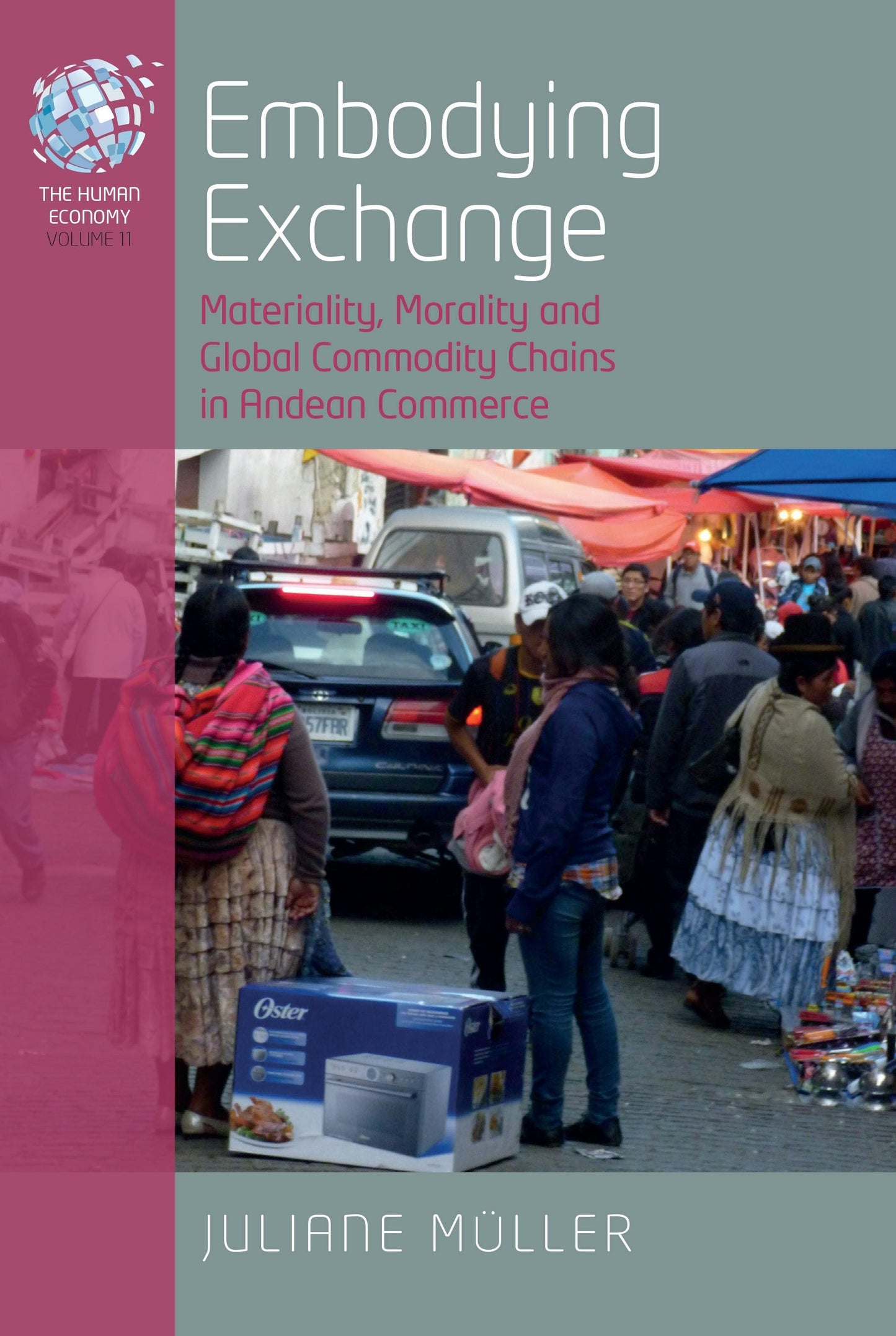
Addressing the infrastructural, social and legal complexities of a global commodity chain, this book uses an ethnographic analysis of the encounter between multinational corporations and popular traders in the Bolivian Andes. It offers a situated account of the everyday work of chain (un)making, and practices of translation, accommodation and contention. It highlights traders’ collective action, understanding of economic concepts and regulatory principles, and traces the circulation of goods and money beyond market exchange. All in all, it aims to comprehend the reproduction of the native trading system amid global connections, and to humanize our understanding of the economy by grounding it in everyday life, bottom-up socio-material infrastructures and morality.


“The main strength of the book is its detailed description of interactions with multinational electronics companies who are rendered dependent on the powerful traders of Huyustus … one of the most exciting aspects of this book was that it is based on long-term and multi-site fieldwork.” • Kate Maclean, University College London
“It is a highly interesting book based on a well-researched phenomenon. It analyzes a relevant topic that hasn't been investigated so far: the commercial link between technology multinationals and 'popular' markets.” • Matías Dewey, University of St. Gallen
Juliane Müller is Professor of Social Anthropology (Serra Húnter Programme) at the University of Barcelona. This is her fourth monograph, the first in English.
List of Figures
Acknowledgements
Part I: The Materiality and Morality of Andean Commerce
Chapter 1. Extra-legal Marketplaces: Past, Present and Future
Chapter 2. Commercial Infrastructure, Spatial Regulation and Situated Economic Ethics
Part II: Traders and Multinationals in La Paz and the Region
Chapter 3. Buyer-Seller-Loyalty and the Limits of Corporate Branding
Chapter 4. Disrupted Cell Phone Supply Chains: Circulatory Authority and Disputes over Ownership
Part III: Embodying Exchange
Chapter 5. Self-Account Trading, Social Interdependencies and Commercial Histories
Chapter 6. The Enmeshment of Commercial and Ritual Cycles: The China Connection of the Fiesta De Jesús Del Gran Poder
Chapter 7. ‘Wealth-in-People’: Gifting and Sharing Amidst Growing Economic Inequality
Conclusion
References
Index