


Some error occured while loading the Quick View. Please close the Quick View and try reloading the page.
Winner, 2025 Merle Curti Social History Award, Organization of American Historians
Finalist, 2025 Hagley Prize in Business History, Business History Conference
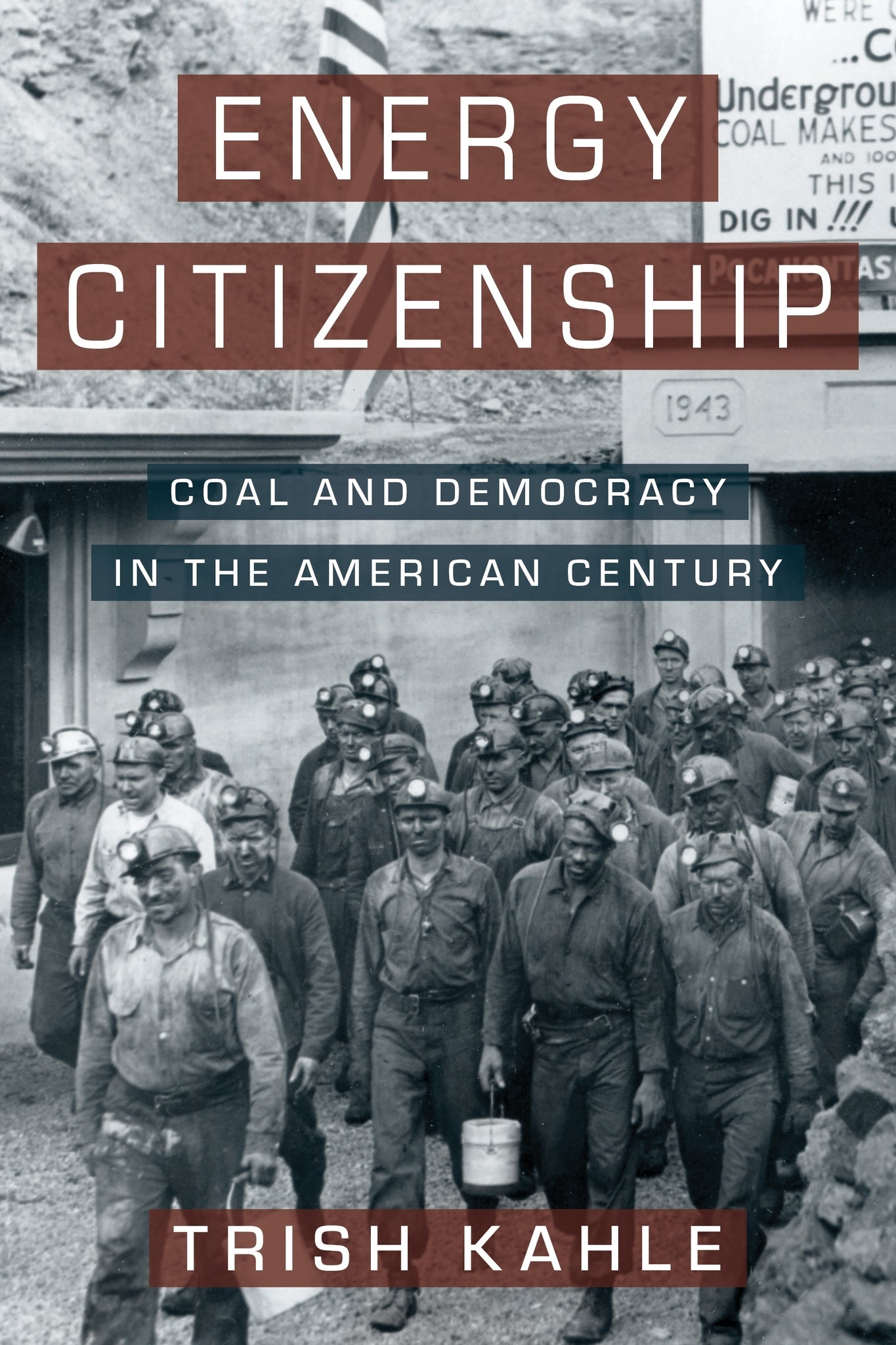
The history of the modern United States is the history of coal—and of coal miners. Trish Kahle reveals miners as forgers of a coal-fired social contract that was contested throughout the twentieth century as Americans sought to define the meaning of citizenship in an energy-intensive democracy.
Energy Citizenship traces the uncertain relationship between coal and democracy from the Progressive Era to the election of Ronald Reagan, examining how miners’ democratic aspirations confronted the deadly record of the country’s coal mines. Miners and their communities bore the burdens of energy production while reaping far fewer of the benefits of energy consumption. But they insisted that death in the mines, far from being inevitable, was a political choice. Kahle demonstrates that coal miners’ struggles to democratize the workplace, secure civil and social rights, and obtain restitution for the human toll of progress reshaped U.S. laws, regulatory administrations, and political imaginaries. Energy policy in the twentieth century was about not only managing fuels but also negotiating the relationship between coal miners and the rest of the country, which depended on the electric power and steel produced with the coal they mined.
Placing coal miners at the center of a sweeping new history of the United States, this book unmasks the violence of energy systems and shows how energy governance cuts to the heart of persistent questions about democracy, justice, and equality.


— Dominic Boyer, author of No More Fossils
Energy Citizenship is an exciting book that offers an innovative look at the study of energy and politics. Kahle convincingly demonstrates that coal workers not only provided the fuel that enabled America to become a superpower but also made vital democratic contributions that reshaped the nation’s political landscape. It is a timely book relevant to those interested in American politics, energy, and a just transition away from fossil fuels.
— Christopher F. Jones, author of Routes of Power: Energy and Modern America
With analytical rigor and moral courage, Kahle recasts the history of the modern United States by placing coal miners at its center. This book shows how miners fueled the industrial nation and, in fighting for rights and protections amid workplace violence, shaped what it meant to be a citizen within it. The result is a powerful account of the contradictions between energy and democracy in America’s coal-fired century.
— Victor Seow, author of Carbon Technocracy
The American Century was powered by coal. In this meticulously researched and beautifully written book, Kahle places coal miners at the center of twentieth century citizenship. Their industrial and political labors shaped modern liberalism, even as the bodily risks they incurred on the job revealed the fragility of American democracy. A brilliant study that reveals the entwinement of citizenship and energy while providing the backstory to the enduring symbolic role of the miner in contemporary politics.
— Natasha Zaretsky, author of Radiation Nation: Three Mile Island and the Political Transformation of the 1970s
Kahle’s volume is valuable for American historians of any stripe. A rich combination of labor, political, and energy history, Energy Citizenship will be particularly indispensable for those who work in any of these subfields. By placing the violence, danger, and undemocratic governance of coal production at the heart of energy history, it upends the tidy narratives of a vanishing fuel source and allows us to reevaluate arguments around the connections between energy production and democracy.
— Robert Suits, University College London
Note on Graphic Content
Introduction. The Paradox of Coal-Fired Democracy
Part I: Forging (1880–1950)
1. Civil War in the Coalfield State
2. National Problem, National Obligation
3. War and Peace
Part II: Stasis (1950–1969)
First Interlude: Between Deep Time and the Future
4. Atomic Menace
5. An Inherent Danger of Explosion
Part III: Renegotiation (1969–1972)
Second Interlude: This Total-Energy Dream
6. Walk Out—Before They Carry You Out
7. If Letcher County Was a Pie . . .
8. Jobs, Lives, and Land
Part IV: Bounding (1973–1981)
Third Interlude: East and West
9. Rights and Obligations
10. A Revolution of Declining Expectations
Conclusion. Energy Citizenship in Transition
Acknowledgments
List of Abbreviations
Notes
Index