


Some error occured while loading the Quick View. Please close the Quick View and try reloading the page.
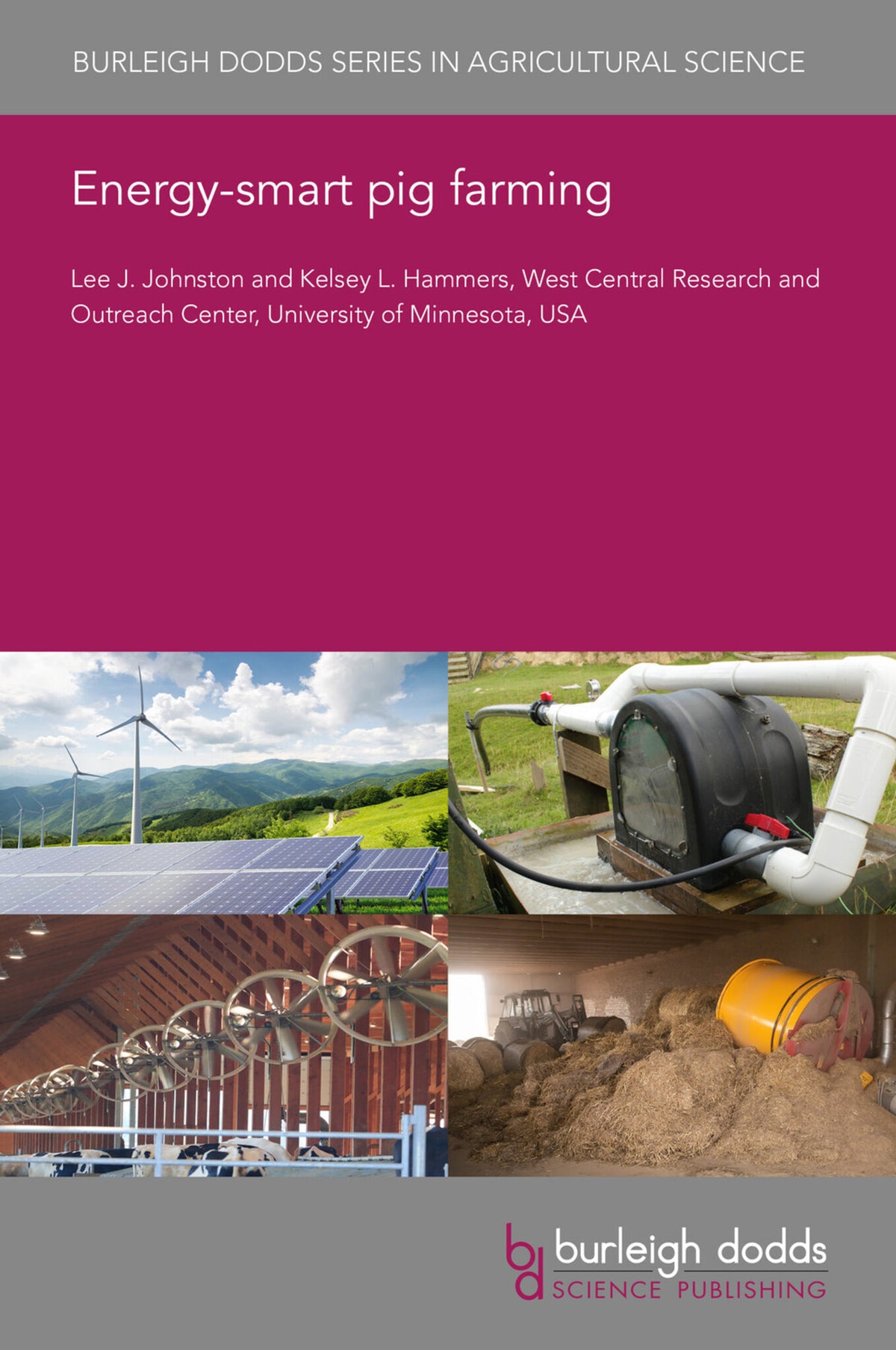
Pig farming plays an important role in providing protein-rich food for consumers worldwide. Consumers increasingly are demanding food with diminishing negative impacts on the environment which encourages pig farmers to adopt renewable energy and more energy-efficient systems to reduce fossil fuel demand. Energy-smart pig farming systems can be realized in several ways. On-farm generation of electricity through solar photovoltaic arrays, and heat from geothermal systems or through biogas from manure, reduces reliance on fossil fuels. On-farm energy generation can require large capital investment that might prevent adoption on many farms. Optimizing pig performance improves energy efficiency by producing the most pork possible from a given quantity of energy inputs. Energy conservation measures in buildings can be implemented on most existing pig farms with small or moderate capital investment. Regardless of size or age, virtually all pig farms can implement some practices or technologies that improve their efficiency of energy use.

Price: $32.50
Publisher: Burleigh Dodds Science Publishing
Imprint: Burleigh Dodds Science Publishing
Series: Burleigh Dodds Series in Agricultural Science
Publication Date:
May 16, 2022
ISBN: 9781801465021
Format: eBook

1 Introduction 2 Energy generation on pig farms 3 Feed energy related to pig production 4 Building design to improve energy efficiency 5 Practices to improve energy efficiency of existing buildings 6 Conclusion and future trends 7 Where to look for further information 8 Acknowledgement 9 References