


Some error occured while loading the Quick View. Please close the Quick View and try reloading the page.
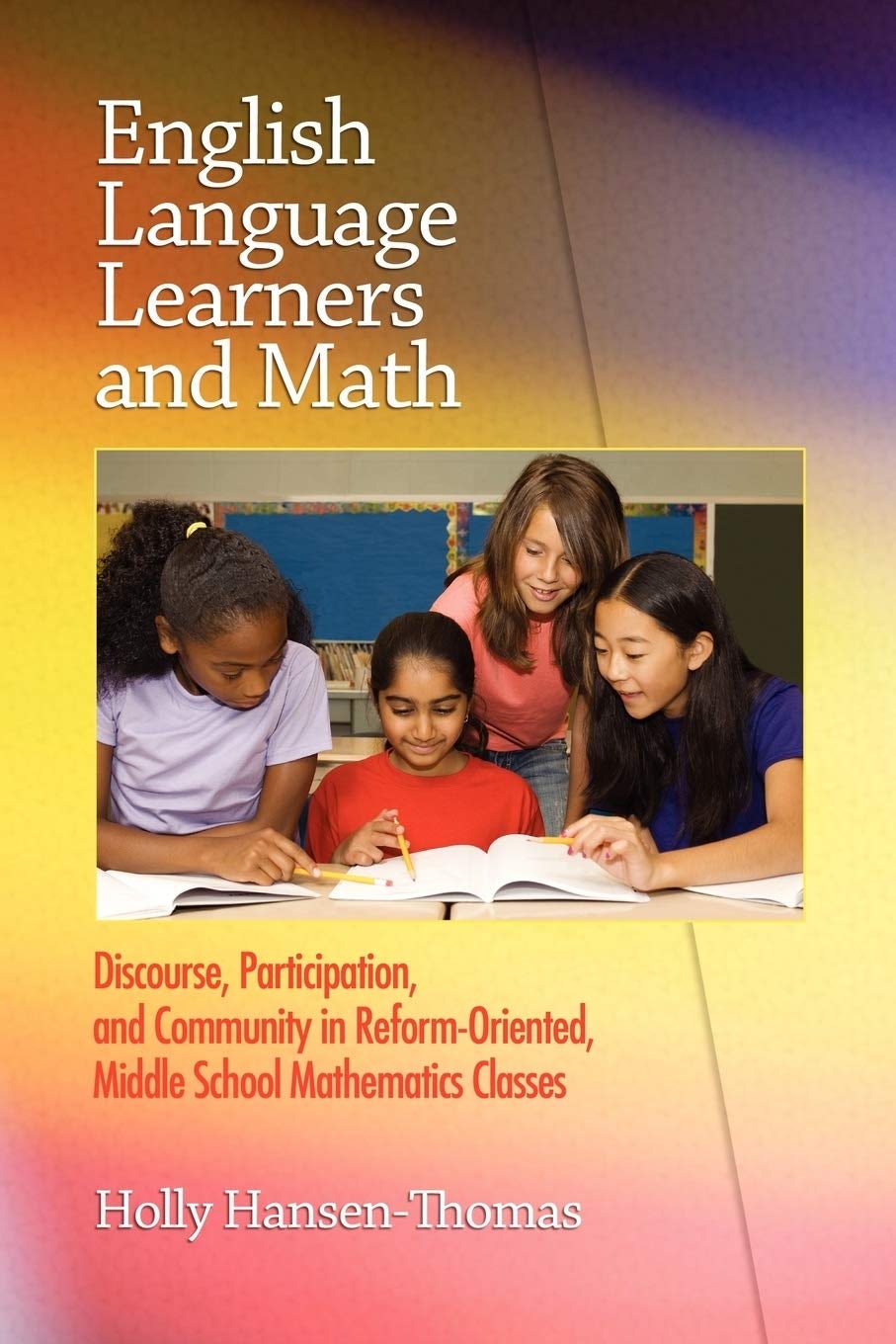
Taking a community of practice perspective that highlights the learner as part of a community, rather than a lone individual responsible for her/his learning, this ethnographically-influenced study investigates how Latina/o English Language Learners (ELLs) in middle school mathematics classes negotiated their learning of mathematics and mathematical discourse. The classes in which the Latina/o students were enrolled used a reform-oriented approach to math learning; the math in these classes was—to varying degrees—taught using a hands-on, discovery approach to learning where group learning was valued, and discussions in and about math were critical.
This book presents the stories of how six immigrant and American-born ELLs worked with their three teachers of varied ethnicity, education, experience with second language learners, and training in reform-oriented mathematics curricula to gain a degree of competence in the mathematical discourse they used in class. Identity, participation, situated learning, discourse use by learners of English as a Second Language (ESL), framing in language, and student success in mathematics are all critical notions that are highlighted within this school-based research.


Introduction.
Chapter 1. Guide to Transcription Conventions.
Chapter 2. Background.
Chapter 3. Introducing the Three Communities.
Chapter 4. Communities of Practice in Three Sixth-Grade Math Classes.
Chapter 5. Frames as Play and Participation Frameworks in Reform Math.
Chapter 6. What Is Mathematical Discourse, How Is it Used, and Who Is Successful at It?
Chapter 7. Conclusions and Implications.
References.
About the Author.