


Some error occured while loading the Quick View. Please close the Quick View and try reloading the page.
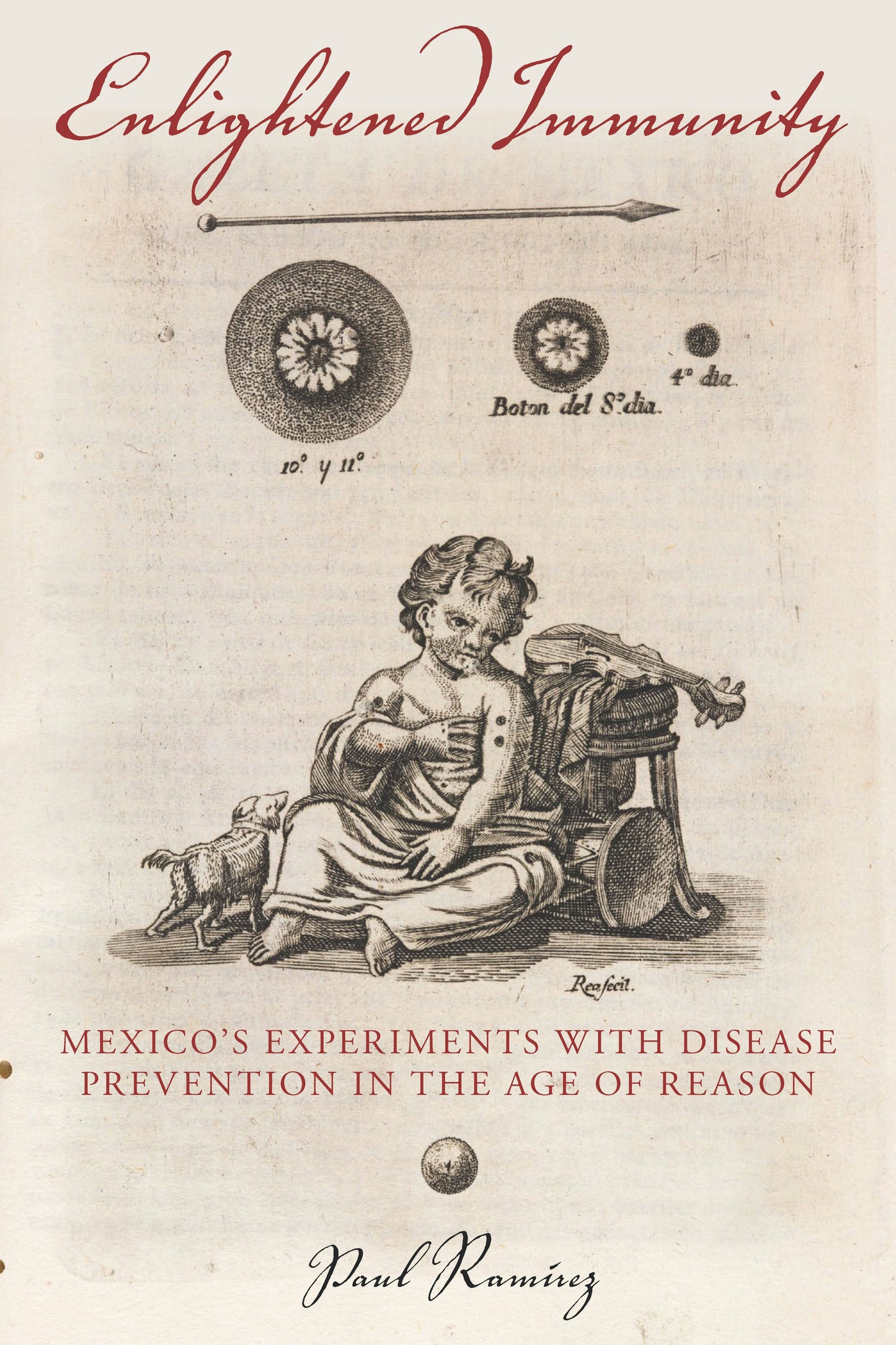
In eighteenth-century Mexico, outbreaks of typhus and smallpox brought ordinary residents together with administrators, priests, and doctors to restore stability and improve the population's health. This book traces the monumental shifts in preventive medicine and public health measures that ensued. Reconstructing the cultural, ritual, and political background of Mexico's early experiments with childhood vaccines, Paul Ramírez steps back to consider how the design of public health programs was thoroughly enmeshed with religion and the church, the spread of Enlightenment ideas about medicine and the body, and the customs and healing practices of indigenous villages.
Ramírez argues that it was not only educated urban elites—doctors and men of science—whose response to outbreaks of disease mattered. Rather, the cast of protagonists crossed ethnic, gender, and class lines: local officials who decided if and how to execute plans that came from Mexico City, rural priests who influenced local practices, peasants and artisans who reckoned with the consequences of quarantine, and parents who decided if they would allow their children to be handed over to vaccinators. By following the multiethnic and multiregional production of medical knowledge in colonial Mexico, Enlightened Immunity explores fundamental questions about trust, uncertainty, and the role of religion in a moment of discovery and innovation.


1. Devotions of Affliction: The Dramaturgy of Colonial Epidemics
2. Periodically Healthy: The Nature of Medicine and the Fashion of Science
3. "Massacre of the Innocents": Preventing Smallpox, 1796–1798
4. The Gift of Immunity: Domesticating Techniques
5. Republics of Vaccinators: Everyday Expertise through the Insurgency
6. Medicine's Malcontents: An Oral History
Conclusion