


Some error occured while loading the Quick View. Please close the Quick View and try reloading the page.
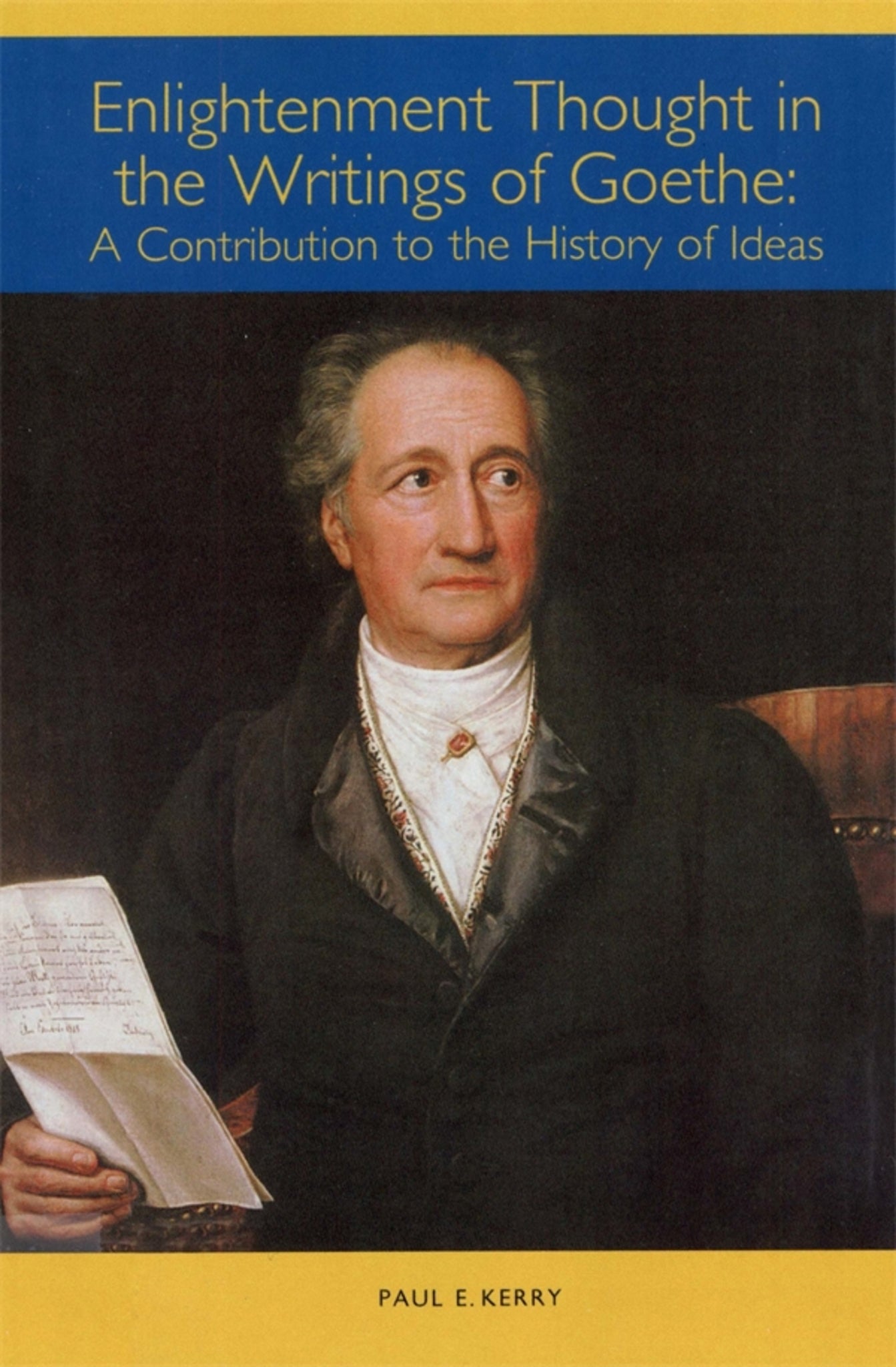
Shows Goethe, the most famous of German writers, as a child of the Enlightenment.
Throughout his oeuvre Goethe invokes the writers and thinkers of the Enlightenment: Voltaire and Goldsmith, Sterne and Bayle, Beccaria and Franklin. And he does not merely reference them: their ideas make up the salt of his most acclaimed works. Like Hume before him, Goethe takes up the topic of suicide, but in a best-selling novel, Werther; the beating heart of Faust I is the fate of a woman who commits infanticide, a burning social issue ofhis age; in an article for a popular journal Goethe takes up the cause of Kant and Penn, who wrote treatises on how to establish peace in Europe. In another essay Goethe calls for reconciliation between Germans who had fought against each other in those same Wars, as well as for worldwide understanding between Christians, Jews, Muslims, and Heathens. Professor Kerry shows that Goethe is a child of the Enlightenment and an innovator of its legacy. To do sohe discusses a chronological swath of Goethe's works, both popular and neglected, and shows how each of them engages Enlightenment concerns.
Paul Kerry is Professor of History at Brigham Young University.
Throughout his oeuvre Goethe invokes the writers and thinkers of the Enlightenment: Voltaire and Goldsmith, Sterne and Bayle, Beccaria and Franklin. And he does not merely reference them: their ideas make up the salt of his most acclaimed works. Like Hume before him, Goethe takes up the topic of suicide, but in a best-selling novel, Werther; the beating heart of Faust I is the fate of a woman who commits infanticide, a burning social issue ofhis age; in an article for a popular journal Goethe takes up the cause of Kant and Penn, who wrote treatises on how to establish peace in Europe. In another essay Goethe calls for reconciliation between Germans who had fought against each other in those same Wars, as well as for worldwide understanding between Christians, Jews, Muslims, and Heathens. Professor Kerry shows that Goethe is a child of the Enlightenment and an innovator of its legacy. To do sohe discusses a chronological swath of Goethe's works, both popular and neglected, and shows how each of them engages Enlightenment concerns.
Paul Kerry is Professor of History at Brigham Young University.

Price: $29.99
Pages: 256
Publisher: Boydell & Brewer Inc.
Imprint: Camden House
Series: Studies in German Literature Linguistics and Culture
Publication Date:
01 May 2009
Trim Size: 9.00 X 6.00 in
ISBN: 9781571134073
Format: Paperback
BISACs:
LITERARY CRITICISM / European / German, Literature: history and criticism, PHILOSOPHY / History & Surveys / Modern

[A]n informative, well-researched, and useful book. By illuminating how Goethe's writings raise intellectual-cultural awareness, Kerry's study bears implications for recent studies of intercultural competence and transcultural literary interpretation. In sum, Kerry's insights into Goethe's writings and the process of enlightenment warrant sustained consideration.
An ambitious attempt to codify the use of Enlightenment philosophy in the writing of Goethe.
Kerry's analyses demonstrate a profound mastery of the sources, of both Goethe's works and the secondary literature, with a pronounced preference for 'little-known pieces'.
Clear, informative, and interesting. It is general enough to serve a less specialized readership, but it also brings to light aspects of Goethe's work that might otherwise be ignored.
In choosing the texts that he does, and providing a very clever glimpse of the background within which those texts were generated, Kerry's book is worth the read, not just for Goethe enthusiasts, or Enlightenment scholars, but also for those seriously considering tolerance in our own age.
In his forthright and clearly-written book, Kerry proves that he is a determined proponent of the argument that the great German writer felt a significant obligation to the Enlightenment, and that 'the Enlightenment engages Goethe for most of his life.
An ambitious attempt to codify the use of Enlightenment philosophy in the writing of Goethe.
Kerry's analyses demonstrate a profound mastery of the sources, of both Goethe's works and the secondary literature, with a pronounced preference for 'little-known pieces'.
Clear, informative, and interesting. It is general enough to serve a less specialized readership, but it also brings to light aspects of Goethe's work that might otherwise be ignored.
In choosing the texts that he does, and providing a very clever glimpse of the background within which those texts were generated, Kerry's book is worth the read, not just for Goethe enthusiasts, or Enlightenment scholars, but also for those seriously considering tolerance in our own age.
In his forthright and clearly-written book, Kerry proves that he is a determined proponent of the argument that the great German writer felt a significant obligation to the Enlightenment, and that 'the Enlightenment engages Goethe for most of his life.