


Some error occured while loading the Quick View. Please close the Quick View and try reloading the page.
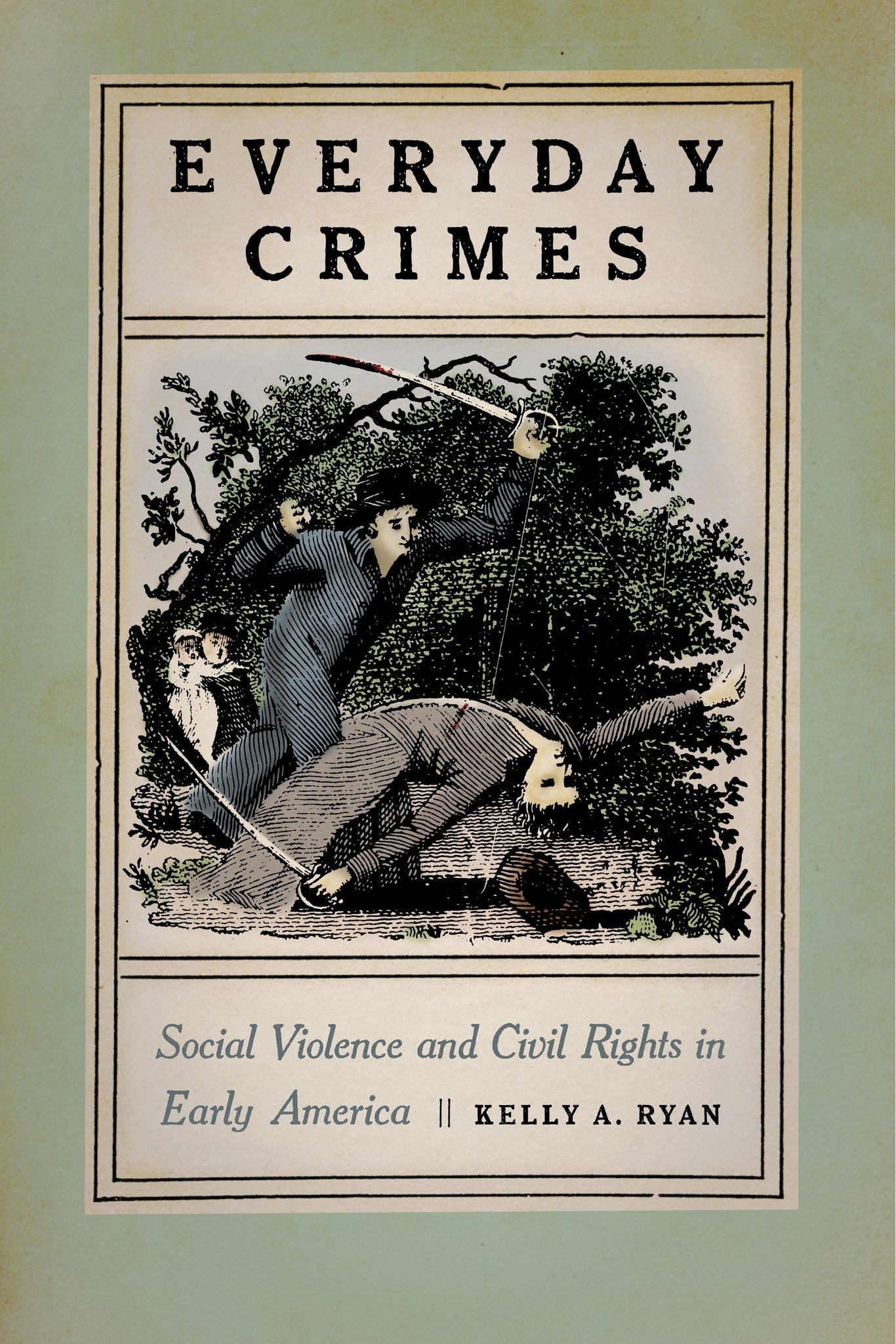
The narratives of slaves, wives, and servants who resisted social and domestic violence in the nineteenth century
In the early nineteenth century, Peter Wheeler, a slave to Gideon Morehouse in New York, protested, “Master, I won’t stand this,” after Morehouse beat Wheeler’s hands with a whip. Wheeler ran for safety, but Morehouse followed him with a shotgun and fired several times. Wheeler sought help from people in the town, but his eventual escape from slavery was the only way to fully secure his safety.
Everyday Crimes tells the story of legally and socially dependent people like Wheeler—free and enslaved African Americans, married white women, and servants—who resisted violence in Massachusetts and New York despite lacking formal protection through the legal system.
These “dependents” found ways to fight back against their abusers through various resistance strategies. Individuals made it clear that they wouldn’t stand the abuse. Developing relationships with neighbors and justices of the peace, making their complaints known within their communities, and, occasionally, resorting to violence, were among their tactics.
In bearing their scars and telling their stories, these victims of abuse put a human face on the civil rights issues related to legal and social dependency, and claimed the rights of individuals to live without fear of violence.


"Everyday Crimes challenges our assumptions about the origins of American civil rights and humanitarian movements, arguing that the nascent foundation of these resistance efforts began long before the mid-nineteenth century. . . . One of the most appealing and impressive facets of Ryan’s work is its methodological approach, namely her intersectional framework of analysis. Situating her study around the concepts of human and civil rights likewise raises the stakes of her contentions about the effects resistance had on influencing changes to the law and the social order. Ryan’s important work draws much needed attention to the ways in which these early forms of resistance to violence implemented and organized by society’s most vulnerable members shaped both the law and early Americans’ views of who the law ought to protect."
"Kelly Ryan’s Everyday Crimes provides perhaps the most in-depth study to date of violence against legally-dependent people in early America. . . . Ryan has produced an important work that both breaks new conceptual ground and provides valuable narrative evidence on the everyday lives of the downtrodden and ignored in early New York and Massachusetts. By combining detailed narrative with ambitious argument and careful attention to change over time, Everyday Crimes is an essential read for students of social history of the colonial and early national period as well as legal scholars and those interested in disenfranchised groups in early American history."
"Everyday Crimes is an ambitious and provocative contribution to the histories of violence, law, and gender in early America. Ryan shows how individual lives were plotted along multiple axes of dependence, leaving legally dependent men, women, and children vulnerable to physical violence, judicial inaction, and public indifference. They resisted when and how they could, slowly redefining their place in the “social economy of violence” [...] Everyday Crimes is a rich and interesting work, and one that is sure to inspire future studies."
"Ryan’s ability to connect the societal norms, English common law, and history is done in a way that engages the reader and provides a perspective on history that is often overlooked. This book is highly recommended for a diverse audience to include history enthusiasts, sociologists that study class relationships, sociologists that focus on civil rights for women, and early America criminologists. This book can be utilized as a supplemental textbook for a graduate class that would focus on society’s relationship with social norms and the early formation of the criminal justice system."
"Ryan has gathered a remarkable archive of legal records from New York and Massachusetts, supplemented by print literature, diaries, and letters of people seeking relief from abuse ... Everyday Crimes offers a revelatory complement to our understanding of how human rights discourse emerged in early America."
"Ryan’s Everyday Crimes is filled with original research and arguments in each chapter, bursting as they are with compelling narratives that highlight the oppressed and their efforts to limit the abuse they faced and find justice against their abusers."