


Some error occured while loading the Quick View. Please close the Quick View and try reloading the page.
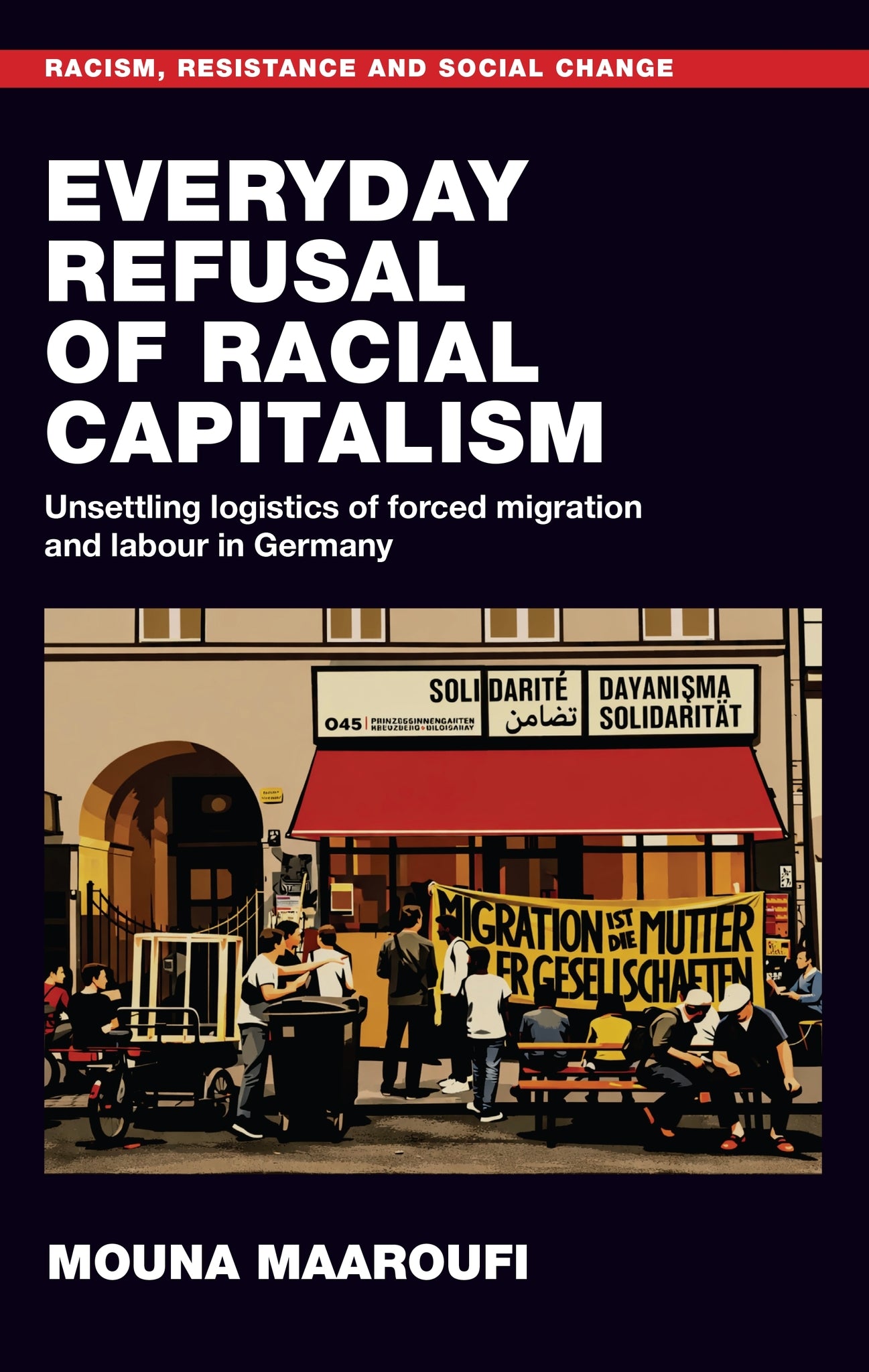
Current conjunctures of racial capitalism in Germany are characterized by unsettling legal, logistical, and infrastructural transformations. This book considers these developments set in motion after the autonomous arrival of refugees in 2015 as part of a reconfiguration of the European asylum regime and as expressive of broader crises in the reproduction and circulation of workforces. It examines how racialised workers’ differential inclusion into workfare and work shapes contingent and fragmented labour relations and analyses how they negotiate logistical constraints designed to confine, categorise and circulate their labour. By foregrounding refugees' infrapolitics and labour struggles, it shows how their decisions, mobilities and refusals contest racialised coercions, inequalities, and divisions while asserting alternative relations of solidarity. Drawing on Black radical traditions, critical and autonomous approaches to migration and ethnographic inquiry, it offers an empirically grounded account of everyday resistance within a contemporary logistical racial capitalism.

Price: $36.95
Pages: 264
Publisher: Manchester University Press
Imprint: Manchester University Press
Series: Racism, Resistance and Social Change
Publication Date:
10 November 2026
ISBN: 9781526193995
Format: Hardcover
BISACs:
SOCIAL SCIENCE / Sociology / General, Employment and labour law: general, POLITICAL SCIENCE / Labor & Industrial Relations, SOCIAL SCIENCE / Emigration & Immigration, Racism and racial discrimination / Anti-racism, Migration, immigration and emigration

Mouna Maaroufi is a post-doctoral researcher in Comparative Cultural and Social Anthropology at the European University Viadrina in Frankfurt Oder.
Introduction
1 Reproducing racial capitalism through infrastructures of asylum and workfare
2 Race, refugees and recognition: Logistics of extracting knowledge
3 Circulation, contingency and coercion in labour supply chains
4 Competition, conflict and division at work
5 Refusing racial capitalism: Autonomy, fugitivity and solidarity
Concluding remarks
References