


Some error occured while loading the Quick View. Please close the Quick View and try reloading the page.
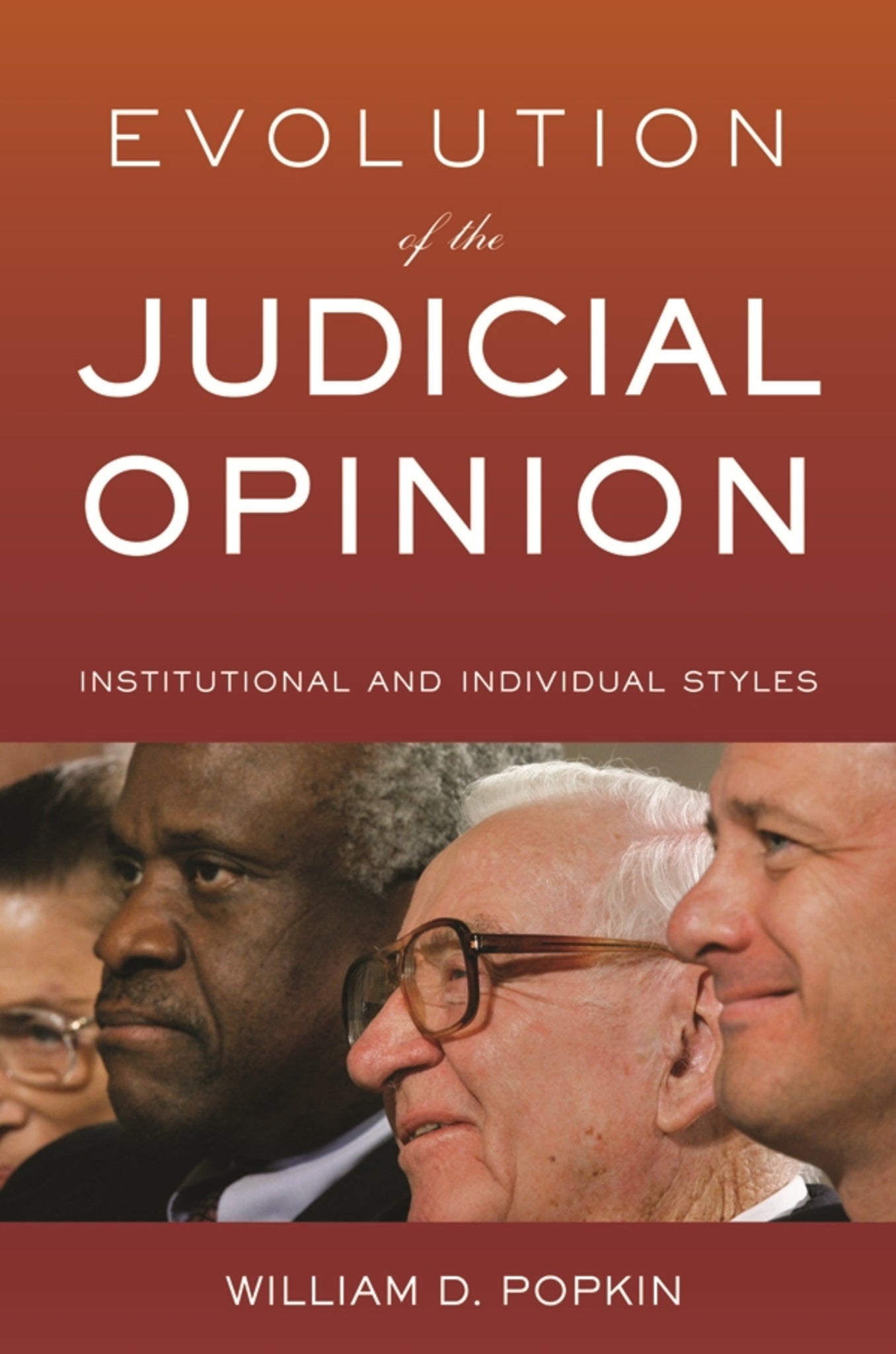
In this sweeping study of the judicial opinion, William D. Popkin examines how judges' opinions have been presented from the early American Republic to the present. Throughout history, he maintains, judges have presented their opinions within political contexts that involve projecting judicial authority to the external public, yet within a professional legal culture that requires opinions to develop judicial law through particular institutional and individual judicial styles.
Tracing the history of judicial opinion from its roots in English common law, Popkin documents a general shift from unofficially reported oral opinions, to semi-official reports, to the U.S. Supreme Court's adoption in the early nineteenth century of generally unanimous opinions. While this institutional base was firmly established by the twentieth century, Popkin suggests that the modern U.S. judicial opinion has reverted—in some respects—to one in which each judge expresses an individual point of view. Ultimately, he concludes that a shift from an authoritative to a more personal and exploratory individual style of writing opinions is consistent with a more democratic judicial institution.


"This work constitutes a perspicacious guide to recovering the vitality and importance of judicial opinions, and it offers recommendations forthe proper mission of judges within a changing legal culture. . . . Recommended."
"There is no better book for conveying the hidden literary value in the judicial opinion of our time."
— Robert A. Ferguson,author of The Trial in American Life