


Some error occured while loading the Quick View. Please close the Quick View and try reloading the page.
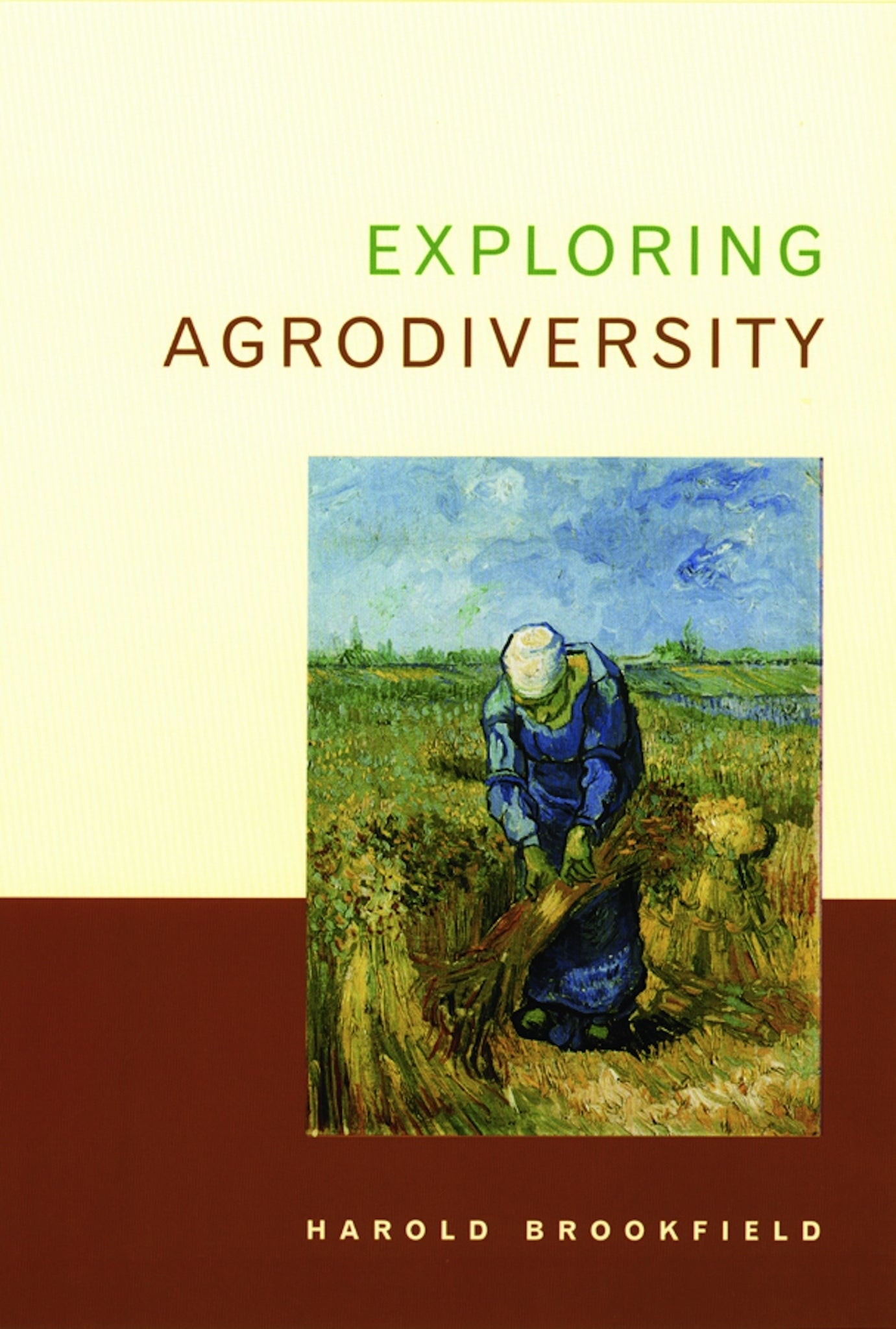
Small farmers are often viewed as engaging in wasteful practices that wreak ecological havoc. Exploring Agrodiversity sets the record straight: Small farmers are in fact ingenious and inventive and engage in a diverse range of land-management strategies, many of them resourcefully geared toward conserving resources, especially soil. They have shown considerable resilience in the face of major onslaughts against their way of life by outsiders and government.
Using case studies from Africa, Asia, Latin America, and the Pacific, this book provides in-depth analysis of agricultural diversity and explores its history. The book also considers the effect of the "gene revolution" on small farmers and reviews the effects of the "green revolution" in Asian countries. In conclusion, it questions whether the diverse agricultural practices employed by small farmers can survive modern pressures and the global ambitions of the biotechnology industry.


— Nature
Brookfield has again broken the mould with this extrememly valuable and detailed introduction to, and exposition of, his latest interest and speciality—the agrodiversity of small farmers.... An excellent treatment of small farmer management strategies.
— Land Degradation and Development
A valuable contribution...provides many interesting examples that question well established and widely disseminated hypotheses.
— Basic and Applied Ecology
Harold Brookfield has written a book well worth the read... Few scholars are as well positioned as Brookfield to write about dynamic diversity in traditional agricultural systems centered on the farmer and the farm.
— Conservation Ecology
Brookfield has emphasized the extremes of agriculturally managed landscapes in the small-farming regions of developing countries... [T]he volume is an excellent resource for scholars and policymakers, as well as a major contribution to the field of agrodiversity.
— Shivaji Prasad
[T]his is an interesting book and would be a worthwhile addition to any personal or academic library just for a range of case studies alone.... There is a fascinating range of examples of variations on the themes of human adaptability and landscape change.
— Christopher Young
Introduction
Part I. Presenting Agrodiversity
1. Presenting Diversity by Example: Mintima and Bayninan
2. Diversity, Stress, and Opportunity
Part II. Diversity Within Rotational Land Systems
3. Defining, Describing, and Writing About Agrodiversity
Part III. Paths of Transformation
4. Learning About the History of Agrodiversity
Part IV. The Future of Agrodiversity
5. Understanding Soils and Soil--Plant Dynamics
6. Analyzing Shifting Cultivation
7. Alternative Ways to Farm Parsimonious Soils
8. Managing Plants in the Fallow and the Forest
9. Coping with Problems: Degraded Land, Slope Dynamics, and Flood
10. Who Has Driven Agricultural Change?
11. Farmer-Driven Transformation in Modern Times
12. The Green Revolution
13. Recent Trends in Agriculture
14. Science, Farmers, and Politics
Epilogue: Looking at the Future
References