


Some error occured while loading the Quick View. Please close the Quick View and try reloading the page.
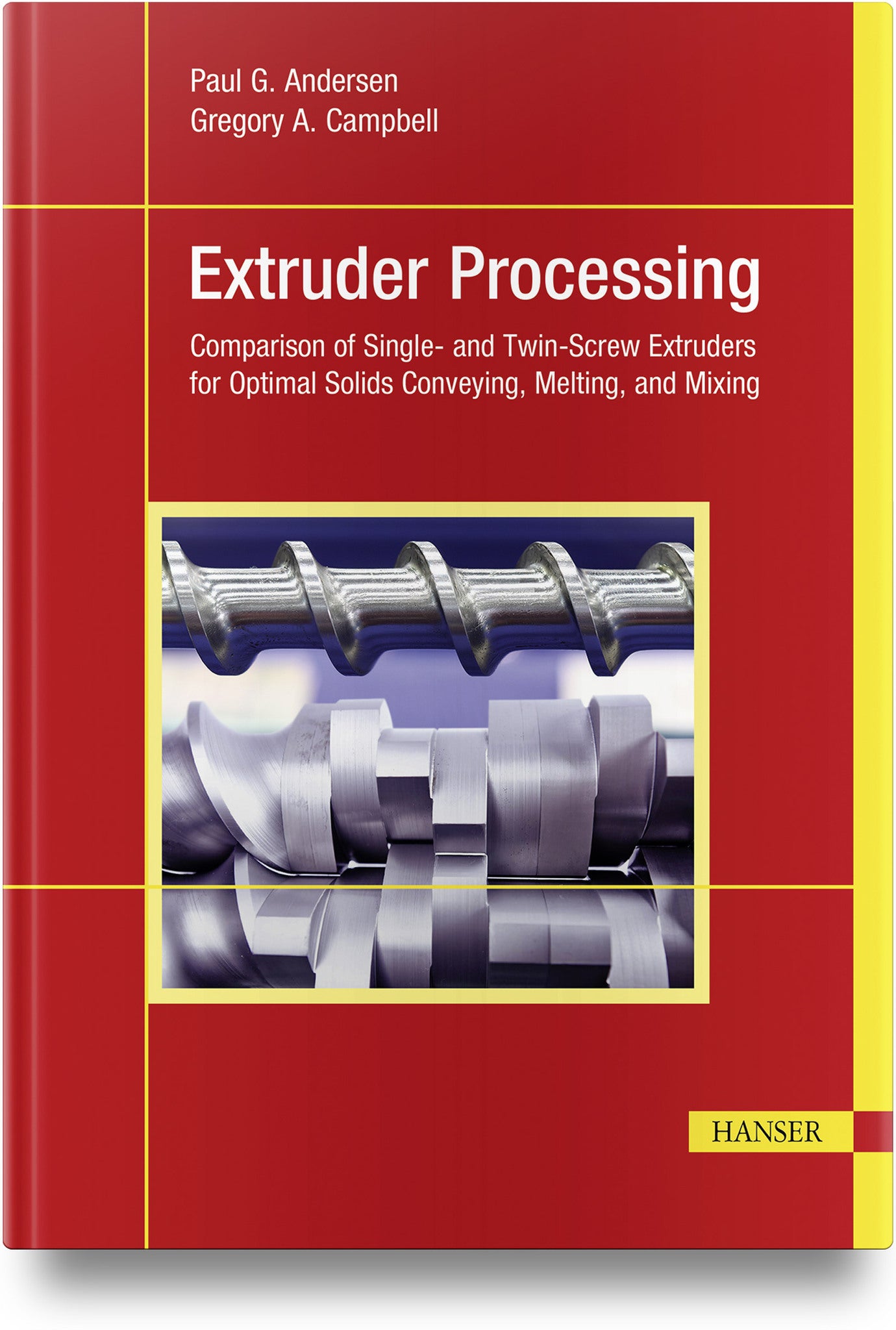
Single-screw or twin-screw extruder? When the need to produce a homogeneous polymer melt occurs in the industrial environment, both product attributes and equipment cost must be evaluated. For many applications both the single and twin-screw extruder will produce the desired homogeneous melt needed to form the product through an extrusion die. Some applications such as dispersive mixing of solids in a polymer matrix are best accomplished in a twin-screw extruder. On the other hand, applications involving chemical reactions, color concentrate distributive mixing, and in line polymer-polymer distributive mixing can be accomplished with either device.
However, for the same production rate, twin-screw extruders are generally more expensive than single-screw extruders with a diameter less than 200 mm. Therefore, a thorough understanding is needed for the concepts of solids conveying, melting, and mixing for the two types of extruders to make appropriate process acquisition decisions. This book covers engineering and technology concepts that should aid the practitioner in comparing these two types of extrusion equipment relative to process requirements.


Equipment Overview
Material Properties
Basic Design and Polymer Flow Comparison
Solids Conveying
Melting
Fluid Flow and Dissipation
Melt Homogenization