


Some error occured while loading the Quick View. Please close the Quick View and try reloading the page.
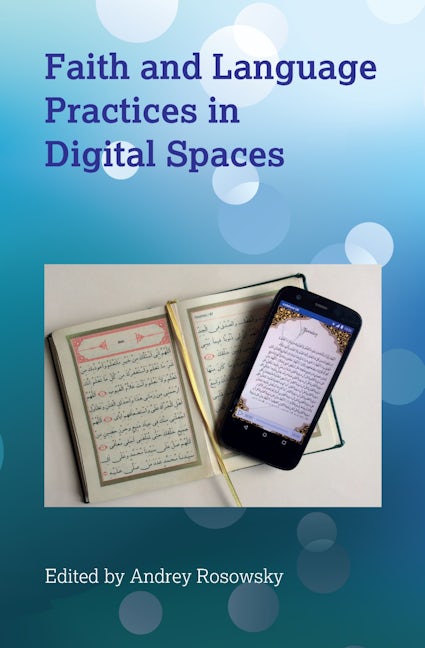
This volume shares the results of research conducted within and across the complex nexus of language, religion and new technologies. It identifies the dynamic and mobile ways religious practice and language interact online to modify, confirm, transform and consolidate linguistic resources and repertoires. It makes a significant contribution to work in the emerging sub-discipline of the sociology of language and religion and adds to the growing work on digital religion. It also showcases leading and ground-breaking researchers working on online and offline examples of the complex relationships evinced by the study of language and religion. The chapter authors explore a wide range of religions, technologies and languages in order to provide an innovative insight into the overlap between the study of language and religion and language and technology.


Research in the Sociology of Language and Religion (SLR) has been gaining momentum over the past decade or so. This volume advances the discussion by focusing on computer and telephonic technologies. Students of religion and sociolinguistics alike will benefit from these skillful probes of the digital world in which we now seem to live and move and have our being.
Andrey Rosowsky is a Senior Lecturer in Education at the University of Sheffield, UK. He is the author of Heavenly Readings: Liturgical Literacy in a Multilingual Context (Multilingual Matters, 2008).
1. Andrey Rosowsky: Faith and Language Practices In Digital Spaces: Introduction
Section 1 – Faith, Language and Social Media
2. Thor Sawin: Re-Parishing In Social Media: Identity-Based Virtual Faith Communities and Physical Parishes
3. Ana Souza: Facebook: A Medium for the Language Planning Of Migrant Churches
Section 2 – Faith, Language and Transnational Online Practices
4. L. Oladipo Salami: Ifa, the Word and the Virtual World: A Study of the Perceptions of and Attitudes Towards Ifa Religious Tradition on the Internet
5. Iyabode Deborah Akande: Globalizing Yoruba Taboos and their Socio-Cultural and Religious Value
6. Tatjana Soldat-Jaffe: Yiddish Wikipedia - History Revisited
Section 3 – Faith, Language and Online Televangelism
7. Tope Omoniyi: Digital Evangelism: Varieties of English in Unexpected Places
8. Shaimaa El Naggar: American Muslim Televangelists as Religious Celebrities: The Changing “Face” of Religious Discourse
Section 4 – Faith, Language and Online Ritual
9. Rajeshwari V. Pandharipande: Online Satsang and Online Puja: Faith and Language in the Era of Globalization
10. Andrey Rosowsky: Virtual Allegiance: Online “Baya’a” Practices Within a Worldwide Sufi Order
Section 5 - Afterword
11. Bernard Spolsky: Afterword