


Some error occured while loading the Quick View. Please close the Quick View and try reloading the page.
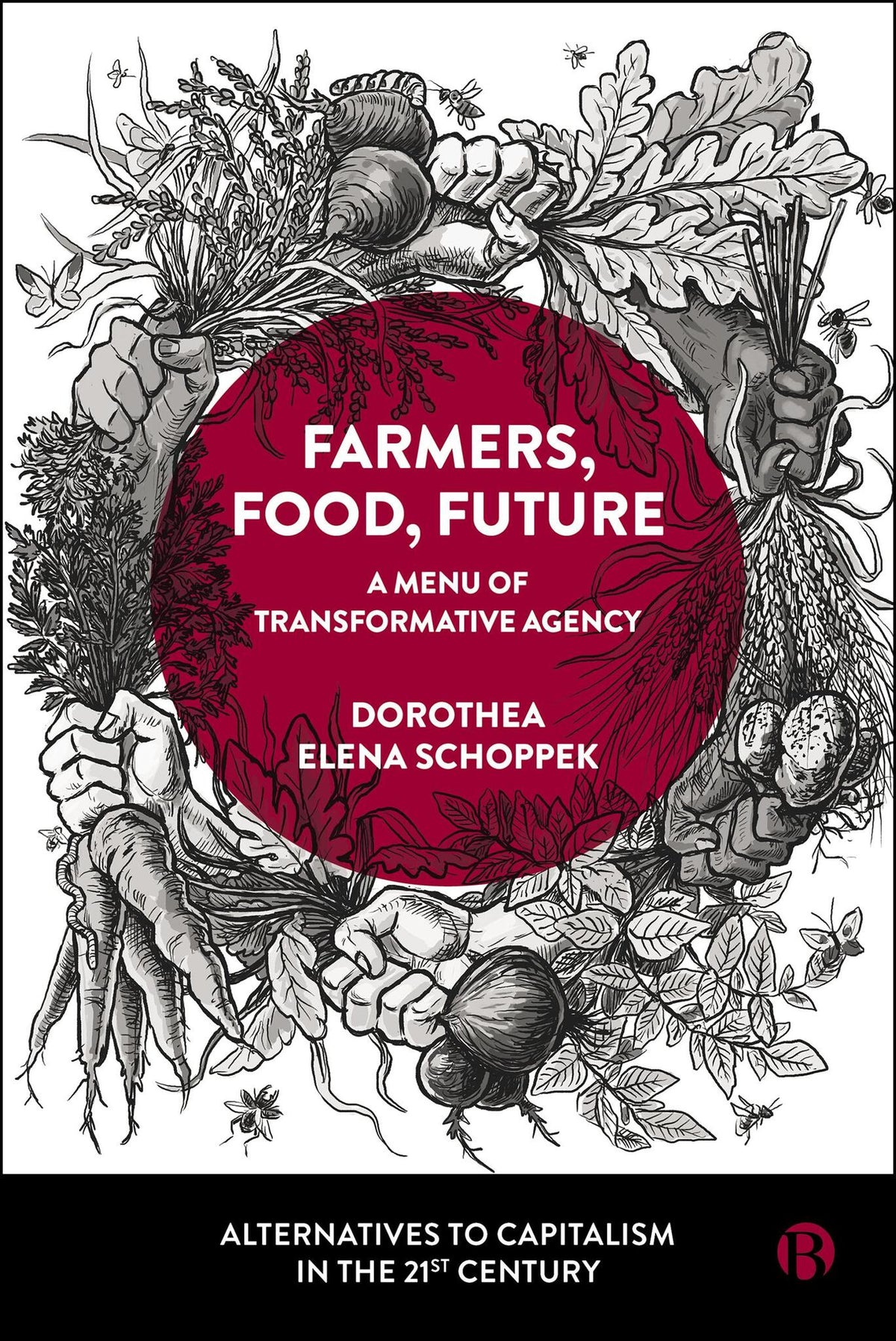
The global industrial food system contributes not only to environmental degradation, but also to multiple forms of nutritional harm and social inequalities. Despite numerous good reasons to fundamentally transform the sector, contemporary debates among practitioners, policy makers and scholars are marked by conflict over the direction of such transformation.
Focusing on Germany, Schoppek analyses the transformative potential of strategic agency in advancing social-ecological alternatives to industrialised capitalism within the agricultural sector. The book compares three initiatives that pursue distinct visions and strategies of reform, innovation, and resistance: a farmers’ interest group, a large agricultural cooperative, and an activist-led field occupation.
Drawing on these case studies, the analysis provides insight into the conditions under which transformative change emerges or fails to emerge, and the challenges of alliance building for a more just and resilient food system.
Chapters 6 and 7 available open access digitally under CC-BY-NC-ND licence.


'A compelling account of Germany's critical agrarian movement and a theoretically rich intervention that deepens our understanding of transformative strategies.' Louisa Prause, Kassel University
'In this historically grounded, theoretically innovative, and empirically detailed book, Dorothea Schoppek creatively explores case studies of three movements on the critical agrarian scene in Germany to discover the conflicts and complementarities between different visions and their corresponding discursive and strategic actions to realize their counter-hegemonic projects of social-ecological transformation.' Bob Jessop, Lancaster University
Dorothea Elena Schoppek is a postdoctoral researcher and lecturer at Technische Universität (TU) Darmstadt in Germany. Her research focuses on social and political conflicts of transformation, particularly emancipatory and transformative agency. Her doctoral thesis, on which this book is based, won the 2024 Prize for Outstanding Academic Achievement from the Friends of TU Darmstadt, the 2026 Karl-Werner Brand Dissertation Prize from the Sektion Umwelt- und Nachhaltigkeitssoziologie of the German Sociological Association, and was shortlisted for the 2024 German Study Prize in the social sciences category of the Körber Foundation.
Dorothea works on interdisciplinary projects concerning social- ecological issues from a critical realist perspective and is an associate editor of the journal Environmental Values.
Foreword: Contested Imperial Mode of Eating by Ulrich Brand
Preface: Food for Thought
Part I: Starters
1. Conceptual Toolbox: Transformation and Transformative Agency
2. Mapping the Agrarian Landscape: Structures, Crises, and Conflicts
Part II: Main Course
3. Reforming the Field: The Symbiotic Strategy
4. Innovating the Field: The Prefigurative Strategy
5. Occupying the Field: The Ruptural Strategy
6 .Transforming the Field of Struggle: Towards a Social-Ecological Hegemony
Part III: Dessert
7. Conclusion: Alliances and a Strategic Division of Labour