


Some error occured while loading the Quick View. Please close the Quick View and try reloading the page.
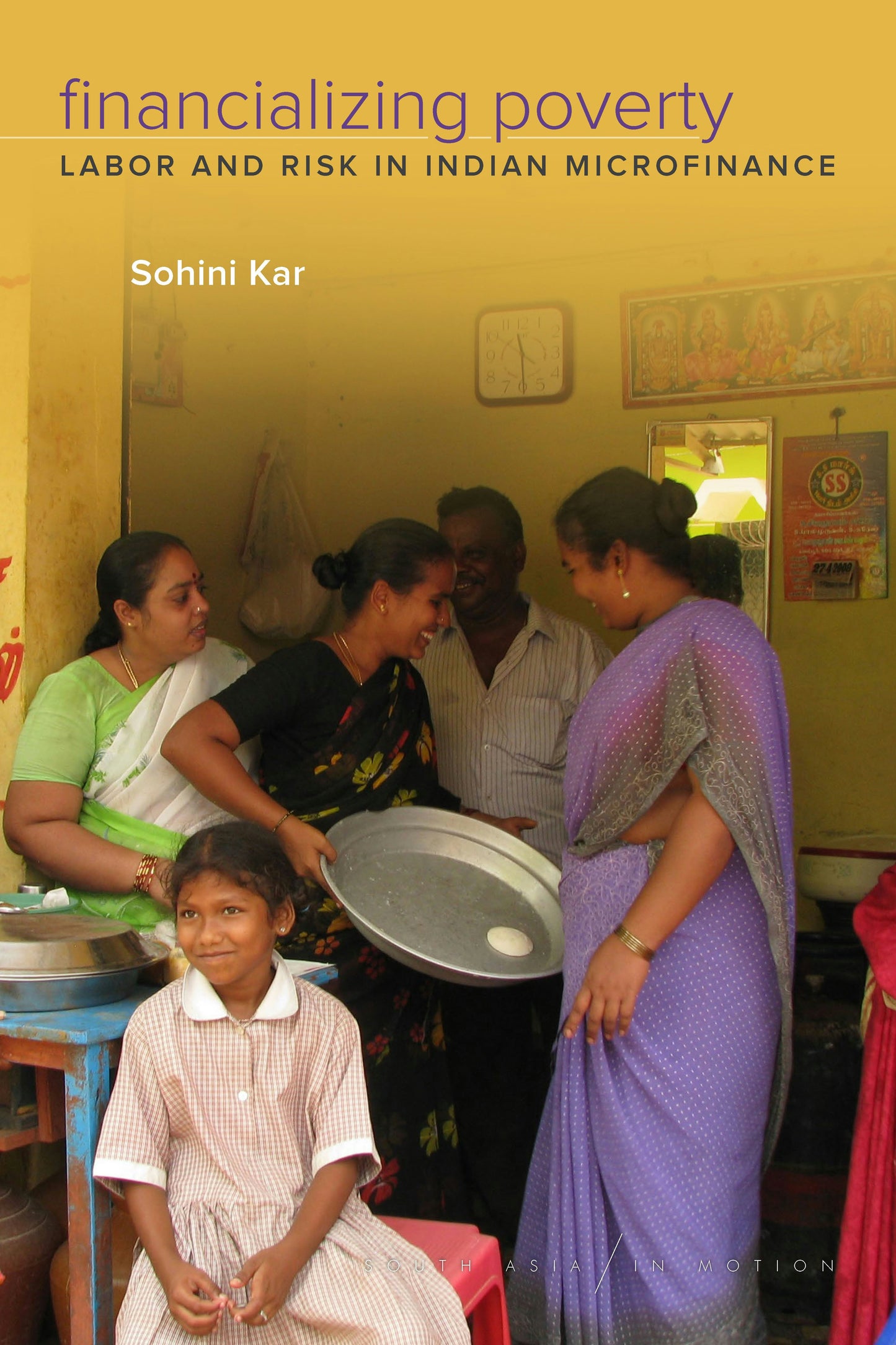
Microfinance is the business of giving small, collateral-free loans to poor borrowers that are paid back in frequent intervals with interest. While these for-profit microfinance institutions (MFIs) promise social and economic empowerment, they have mainly succeeded at enfolding the poor—especially women—into the vast circuits of global finance. Financializing Poverty ethnographically examines how the emergence of MFIs has allowed financial institutions in the city of Kolkata, India, to capitalize on the poverty of its residents.
This book reveals how MFIs have restructured debt relationships in new ways. On the one hand, they have opened access to new streams of credit. However, as the network of finance increasingly incorporates the poor, the "inclusive" dimensions of microfinance are continuously met with rigid forms of credit risk management that reproduce the very inequality the loans are meant to alleviate. Moreover, despite being collateral-free loans, the use of life insurance to manage the high mortality rates of poor borrowers has led to the collateralization of life itself. Thus the newfound ability of the poor to use MFI loans has entrapped them in a system dependent not only on their circulation of capital, but on the poverty that threatens their lives.


1. Entrepreneurship and Work at the "Bottom of the Pyramid"
2. From Social Banking to Financial Inclusion
3. The Reluctant Moneylender
4. The Domestication of Microfinance
5. Financial Risk and the Moral Economy of Credit
6. Insured Death, Precarious Life
Epilogue: