


Some error occured while loading the Quick View. Please close the Quick View and try reloading the page.
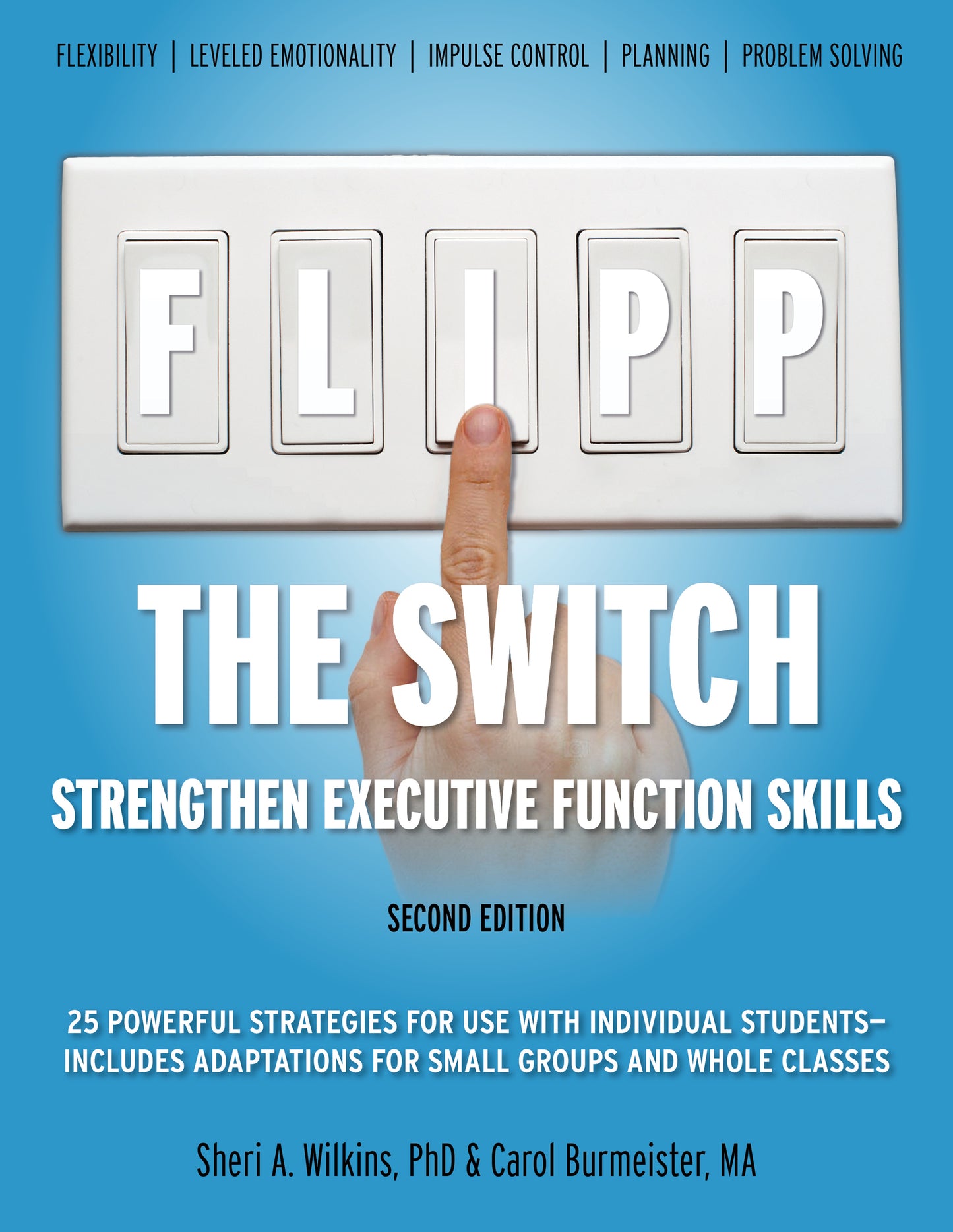
The second edition of FLIPP the Switch continues to provide educators and parents with powerful strategies that lead to greater success in school and the future. The authors have also included classroom and school-wide adaptations, including examples of how each of the 25 strategies can be adapted so that all students can benefit. Research has been meticulously updated.
FLIPP the Switch to Better Life Skills!
Are you an educator or a parent of students who:
- Lack time management skills?
- Have difficulty with social situations?
- Do not complete and/or turn in homework?
- Avoid new activities or challenging work?
- Have poor coping strategies?
- Exhibit challenging behaviors?
Do you find yourself losing sleep thinking about what might happen in the future to them, and wondering what you might do to help them succeed in school and in future life? If so, this book is for you.
Young people, those with documented disabilities and those without, can struggle with executive function (EF) skills such as mental flexibility, emotional regulation, impulse control, and problem-solving. Although educators may associate deficits in executive function skills with autistic students, the reality is that many young people struggle with EF. In fact, all young people are learning EF skills as these skills are not fully developed until people are well into their twenties.
Additionally, individuals with anxiety, depression, and schizophrenia may also show deficits in EF. The good news is that there are evidence-based strategies that can be used at home, in school, in the community, and in work situations that can significantly improve the executive functioning of individuals who struggle in this area. FLIPP the Switch will provide them with the tools they need to be successful throughout their school careers and into adult life.


This is a fantastic tool for parents, professionals, and anyone else who connects with persons who have challenges with executive function skills. After a thoughtful, easy-to-read introduction on the difficulties experienced by those who struggle with thinking flexibly and self-monitoring their behavior, a series of concrete solutions is presented along with templates so they can be quickly and easily implemented. The ideas in this book are appropriate for learners of any age group and any ability level, including students who do not have diagnosed disabilities but struggle with executive function skills. FLIPP the Switch is a book that every parent and professional should have at the ready, like you might keep a cookbook in a kitchen. It reads like a recipe for success! I personally cannot wait to use it. — Aileen Zeitz Collucci, MA, CCC, speech-language pathologist, autism and social-communication consultant, and author of Big Picture Thinking: Using Central Coherence to Support Social Skills
The layout and ease of use of this book is fantastic! The specific tools are organized in a manner that allows educators and/or parents to access specific strategies and put them into practice right away. The visual scales are incredibly useful for students to identify and monitor their behavior and identify how they are feeling. This is a great first step to help them identify what strategies they need to implement in the moment based on their self-reporting. — Phyllis Perlroth, lead education specialist, High Tech High North County, intern credential program
As a physician, I am always in search of information on how to reduce the effects of autism from a biochemical perspective. In addition, as the father of two sons on the spectrum, I rely on practical strategies that help them to navigate their daily lives. FLIPP the Switch is just that type of practical help. It is straightforward, easy to use and put into action, and it speaks to executive functioning, which is a huge challenge for my sons and most kids on the spectrum. I highly recommend this book to parents and professionals. — Dwayne Cox, MD, anesthesiologist, and father of two on the spectrum
Problems with attention, working memory, and EF of children and youth at home and at school are commonly cited; however, practical advice about how to ease these problems is rare. That’s where this book comes in, with honest and evidence-based recommendations for activities to strengthen working memory and executive function and improve focus and behavior. Readers will find clear descriptions of problems they will recognize – including self-regulation, impulse control, and difficulty linking behavior to its effects – and specific activities they can implement to help individuals with EF difficulties to cope and improve. In Flipp the Switch, long-term professional practice interfaces with a solid research base to create a set of strategies that enable parents and practitioners to feel renewed competence in supporting individuals with EF deficits. I predict this book will spend very little time sitting on a shelf. — Rollanda E. O’Connor, PhD, professor and Eady/Hendrick chair in Learning Disabilities, University of California, Riverside, and author of Teaching Word Recognition, The Handbook of Reading Interventions, and Ladders to Literacy
Introduction to the 2nd Edition
Power Up
Part 1: Introduction to Executive Function
What Is Executive Function (EF)?
What Do EF Challenges Look Like?
How Are EF Challenges Manifested?
How Do EF Deficits Impact Learning and Behavior?
Which Disorders Commonly Manifest Executive Function Deficits?
Part 2: Strategies to Strengthen Executive Function Skills
Flexibility
Visual Scales
Time Management Strategies
Wait Card
Countdown Timer
Power Card
Leveled Emotionality
Choice Cards
Break Cue Cards
Interoception/SOS (Step Out and Self-Regulate)
Contextual Chronicles
Calming Routines
Impulse Control
Positive Behavior Interventions and Supports (PBIS)
Reinforcement Systems
Reminder Cards
Cognitive Scripts
Mindful Breathing
Planning
Master Binder System
Project Mapping
Video Modeling
Contingency Mapping
Get It DONE
Problem-solving
SOARR (Specify, Observe, Analyze, Respond, Reflect)
Metacognitive Problem-solving (Problem-Solving Chart)
Self-Advocacy (4 W Map)
Social Autopsy
Triple R (Replay, Reflect, Resolve)
Moving Toward Stronger Executive Function Skills for All Students
References