


Some error occured while loading the Quick View. Please close the Quick View and try reloading the page.
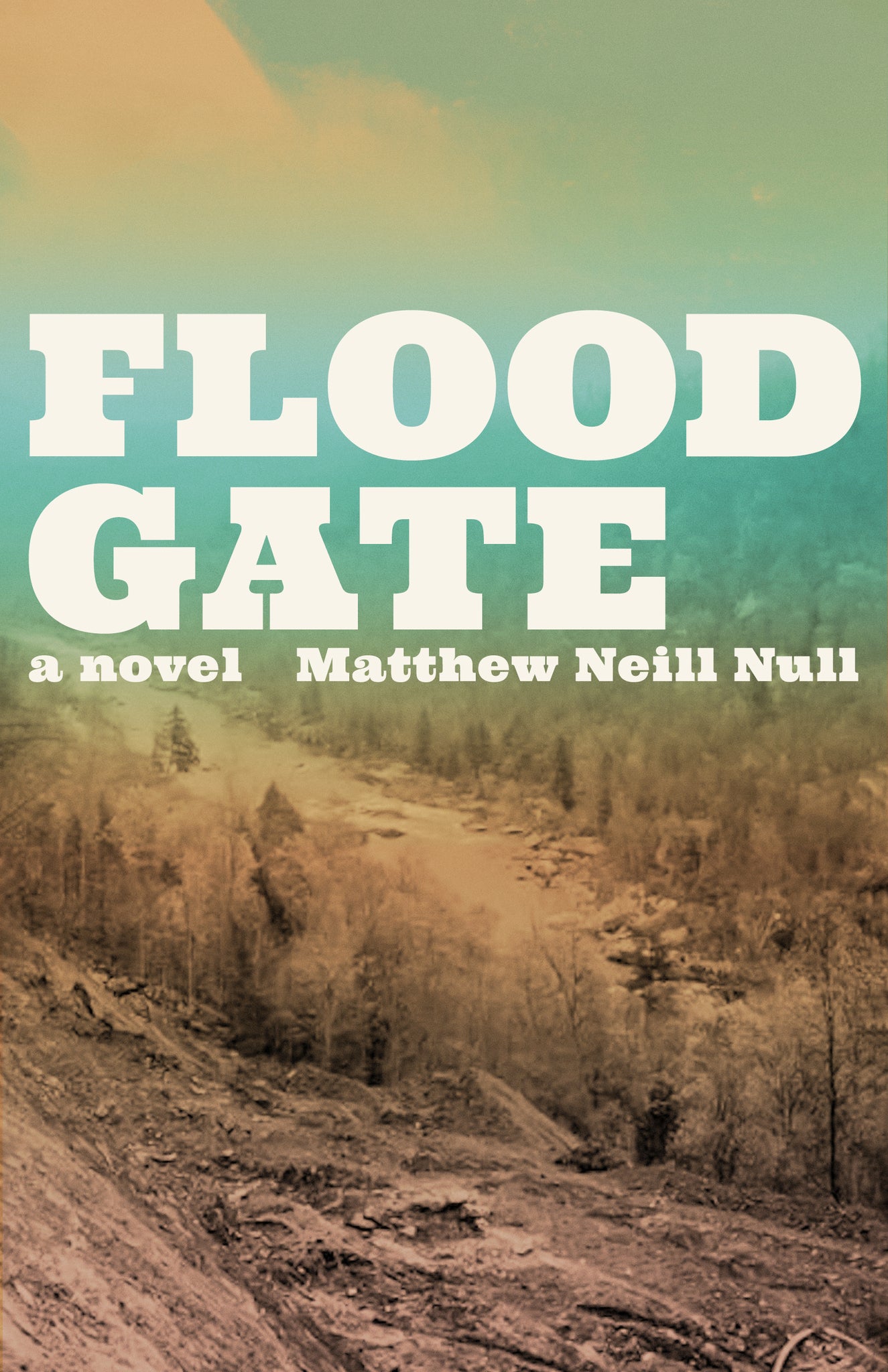
A former West Virginia coal miner encounters corruption and cultural upheaval working on a dam project that will submerge his town.
In the remote corner of West Virginia in the 1960s, former coal miner Lance Drennen takes a job as an overseer for the construction of an immense flood-control dam, which will drown 2,800 acres of land that have been in his and other local families for generations. When Lance witnesses a terrible accident and discovers irregularities on the site that are guaranteed to line the pockets of the company and the local government, he must decide whether or not he will become a whistle-blower.
With incredible eloquence and clarity, Matthew Neill Null sets in motion the characters who will tug at either end of Lance’s life: his wife, Johnny, the adoring daughter of a hell-raising radical coal miner, who has withdrawn into her own world, and Jim Koss, a veteran of the Spanish Civil War. Koss is the only person who can draw Johnny out, and he becomes Lance’s confidant. But Koss has a secret history: he had been fired from the Washington agency designing the dam because of his Communist sympathies.
In a most concrete and riveting narrative, Floodgate explores the social and economic upheavals of the era—labor unrest, political and corporate corruption, persecution of Communists, the devastation of the environment—and their powerful impact on powerless communities. It is a story of loyalty to family and community, moral responsibility for personal choices, corporate greed and environmental destruction, and the depths and limits of love.


“Matthew Neill Null’s Floodgate
“With Floodgate, Matthew Neill Null continues his artful, now monumental, consideration of the American empire run amok and the grievous consequences for its own land, its own ideals, its own citizens. From the particular vantage of West Virginia and its working people, Null choreographs the machinery and distills the human costs of ‘Power held at bay. Power at rest. Power unleashed’ into a stark lamentation of injustice and a moving, lyric hymn honoring those who struggle to endure it.”—Paul Harding, Pulitzer Prize–winning author of Tinkers
“A lushly rendered, politically radical novel that illuminates not only the American past, but also our present. Floodgate is a historical novel with harrowing contemporary stakes. I loved it.”—Rita Bullwinkel, author of Headshot
“The extraordinary work of Matthew Neill Null stands out not only for its intelligence but for the sincerity of its humanist concerns for people and the land itself. Floodgate refuses sentimentality in showing us the personal tolls in the collision of community and government, the dignity of labor and the backbreaking toll on our bodies. Here is a wise writer indeed, one who deeply understands how history can subsume and even drown out the individual story, the terrible costs we bear by not knowing how we have arrived to our present time.”—Manuel Muñoz, author of The Consequences
Praise for Matthew Neill Null's Honey from the Lion:“Lyrical, quietly powerful debut novel...Against a backdrop of labor unrest and the growing destruction of the old-growth forest, Null weaves a morality play of many threads: who will betray whom and at what price? The writing is exact and assured, the story complex and rewarding. Fans of John Sayles’s film Matewan will find this a kindred work and just as good.”—Kirkus, One of Nine Books You Shouldn’t Overlook
“Award-winning short story author Null writes with an eye for the geography, players, and violent push of the Gilded Age profit engines...A debut of note for fans of historical fiction, labor, or environmental issues, and Appalachian settings; read-alike authors include Denis Johnson and E.L. Doctorow.”—Library Journal, Summer Best Debuts
Praise for Null's story collection, Allegheny Front:
“Remarkable...A cleareyed look at an area that has been torn apart for more than a century...Together these stories show the human and natural calamity that follows when an entire region is seen merely as a resource...Null never yields to nihilism, but captures the rich and complex, if imperfect, lives of the dispossessed.”—The New York Times
“Sometimes lyrical, sometimes scarifying stories...Within that setting of crags, foreboding forests, and onrushing creeks, Null finds poetry and moments that can sometimes bear something like grace.”—STARRED review, Kirkus
“A fully immersive experience of rural Appalachia…Floodgate is utterly evocative, redolent of time and place (descriptions of the wild rhododendron thickets amaze and horrify in equal measure), and Null brilliantly captures the push-pull of pressure to maintain the status quo against the flame of structural transformation.”—STARRED review, Booklist