


Some error occured while loading the Quick View. Please close the Quick View and try reloading the page.
Winner of the 74th National Jewish Book Award: The Jane and Stuart Weitzman Family Award for Food Writing and Cookbooks
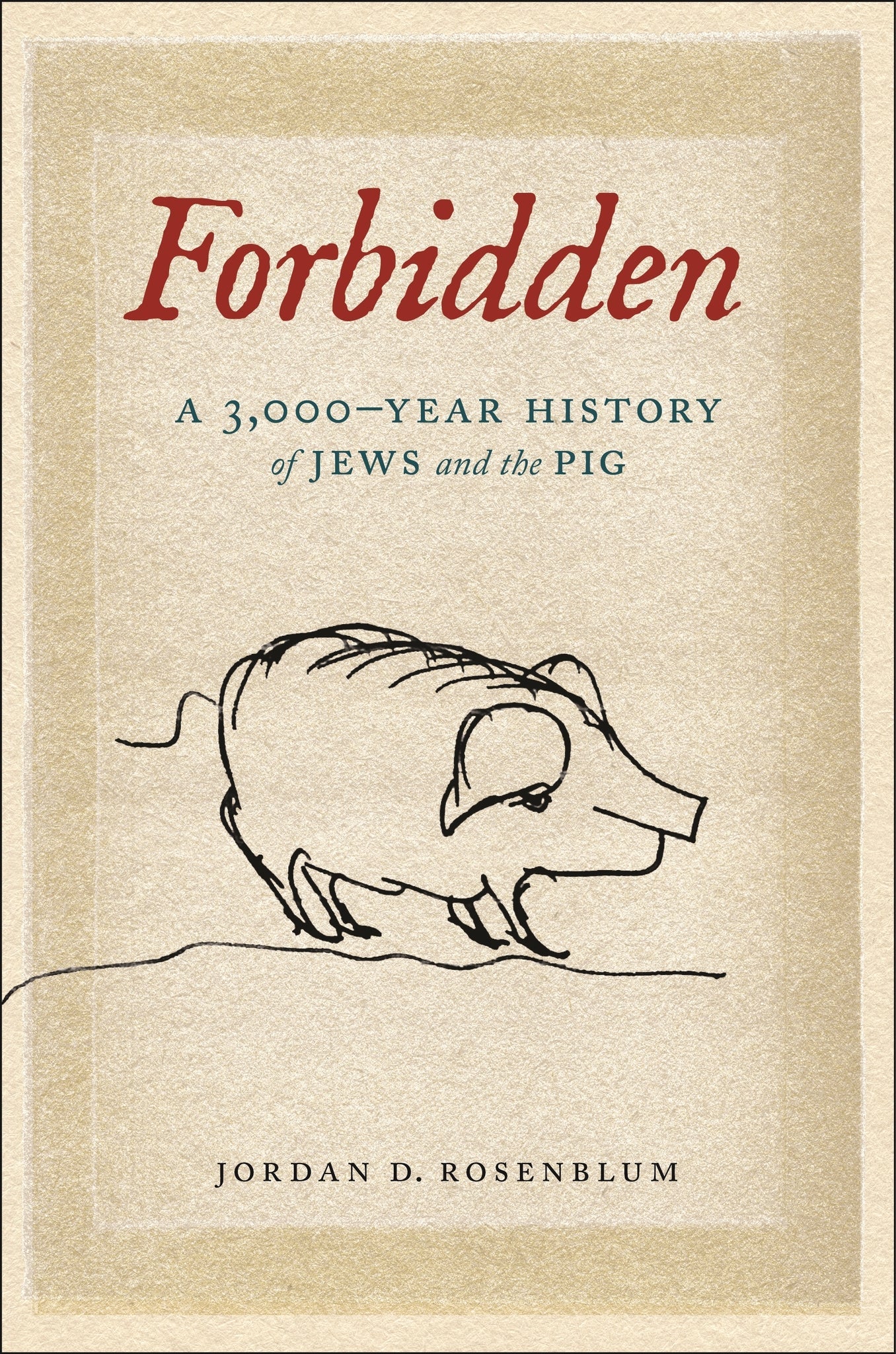
A surprising history of how the pig has influenced Jewish identity
Jews do not eat pig. This (not always true) observation has been made by both Jews and non-Jews for more than three thousand years and is rooted in biblical law. Though the Torah prohibits eating pig meat, it is not singled out more than other food prohibitions. Horses, rabbits, squirrels, and even vultures, while also not kosher, do not inspire the same level of revulsion for Jews as the pig. The pig has become an iconic symbol for people to signal their Jewishness, non-Jewishness, or rebellion from Judaism. There is nothing in the Bible that suggests Jews are meant to embrace this level of pig-phobia.
Starting with the Hebrew Bible, Jordan D. Rosenblum historicizes the emergence of the pig as a key symbol of Jewish identity, from the Roman persecution of ancient rabbis, to the Spanish Inquisition, when so-called Marranos (“Pigs”) converted to Catholicism, to Shakespeare’s writings, to modern memoirs of those leaving Orthodox Judaism. The pig appears in debates about Jewish emancipation in eighteenth-century England and in vaccine conspiracies; in World War II rallying cries, when many American Jewish soldiers were “eating ham for Uncle Sam;” in conversations about pig sandwiches reportedly consumed by Karl Marx; and in recent deliberations about the kosher status of Impossible Pork.
All told, there is a rich and varied story about the associations of Jews and pigs over time, both emerging from within Judaism and imposed on Jews by others. Expansive yet accessible, Forbidden offers a captivating look into Jewish history and identity through the lens of the pig.


An enlightening historical exposé of the remarkable transformation of the pig from an obscure animal in Jewish dietary laws to the center of what it means to be Jewish.
A rich and highly readable Jewish cultural history of the pig. Based on an impressive array of sources, Rosenblum shows that the pig has been a defining feature of Jewish identity from ancient Israel through today.
— Beth Berkowitz, author of Animals and Animality in the Babylonian Talmud
Easy to read, spiced with humor and new information. Who knew there was so much history between Jews and pigs?
Using a wealth of sources, Rosenblum invites readers to delve deep into the Jewish cultural significance of the swine over time.
A historical tour d’horizon of the obsessive focus on Jews and the pig from antiquity to the present... Given [Rosenblum's] past scholarship on Jewish foodways in antiquity, it comes as no surprise that the analyses of classical texts sparkle... Those who eat 'pork for dinner,' those repelled by the very thought, and those somewhere in between will all find food for thought in this illuminating volume.
— Jonathan Sarna
A lively new history.
Captivating and contagious … The depth into which Rosenblum reaches to uncover minute and key details and hidden correlations equally deserves praise.
Wonderfully written … Rosenblum’s book, a model of bringing religion, history, and contemporary experience together, shows how the decisions we make today often live in the shadow of those we have faced for centuries.
The publication of Forbidden is an event. It will enliven our classrooms, and it should enliven our own writing so that we can produce knowledge-claims in others that we might not have ever expected. At this moment in time, the scholarly exemplars handed down to us—in which knowledge hangs on the page like maggot-filled pork, are rotten things to pass on to our students. Forbidden is a much, much better exemplar.
This witty and insightful book’s careful discussion unpacks the complex and changing ways that the pig signified Jewish-related identity. The power of Rosenblum’s discussion lies in its trenchant attention to the single theme of pig-Jewish relationships through different historical settings, demonstrating the flexible yet consistently harmful ways in which the pig–Jewish relationship could develop.
Rosenblum is a poet in prose, full of puns and other wordplay, with witty as well as balanced turns of phrase. They make his book a delight to read, both rich in information and full of tasty linguistic treats… Intellectually challenging, provocative, and fun.
Jordan Rosenblum is Professor of Religious Studies, University of Wisconsin-Madison, where he is also the Belzer Professor of Classical Judaism at the Mosse/Weinstein Center for Jewish Studies. He is the author of many books, including Rabbinic Drinking: What Beverages Teach Us About Rabbinic Literature,
The Jewish Dietary Laws in the Ancient World and Food and Identity in Early Rabbinic Judaism and coeditor of Feasting and Fasting: The History and Ethics of Jewish Food.