Skip to product information
1 of 1

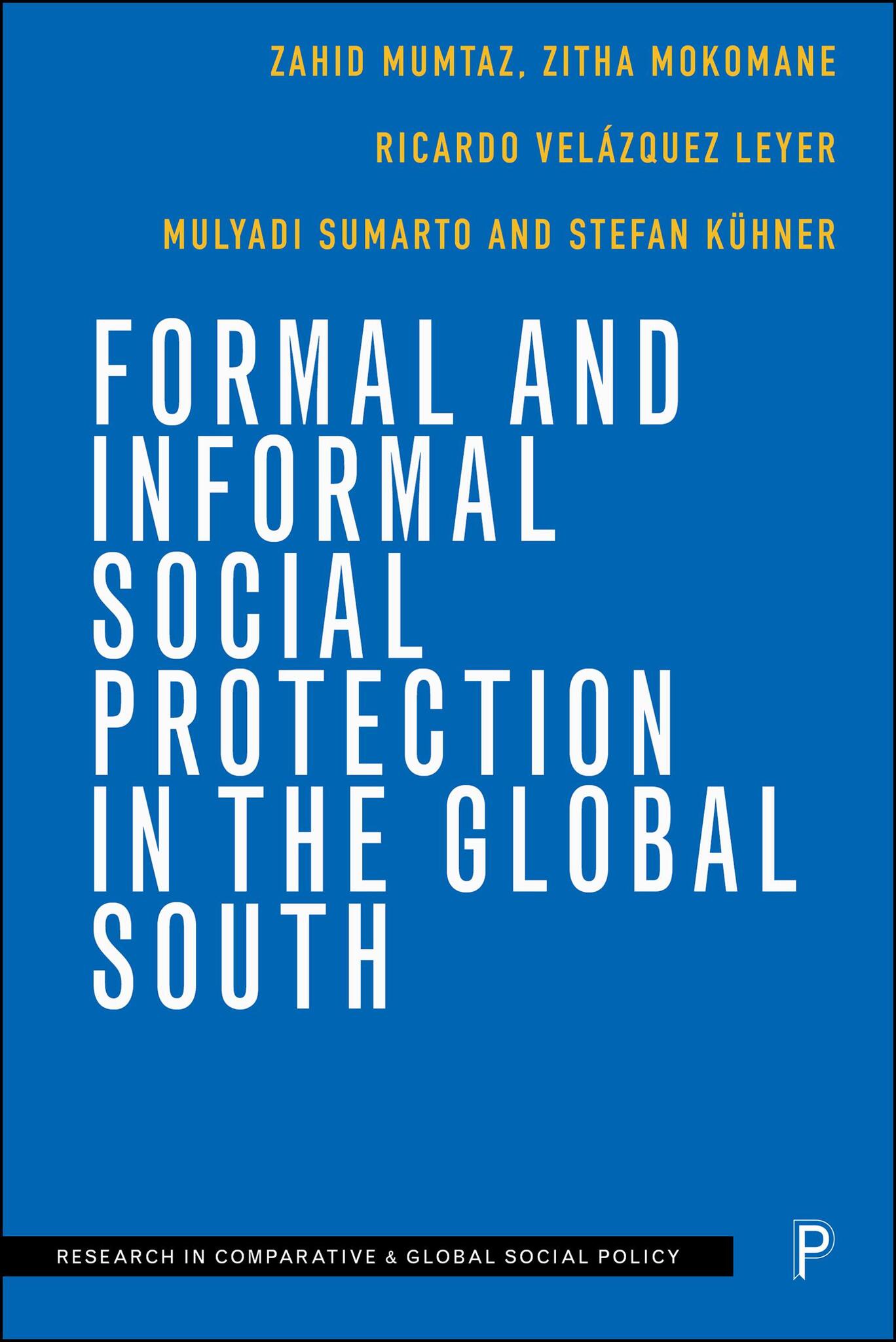
Formal and Informal Social Protection in the Global South

Regular price $127.95
Regular price $0.00 Sale price $127.95
Sold out
The first comprehensive empirical account of the dynamics between formal and informal social protection across major regions of the Global South. The book offers fresh theoretical and practical ins...
Read More
  • 01 July 2027
View Product Details
The first comprehensive empirical account of the dynamics between formal and informal social protection across major regions of the Global South. The book offers fresh theoretical and practical insights into how these systems shape population wellbeing and where they fall short.
files/i.png Icon
Price: $127.95
Pages: 240
Publisher: Bristol University Press
Imprint: Policy Press
Series: Research in Comparative and Global Social Policy
Publication Date: 01 July 2027
ISBN: 9781447380474
Format: Hardcover
BISACs: POLITICAL SCIENCE / Public Policy / Social Policy, Social welfare, social policy and social services, POLITICAL SCIENCE / Public Policy / Social Services & Welfare, SOCIAL SCIENCE / Developing & Emerging Countries, Welfare economics
REVIEWS Icon

Zahid Mumtaz is Lecturer in the School for Policy Studies at the University of Bristol.

Zitha Mokomane is Professor in the Department of Sociology at the University of Pretoria.

Mulyadi Sumarto is Faculty Member in the Faculty of Social and Political Sciences and Senior Researcher in the Center for Population and Policy Studies at Gadjah Mada University.

Ricardo Velázquez Leyer is Professor at the Ibero-American University of Mexico City.

Stefan Kühner is Associate Professor in the Department of Sociology and Social Policy at Lingnan University.

1. Introduction

2. Conceptual framework and methodology

3. Formal and informal social protection in Pakistan

4. Formal and informal social protection in Indonesia

5. Formal and informal social protection in Mexico

6. Formal and informal social protection in South Africa

7. A Comparative Analysis

8. Conclusions, implications and future research agenda