


Some error occured while loading the Quick View. Please close the Quick View and try reloading the page.
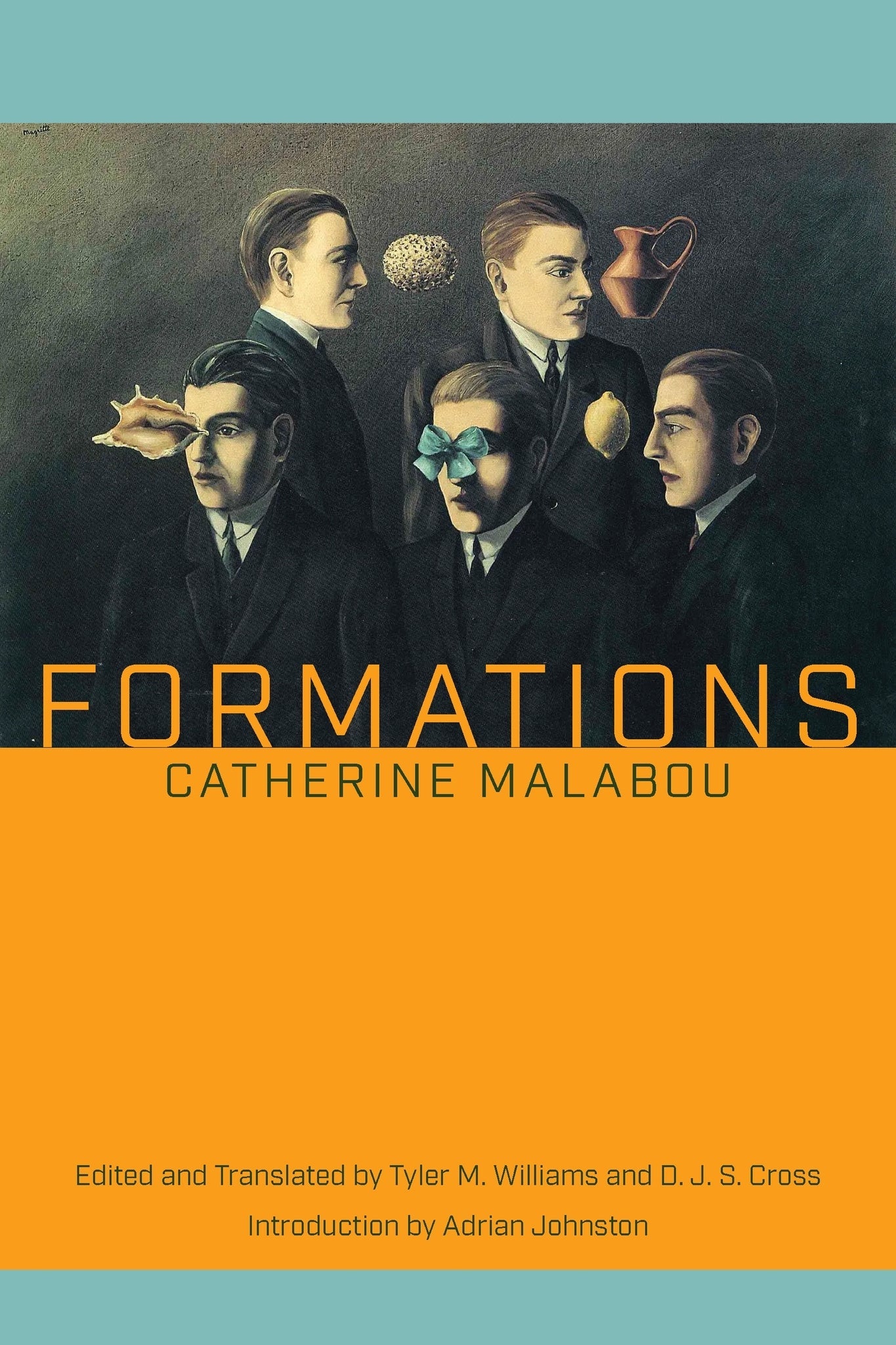
Catherine Malabou’s elaboration of the concept of plasticity has made her one of the most innovative philosophers working today. Formations collects eighteen of Malabou’s early writings, spanning 1986 to 2003, within which her initial articulations of plasticity take shape.
Though Malabou might be most famous for bringing neurobiological discourse into conversation with continental philosophy, she has always maintained, as the essays in Formation make clear, that “plasticity” circulates dynamically within the history of philosophy. Across readings of Hegel, Marx, Derrida, Rousseau, Heidegger, Ricoeur, Plato, Aristotle, and many others, these essays highlight the deep entrenchment of plasticity within the history of philosophy.
Formations puts on full display Malabou’s associations with deconstruction, her negotiations with structuralism, her interdisciplinary investments in philosophical calibrations of literature, and the unique form of dialectics that will shape her later thought. A critical introduction by Adrian Johnston situates these essays within the contexts of French Hegelianism and Marxism, showing both the continuity of these early essays with Malabou’s later work as well as their singular contributions to the development of these still-relevant critical fields. An afterword by Malabou herself offers a biographical and bibliographic retrospective to these essays.
Never just an archive of precursory traces of a later project, Formations exhibits the plastic metamorphosis of Malabou’s own thought by revealing any oeuvre, including any translation or editorial arrangement of that oeuvre, to be a product constituted by its ongoing formations. In this sense, the title reflects one of the most enduring features of Malabou’s thought: “formation” stands doubly for the rigidity of an identity and the processes by which that identity changes and takes shape.


One of France’s foremost living philosophers, Malabou stands as a transitional figure in the history of philosophy in the late twentieth and early twenty-first centuries, a bridge from the exceptional group of post–May ’68 thinkers. Formations provides a window into the importance of literature to her praxis of philosophy.---Emily Apter, New York University
Catherine Malabou is Professor of Comparative Literature at the University of California, Irvine, and Visiting Professor of Modern European Philosophy at Kingston University. Her many books include Stop Thief! Anarchism and Philosophy (2023), Pleasure Erased: The Clitoris Unthought (2022), The Ontology of the Accident: An Essay on Destructive Plasticity (2012), The New Wounded: From Neurosis to Brain Damage (2012), and What Should We Do with Our Brain? (2008).
Tyler M. Williams (Edited & Translated By)
Tyler M. Williams is Associate Professor of English, Humanities, and Philosophy at Midwestern State University. He is editor of Catherine Malabou’s Plasticity: The Promise of Explosion (2022).
D. J. S. Cross (Edited & Translated By)
D. J. S. Cross is Assistant Professor of Translation at the University of North Carolina at Charlotte. He is the author of Deleuze and the Problem of Affect (2021).
Adrian Johnston (Introducer)
Adrian Johnston is Distinguished Professor of Philosophy at the University of New Mexico. His most recent book is Infinite Greed: The Inhuman Selfishness of Capital (2024).
Preface: In the Usual Order of Things
Tyler M. Williams and D. J. S. Cross | vii
Introduction: The Taking Shape of Malabou
Adrian Johnston | xvii
1 The Duplicity of Memory: Hegel and Proust | 1
2 Images of the Elsewhere in Rousseau’s Political Philosophy | 8
3 Literary Time and the Thought of Time: Proust, Reader of Ricoeur | 14
4 To Paint the Sea with Another Sense of Direction: Proust and Elstir | 28
5 Photocopies of Consciousness: Hegel, Copyright, and the Right of the Author | 37
6 Speculative Plastique | 47
7 Economy of Violence, Violence of Economy: Derrida and Marx | 71
8 Hegel’s Science of Logic: Translator’s Foreword to the Preface to the Second Edition (1831) | 90
9 The Times of Experience: Aristotle’s Style | 99
10 What Good Is It to Be Sparing of Life When There Is Almost None Left? | 106
11 From Pascal to Heidegger: Vincent Carraud’s Pascal et la philosophie | 113
12 Writing the End of Love: Proust, or Genre Put Away | 121
13 Derrida’s Way: Noblesse oblige | 136
14 Negatives of Dialectic: Between Hegel and Heidegger’s Hegel (Hyppolite, Koyré, Kojève) | 142
15 The Metamorphosis of Constancy: A Reading of Nietzsche and the Shadow of God | 158
16 Gré | 177
17 The Ungraspable in Question, or Take to Dying | 193
18 Dialectical Negativity and Transcendental Pain:
Heidegger’s Reading of Hegel in Volume 68 of the Gesamtausgabe | 202
Afterword | 215
Catherine Malabou
Notes | 219
Works Cited | 229
Index | 239