


Some error occured while loading the Quick View. Please close the Quick View and try reloading the page.
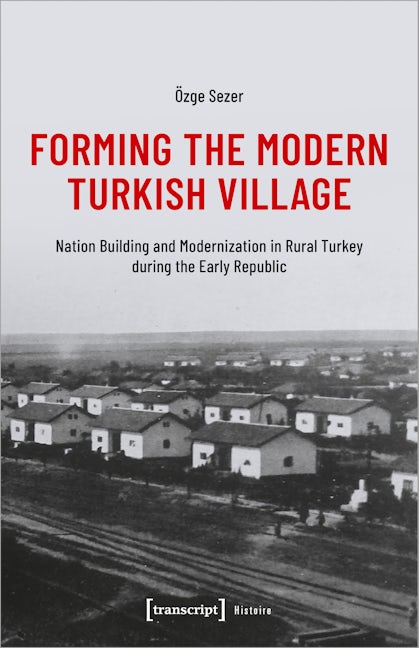
During the early republican period, architectural interventions in rural Turkey took the form of social engineering as part of the state's modernization and nationalization policies. Özge Sezer demonstrates how the state's particular programs had a powerful effect on rural life in the countryside. She examines the regime's goals and strategies for controlling the rural people through development projects and demographic shaping to create a strong Turkish identity and a loyal citizenry. The book outlines the implementation of new rural settlements, particularly following the 1934 Settlement Law, with a geographic focus on two cities – Izmir and Elazig – with varied socio-economic and ethnic standing in the state program.

Price: $55.00
Pages: 212
Publisher: transcript publishing
Imprint: transcript publishing
Series: Histoire
Publication Date:
21 February 2023
Trim Size: 8.86 X 5.83 in
ISBN: 9783837661552
Format: Paperback
BISACs:
HISTORY / Europe / General, HISTORY / Social History, HISTORY / General

»Sezers work is an important new element to understand the practices behind the Kemalist Turkification project. It adds to the understanding of how an intellectual village discourse transformed the countryside and how the organization of village and housing spaces interacted not only with sociological ideas but also with racist ideologies.«
Özge Sezer, born in 1984, works as a post-doctoral researcher at the DFG Research Training Group 1913 at Brandenburgische Technische Universität Cottbus-Senftenberg. She received her PhD from Technische Universität Berlin with a dissertation on modernist interventions in planning the rural settlements in early republican Turkey. She worked as an architect in preservation projects of historic buildings and archaeological sites, as well as an adjunct lecturer in history and theory of art and architecture. Her research focuses on architectures of rural communities, migration, and state and people relations in different architectural processes.
Frontmatter 1
Contents 5
Abbreviations 7
Acknowledgements 9
Introduction 11
Chapter 1 - Concepts and Analogies 19
Chapter 2 - Rural as the Realm for Turkish Modernism and Nation-Building 37
Chapter 3 - Spatial Agents of Rural Development and Conceptualization of the Village 63
Chapter 4 - Administering the Rural: Regulations for the Making of the Modern Turkish Village 105
Chapter 5 - Turkification and Planning: New Settlements in Izmir and Elaz 143
Conclusion 177
Literature 181
Appendix 205