


Some error occured while loading the Quick View. Please close the Quick View and try reloading the page.
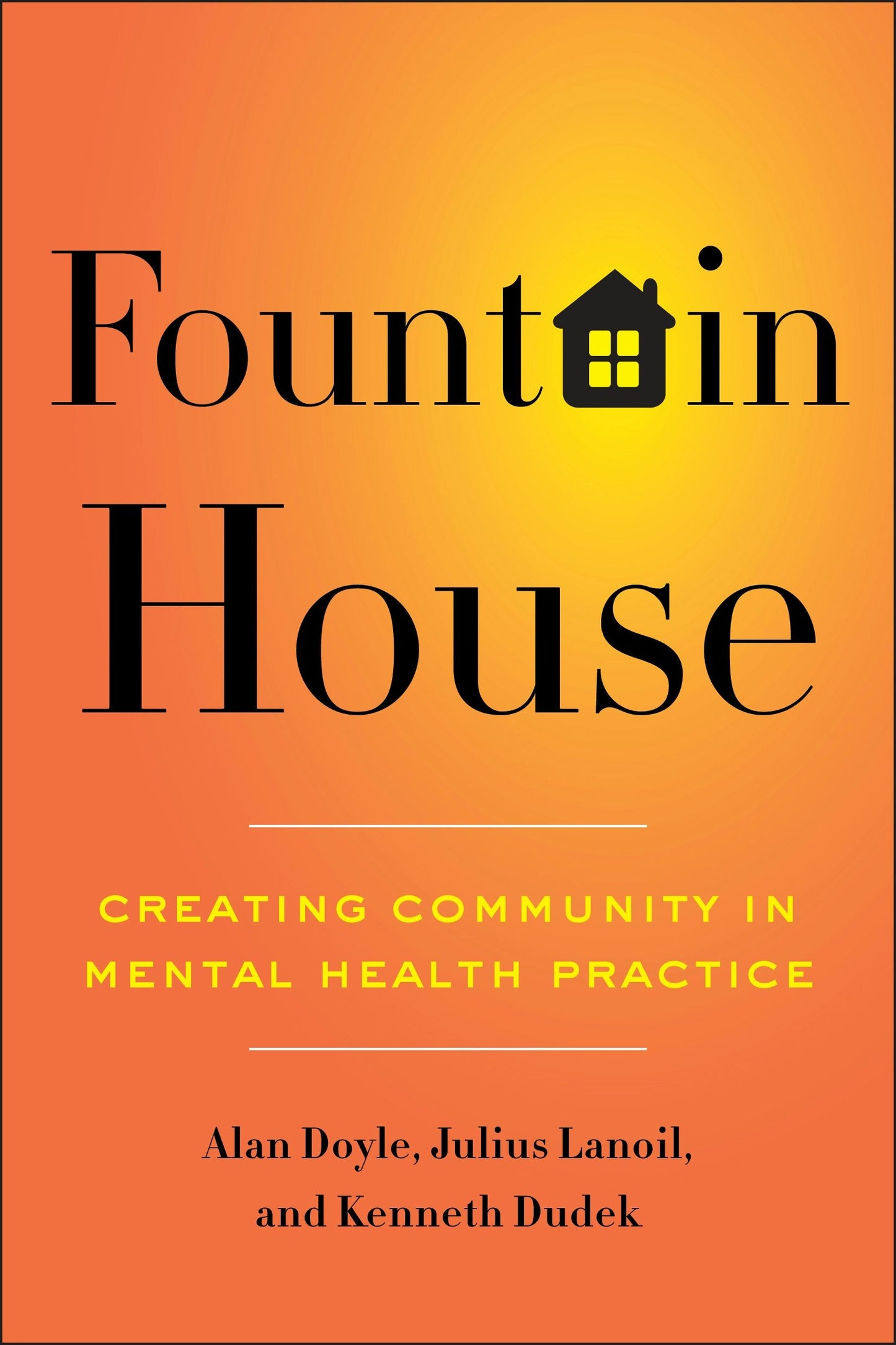
Often people with mental illness feel alone in society, with no place to go and little hope. Their isolation can be further perpetuated through typical approaches to treatment, such as case management and psychotherapy.
Since 1948, the Fountain House "working community" has worked to address the isolation and social stigmatization faced by people with mental illness. This volume describes in detail its evidence-based, cost-effective, and replicable model, which produces substantive outcomes in employment, schooling, housing, and general wellness. Through an emphasis on personal choice, professional and patient collaboration, and, most important, "the need to be needed," Fountain House demonstrates that people with serious mental illness can not only live but also contribute and thrive in society.
The authors also explore the evolution of Fountain House practice, which is grounded in social work and psychiatry and informs current strength-based and recovery methodologies. Its inherent humanity, social inclusivity, message of personal empowerment, and innovation—a unique approach on behalf of people suffering from mental illness—have led to the paradigm's worldwide adoption.


Alan Doyle is the director of the Fountain House Institute. He is a former assistant director for occupational education for a regional school system on Long Island, has served as the federal liaison for the Massachusetts State Education Commissioner, and attended Fordham University and the Harvard Graduate School of Education.
Julius Lanoil is a psychotherapist and wellness consultant at Fountain House and a certified medical rehabilitation director. He has served as assistant director of Fountain House and has been assistant professor in the Department of Psychiatry and director of psychiatric rehabilitation at the University of Medicine and Dentistry of New Jersey. While there, he created The Club, a replication of the Fountain House model, and SERV, a statewide New Jersey housing program. He is also a cofounder of the Psychiatric Rehabilitation Association and the first coeditor of its journal.
Kenneth J. Dudek is the current president and executive director of Fountain House, New York. His career spans three decades in community mental health, from social worker to director of community support for the State of Massachusetts. His latest efforts at treatment? innovation include programs in supported education, wellness, and community psychiatry. He received his MSW from Boston University.
Foreword by Ezra S. Susser
Introduction
Part I. Working Community
1. Insights from Activity Group Therapy
2. Reinventing Fountain House
3. Core Principles of a Working Community
Part II. Social Practice
4. Defining Social Practice
5. Transformational Design
6. Motivational Coaching
7. Issues in Relationships
Afterword: A Place for Recovery in the Community
Acknowledgments
Chronology
Glossary
References
Index