


Some error occured while loading the Quick View. Please close the Quick View and try reloading the page.
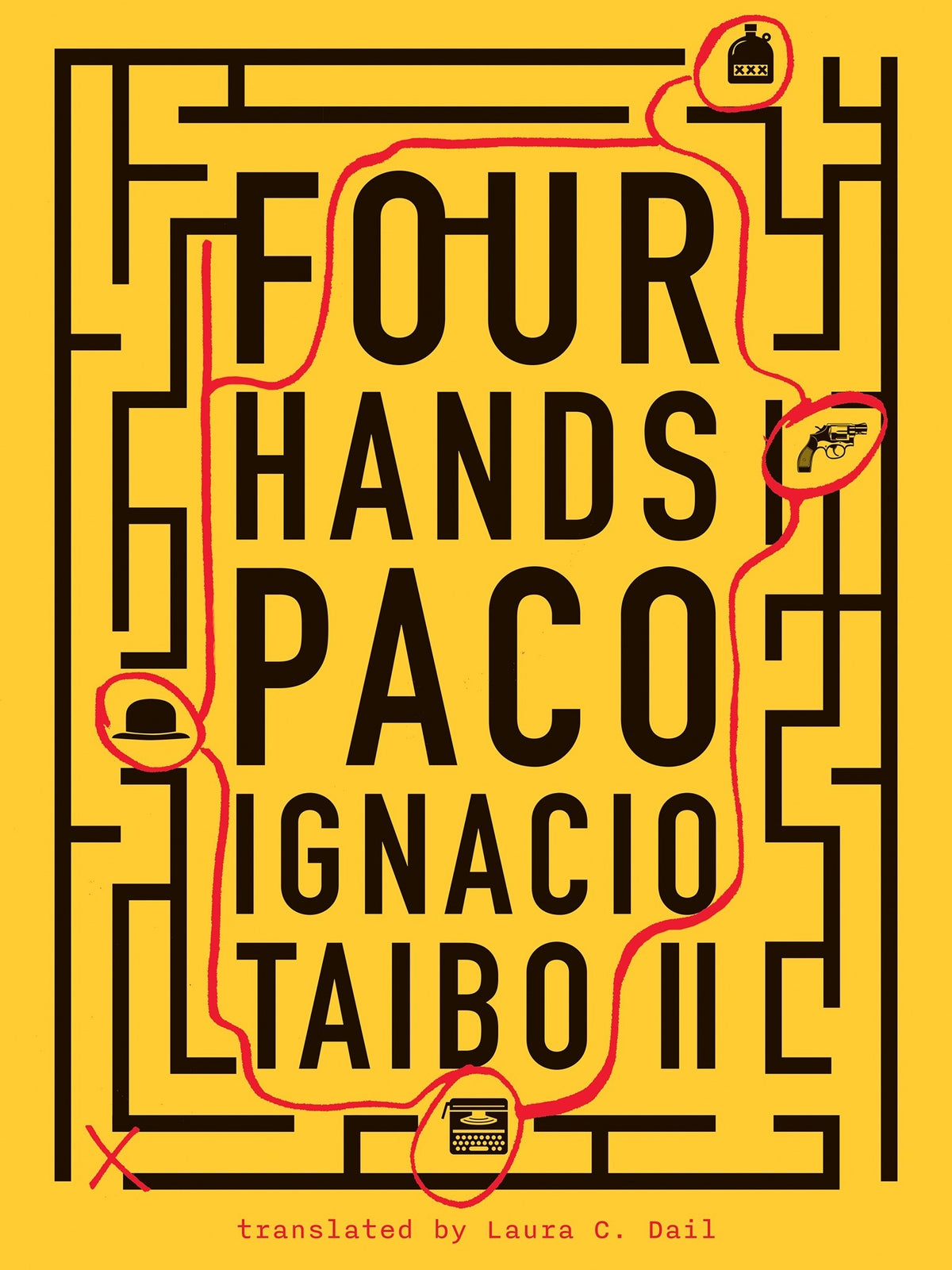
The narrators of Paco Ignacio Taibo II's wonderfully inventive novel, Four Hands, are Greg Simon and Julio Fernandez: investigative journalists uncovering an elaborate plot by an obscure American government agency to vilify the Sandinista leadership in Nicaragua. The story they discover and type out together weaves truth with lies, wild humor with tragedy, and reality with fantasy–a stranger-than-fiction tale of imperial excess where delusion makes perfect sense.
Joining such historical figures as Harry Houdini, Leon Trotsky, Pancho Villa, and Stan Laurel is a sprawling cast of characters that includes Alex, a spymaster with a knack for the absurd; Rolando, a depraved Mexican drug trafficker; and Stoyan Vasilev, a geriatric Bulgarian counterspy.
A “documentary novel” and a passionate satire about the means and ends of politics, Paco Taibo's Four Hands has been compared to the fiction of Marquéz, Dos Passos, Doctorow, and Heller.


“I am his number one fan…. I can always lose myself in one of his novels because of the intelligence and humor.”
—Laura Esquivel, author of Like Water for Chocolate
“Taibo writes with genuine savvy, a crackling wit and a certain zaniness that is his very own…. A storyteller of real genius.”
—Los Angeles Times
“Like Bach (or Houdini), the pleasure Taibo offers us consists in watching him set himself a problem of astonishing complexity and then solve it.”
—New York Newsday
“It’s impossible to review [Taibo II’s] literary work without painting an ideological portrait. He’s probably the writer on the left with the proudest lineage of all those I’ve read.”
—Christopher Domínguez Michael, Letras Libres
“Taibo's prose is rich in metaphor, and his confident, insightful storytelling makes the individual pieces of his novel intriguing long before the connections among them are apparent. Dail's translation does fine justice to the author's colorful, virtuosic narrative.”
—Publishers Weekly