


Some error occured while loading the Quick View. Please close the Quick View and try reloading the page.
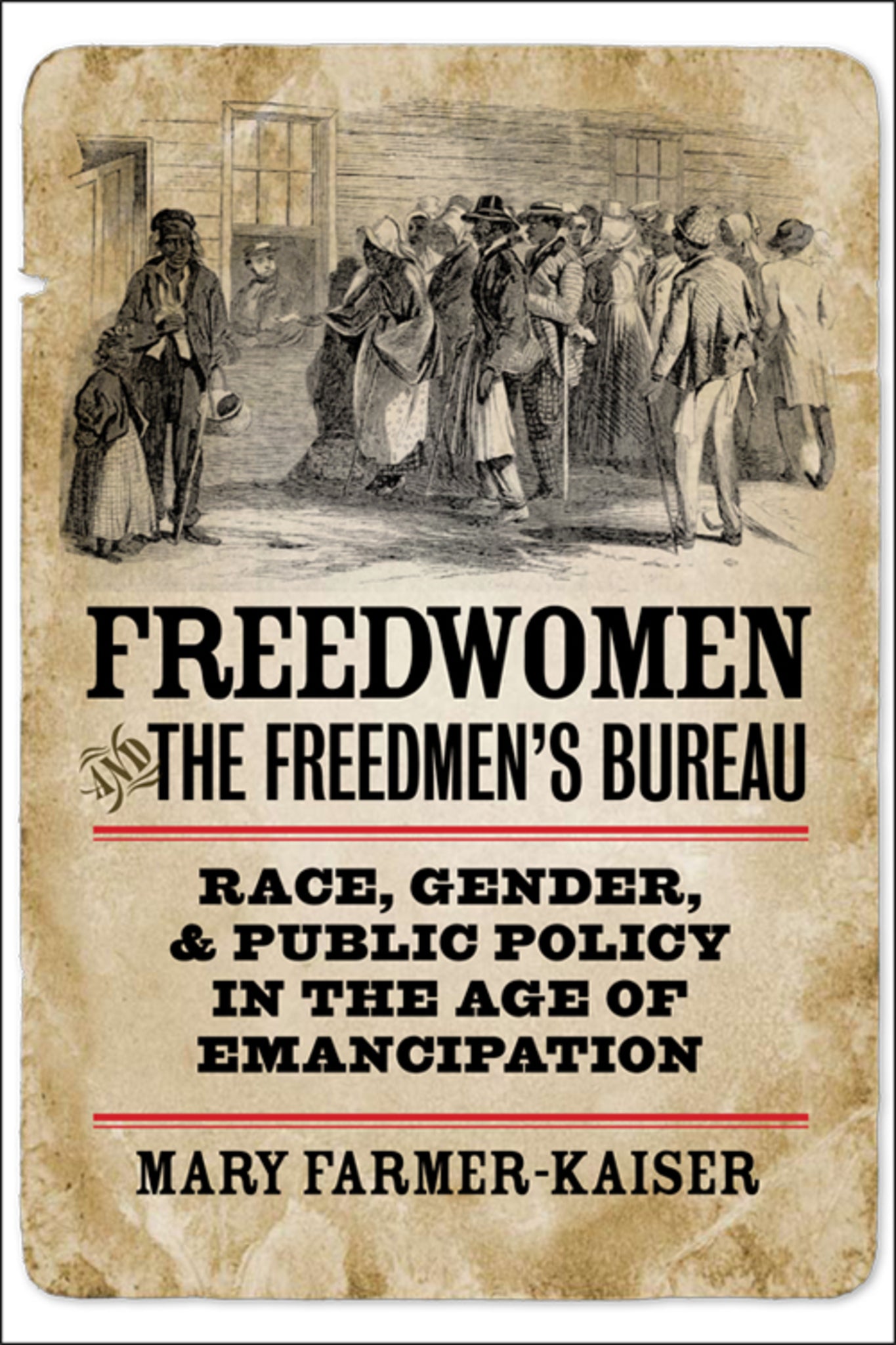
Established by congress in early 1865, the Bureau of Refugees, Freedmen, and Abandoned Lands—more commonly known as “the Freedmen’s Bureau”—assumed the Herculean task of overseeing the transition from slavery to freedom in the post–Civil War South. Although it was called the Freedmen’s Bureau, the agency profoundly affected African-American women. Until now remarkably little has been written about the relationship between black women and this federal government agency.
As Mary Farmer-Kaiser clearly demonstrates in this revealing work, by failing to recognize freedwomen as active agents of change and overlooking the gendered assumptions at work in Bureau efforts, scholars have ultimately failed to understand fully the Bureau’s relationships with freedwomen, freedmen, and black communities in this pivotal era of American history.


This work is essential for understanding not only the Fredmen's Bureau's policies but also the plight of black women in the first years of emancipation.
Farmer-Kaiser's contribution to the literature is significant in that she is the first scholar to examine in a book-length study how the polities of the Freedmen's Bureau were shaped by gender ideologies.
Freedwomen and the Freedmen's bureau is well researched and written... Mary Farmer-Kaiser has produced an important work that furthers our understanding of the complexities of the Reconstruction era.
Overall, this is a first-rate work that is long overdue in Reconstruction historiography.---—Rebecca A. Kosary, University of North Carolina at Charlotte
"Mary Farmer-Kaiser’s much-anticipated and excellent new book, Freedwomen
and the Freedmen’s Bureau, offers the first systematic examination of what
she calls 'the gendered nature of bureau work.' In masterful fashion, she
explores the work of the Freedmen’s Bureau as an institution while
simultaneously placing the former slaves, women in particular, at the
center of her analysis. In doing so, she convincingly demonstrates, in
refreshingly clear and jargon-free prose, that issues of gender are
essential to any understanding of the bureau and of emancipation.
Farmer-Kaiser made extensive use of field office records and the commissioner and assistant commissioner records for Virginia, Georgia, Louisiana, and Texas, chosen for quality and the geographic, demographic, and economic diversity they presented.