


Some error occured while loading the Quick View. Please close the Quick View and try reloading the page.
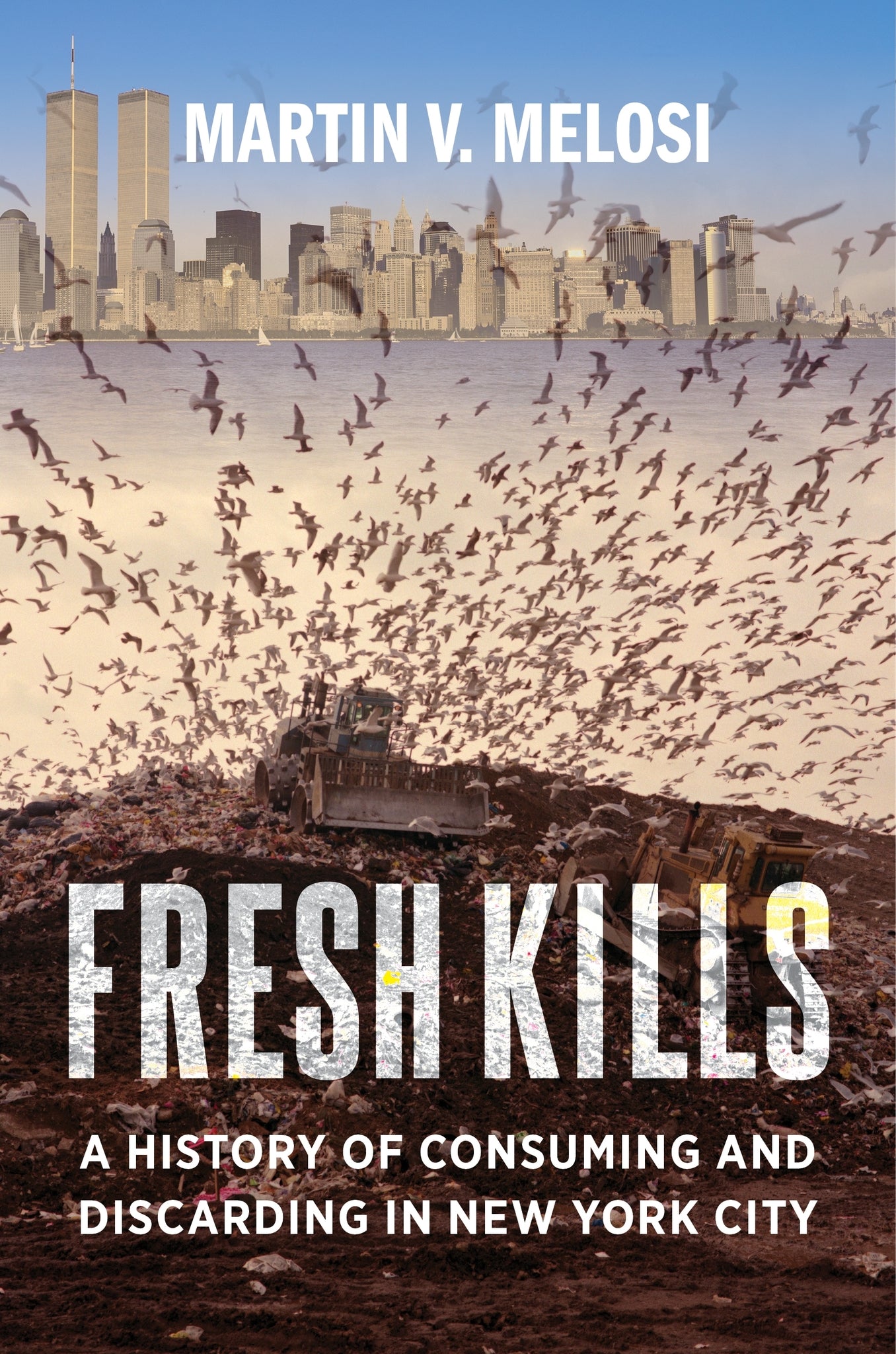
Fresh Kills—a monumental 2,200-acre site on Staten Island—was once the world’s largest landfill. From 1948 to 2001, it was the main receptacle for New York City’s refuse. After the 9/11 attacks, it reopened briefly to receive human remains and rubble from the destroyed Twin Towers, turning a notorious disposal site into a cemetery. Today, a mammoth reclamation project is transforming the landfill site, constructing an expansive park three times the size of Central Park.
Martin V. Melosi provides a comprehensive chronicle of Fresh Kills that offers new insights into the growth and development of New York City and the relationship among consumption, waste, and disposal. He traces the metamorphoses of the landscape, following it from salt marsh to landfill to cemetery and looks ahead to the future park. By centering the problem of solid-waste disposal, Melosi highlights the unwanted consequences of mass consumption. He presents the Fresh Kills space as an embodiment of massive waste, linking consumption to the continuing presence of its discards. Melosi also uses the landfill as a lens for understanding Staten Island’s history and its relationship with greater New York City. The first book on the history of the iconic landfill, Fresh Kills unites environmental, political, and cultural history to offer a reflection on material culture, consumer practices, and perceptions of value and worthlessness.


— David Stradling, author of The Nature of New York: An Environmental History of the Empire State
Fresh Kills frames Staten Island’s iconic landfill as not just a repository for solid waste but also a monument to consumer culture. This is an immensely readable and valuable book by a distinguished scholar of environmental history.
— Michael Rawson, author of Eden on the Charles: The Making of Boston
Melosi tells the story of the dump that ate New York with panache, rescuing this erstwhile salt marsh from the late-night comedians and, in the process, telling us something deeply important and troubling about postwar American capitalism.
— Ted Steinberg, author of Gotham Unbound: The Ecological History of Greater New York
One of the pioneers of urban environmental history gives us a meticulously researched and sweeping narrative of New York, Staten Island, and the landfill known as Fresh Kills, revealing a seamy underside of modern prosperity, mass consumption, and New York politics. The maps and illustrations are marvelous.
— J.R. McNeill, author of Something New Under the Sun: An Environmental History of the 20th-Century World
Fresh Kills is also a piece about mourning the scars in our landscapes engineered to harbor the remnants of modern mass consumption, and a subtle warning that we should not avert our gaze from them. It is Martin V. Melosi at his best.
The landfill and the park now being constructed atop it are—like Melosi’s fine book—important reminders that we cannot entirely forget or be free of what we discard.
Fresh Kills is an epic drama, extraordinarily rich in archival detail, that traces New York City’s long saga of waste disposal from the early nineteenth century through the present day.
— Lily B. Pollans
Preface
Acknowledgments
Introduction: The Dilemma of Consuming
Part I: The Backdrop
1. Island City
2. Wasting Away
Part II: Staten Island: Borough of Last Resort
3. The Quarantine
4. The Garbage War
Part III: Seeking a Disposal Sink
5. The Go-Away Society
6. One Best Way
7. Futile Protests
Part IV: Living with and Surviving the Landfill
8. The Burning Question
9. The End of Isolation
10. An Environmental Turn
11. Fiscal Crisis and Disposal Dilemma
12. Fresh Kills at Midlife
13. Barge to Nowhere
14. A New Plan
Part V: The Road to Closure
15. Secession
16. Closure
17. Now What?
Part VI: The Post-Closure Era
18. 9/11
19. Regeneration
20. Crossroads
Conclusion
Notes
Index