


Some error occured while loading the Quick View. Please close the Quick View and try reloading the page.
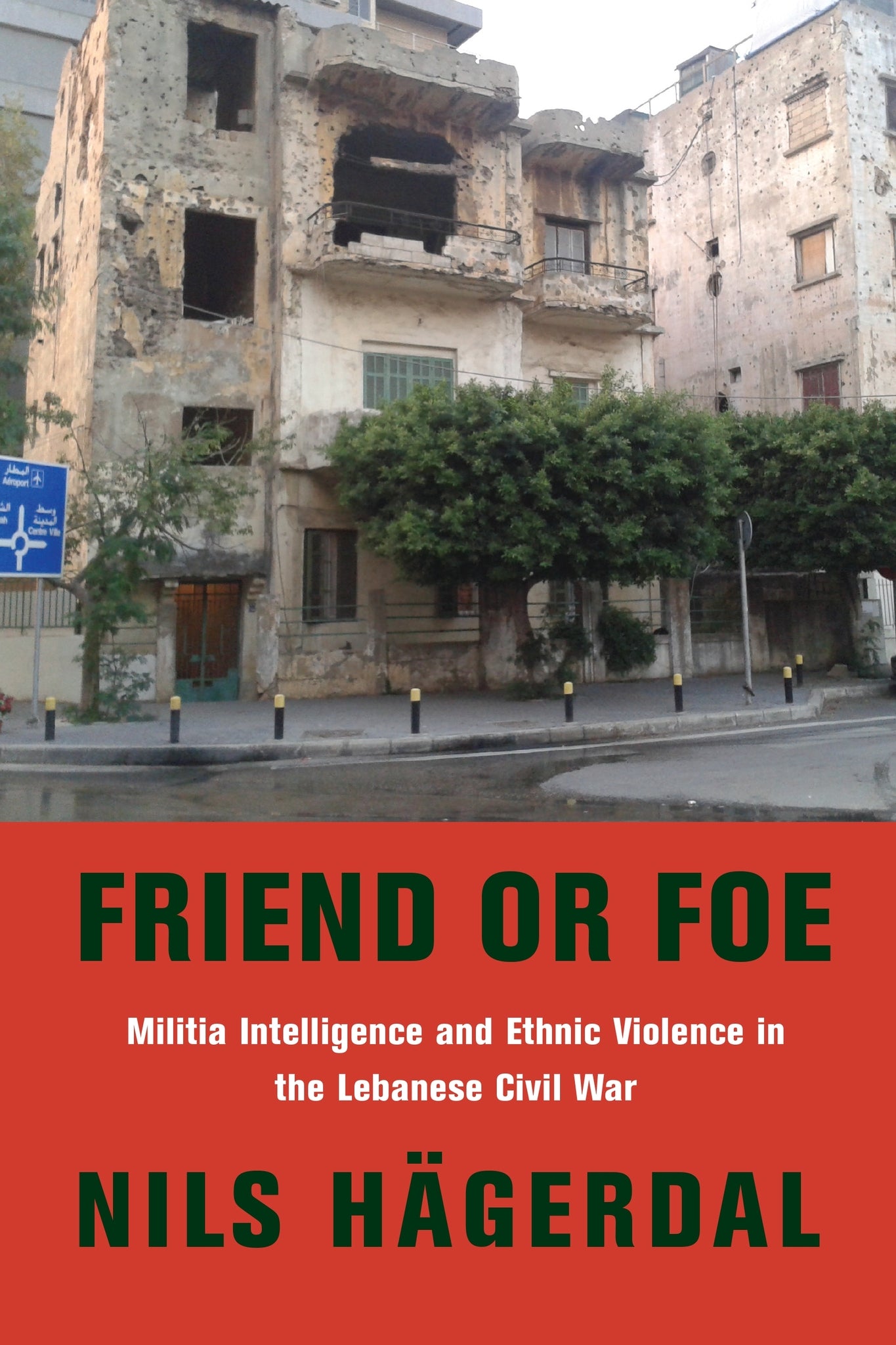
When civil conflicts break out in plural societies, violence often occurs along group divides—running the risk of spiraling into ethnic cleansing. Yet for militants who do not seek ethnic separation as a political goal, indiscriminate attacks are detrimental to their cause. Under what circumstances are such combatants more or less likely to commit ethnic violence?
Nils Hägerdal examines the Lebanese civil war to offer a new theory that highlights the interplay of ethnicity and intelligence gathering. He shows that when militias can obtain reliable intelligence—particularly in demographically intermixed areas where information can cross ethnic boundaries—they are likely to refrain from indiscriminate tactics. Access to local intelligence helps armed groups distinguish between neutral and hostile non-coethnics to target individual opponents while leaving civilians in peace. Conversely, when militias struggle to access local information, they often fall back on ethnicity as a proxy for political allegiance, with bloody consequences. As intelligence capabilities shape the course of sectarian strife, the role of ethnicity can vary even within a particular conflict.
Hägerdal conducted sixteen months of fieldwork in Lebanon, interviewing former militia fighters and commanders and collecting novel statistical evidence. He combines documentation by government agencies, NGOs, local news media, and the United Nations with firsthand narratives by participants to provide an unparalleled account of the processes that generate violence or coexistence when a diverse society descends into armed conflict. Theoretically innovative and descriptively rich, Friend or Foe sheds new light on the logic and dynamics of ethnic violence in civil wars.


— Laia Balcells, author of Rivalry and Revenge: The Politics of Violence During Civil War
Hägerdal has written an excellent book on the conditions that lead to indiscriminate ethnic violence during civil war. Using an impressive array of original statistical and qualitative information on Lebanon’s civil war, he convincingly argues that information asymmetries explain the variation in levels of violence. Where intelligence information is reliable, there is less violence, and when it is less reliable, there is more violence.
— Amaney A. Jamal, author of Of Empires and Citizens: Pro-American Democracy or No Democracy at All?
Ethnic violence—in particular mass displacement or ‘ethnic cleansing’—is both disturbing and puzzling. Hägerdal’s careful and innovative research in Lebanon offers important insights that help make sense of this vexing phenomenon.
— Stathis N. Kalyvas, author of The Logic of Violence in Civil War
In Friend or Foe, Hägerdal offers a powerful theory of ethnic violence in non-separatist ethnic civil wars, which he tests with an impressive mix of fieldwork and original data on demographics, migration, and violence for over 1,400 rural villages and urban neighborhoods in Lebanon.
— Peter Krause, coeditor of Rebel Power: Why National Movements Compete, Fight, and Win
This book is an excellent study of the dynamics of the Lebanese civil war, and it offers a theoretical approach that might be useful in dealing with other sectarian conflicts.
Acknowledgments
Introduction
1. Ethnic Violence in Non-Separatist Wars
2. The Lebanese Civil War, 1975–1990
3. Demographics, Migration, and Violence
4. Lebanon’s Christian Militias
5. Palestinian, Muslim, and Left-Wing Armed Groups
Conclusion
Notes
References
Index