


Some error occured while loading the Quick View. Please close the Quick View and try reloading the page.
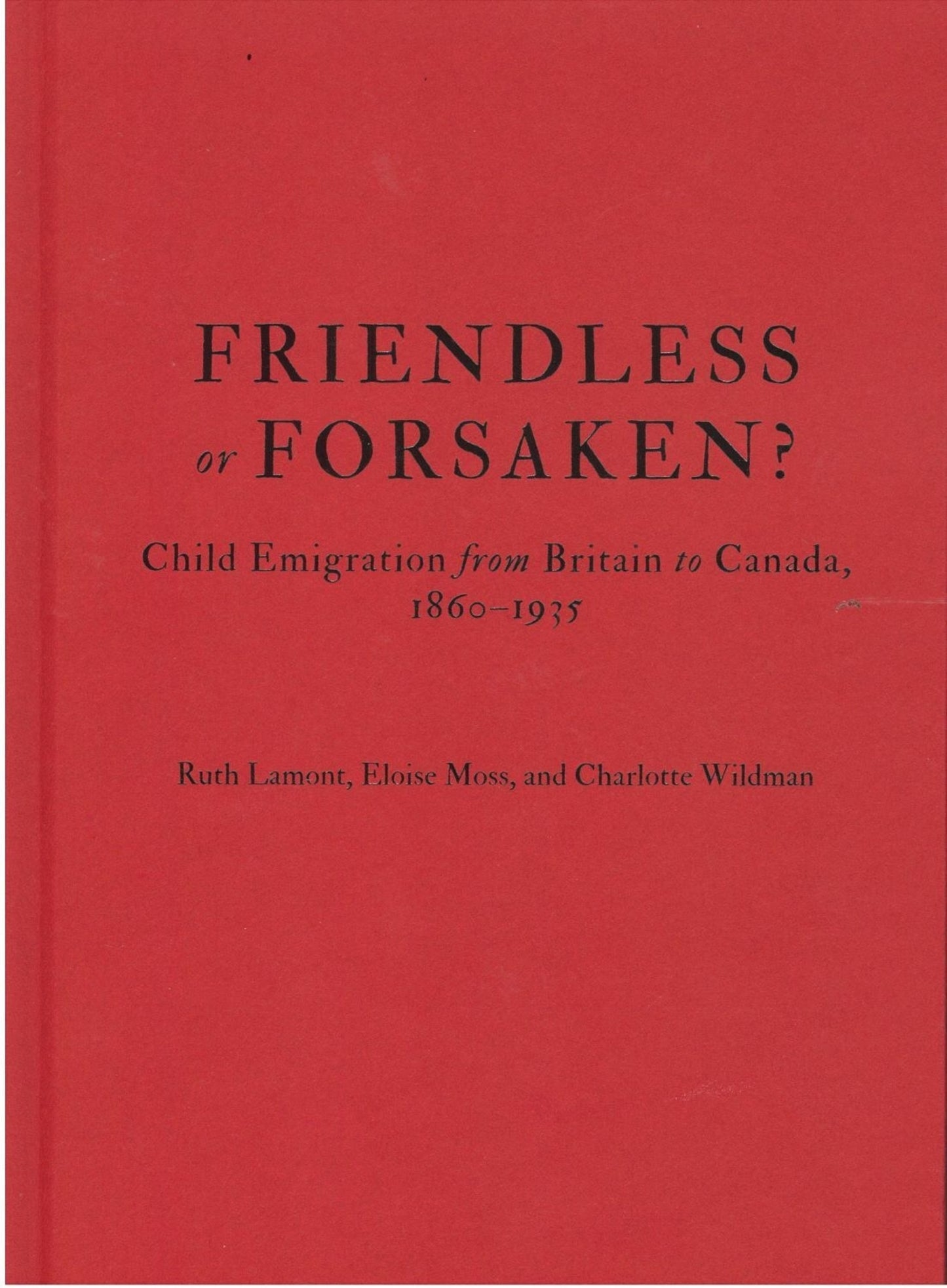
Between 1860 and 1935, about 100,000 impoverished children were emigrated from Britain to Canada to seek a new life in the “land of plenty.” Charities, religious workers, philanthropists, and state-run institutions such as workhouses and orphanages all sent children abroad, claiming that this was the only way to prevent their becoming criminals or joining the masses of working-class unemployed.
Friendless or Forsaken? follows the story of child emigration agencies operating in North West England, tracing the imperial relationships that enabled agents to send children away from their homes and parents, who often lost sight of them forever. The book sheds light on public support for the schemes, their financial beneficiaries, and how parents were persuaded to consent to sending their children across the world – frequently without fully realizing what rights they had signed away. The story charts the legal measures introduced to maintain and regulate child emigration schemes, as well as the way “home children” were portrayed as both needy and dangerous on each side of the Atlantic and how the children themselves sought to overcome prejudice and isolation in an unfamiliar country.
Exploring the transnational economy of child emigrations schemes, Friendless or Forsaken? records the bravery and resilience of those children whose lives were altered by this traumatic and divisive episode in the history of empire.


"Based on extensive research in British and Canadian archives, [Friendless or Forsaken] offers a measured, clear-headed history of child migration to Canada." Canadian Historical Review
"Friendless or Forsaken? is deeply insightful and remarkably respectful of the children it studies. It will be most interesting to those who study the history of family law, welfare, and migration in Great Britain and Canada. However, the work is ultimately valuable to all potential readers as it underscores the strength and tenacity of the most vulnerable." American Review of Canadian Studies
“The authors skilfully turn promoters’ views around, and we learn from their letters and later their memoirs how children understood their situation and tried to take charge of their own destiny. This is an important and much needed addition to the literature.” Historical Studies in Education
“[Friendless or Foresaken] is a significant contribution to the current historiography of child emigration initiatives from the mid-nineteenth to the mid-twentieth century. The book certainly appeals to both an academic and a public audience, though the detailed notes, bibliography and index found at the end of the book ensures it will be a valuable text for researcher and student alike.” English Historical Review
Ruth Lamont is reader in family and child law at the University of Manchester.
Eloise Moss is senior lecturer in modern British history at the University of Manchester.
Charlotte Wildman is senior lecturer in modern British history at the University of Manchester.