


Some error occured while loading the Quick View. Please close the Quick View and try reloading the page.
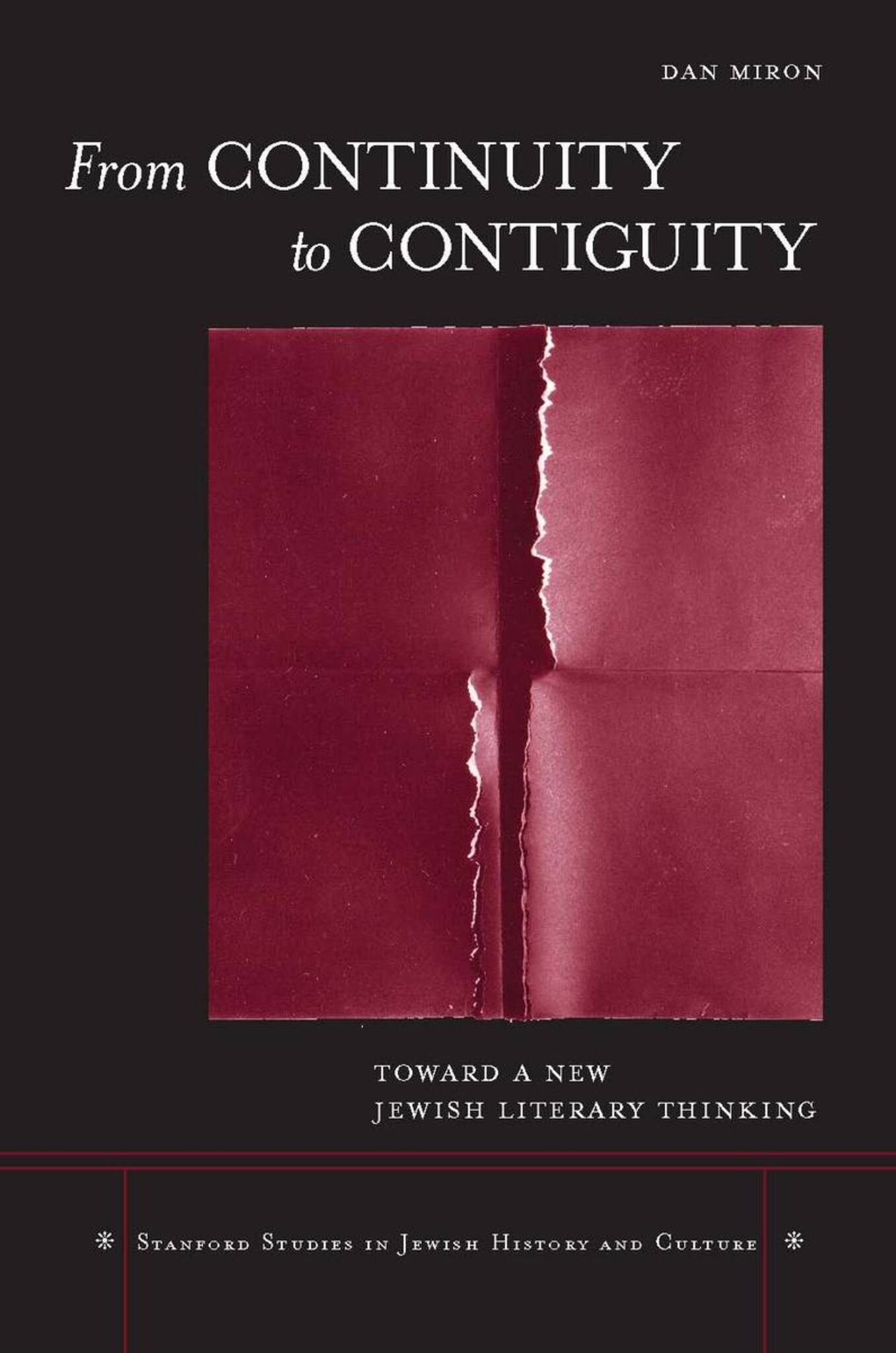
Dan Miron—widely recognized as one of the world's leading experts on modern Jewish literatures—begins this study by surveying and critiquing previous attempts to define a common denominator unifying the various modern Jewish literatures. He argues that these prior efforts have all been trapped by the need to see these literatures as a continuum. Miron seeks to break through this impasse by acknowledging discontinuity as the staple characteristic of modern Jewish writing. These literatures instead form a complex of independent, yet touching, components related through contiguity. From Continuity to Contiguity offers original insights into modern Hebrew, Yiddish, and other Jewish literatures, including a new interpretation of Franz Kafka's place within them and discussions of Sholem Aleichem, Sh. Y. Abramovitsh, Akhad ha'am, M. Y. Berditshevsky, Kh. N. Bialik, and Y. L. Peretz.


— Yael Halevi-Wise
"This is a truly outstanding work of literary criticism that will set up a new agenda for the discussion of Jewish literature. The distillation of many years of his work, this book is genuine Miron, with his encyclopedic erudition, sharp intellect, and powerful conceptual synthesis."
— Mikhail Krutikov