


Some error occured while loading the Quick View. Please close the Quick View and try reloading the page.
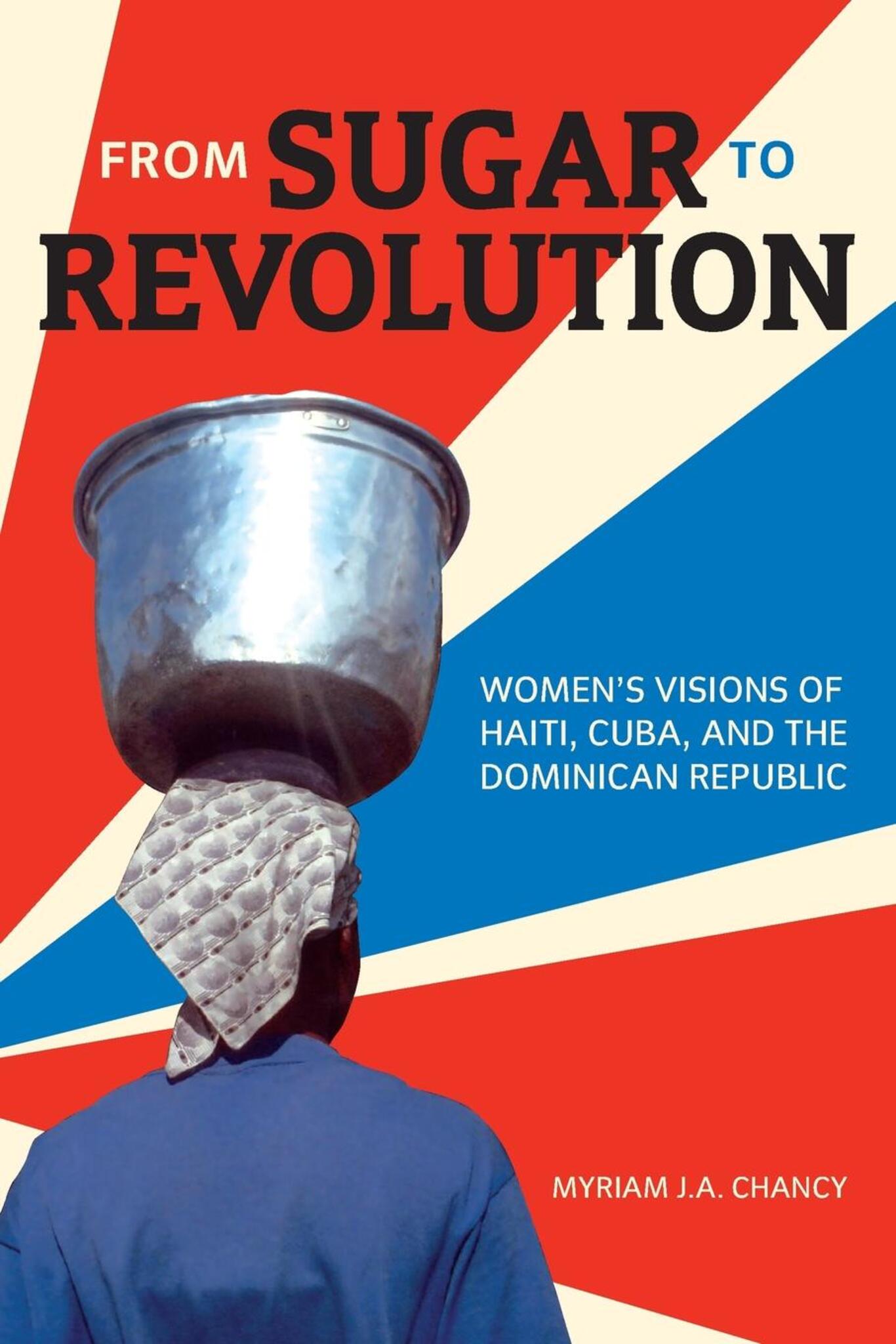
Sovereignty. Sugar. Revolution. These are the three axes this book uses to link the works of contemporary women artists from Haiti—a country excluded in contemporary Latin American and Caribbean literary studies—the Dominican Republic, and Cuba. In From Sugar to Revolution: Women’s Visions of Haiti, Cuba, and the Dominican Republic, Myriam Chancy aims to show that Haiti’s exclusion is grounded in its historical role as a site of ontological defiance. Her premise is that writers Edwidge Danticat, Julia Alvarez, Zoé Valdés, Loida Maritza Pérez, Marilyn Bobes, Achy Obejas, Nancy Morejón, and visual artist Maria Magdalena Campos-Pons attempt to defy fears of “otherness” by assuming the role of “archaeologists of amnesia.” They seek to elucidate women’s variegated lives within the confining walls of their national identifications—identifications wholly defined as male. They reach beyond the confining limits of national borders to discuss gender, race, sexuality, and class in ways that render possible the linking of all three nations. Nations such as Haiti, the Dominican Republic, and Cuba are still locked in battles over self-determination, but, as Chancy demonstrates, women’s gendered revisionings may open doors to less exclusionary imaginings of social and political realities for Caribbean people in general.


— David Scott, Columbia University; Editor, Small Axe, 2012 March
Rich and suggestive, this broad-ranging and original study combines interpretive readings and personal conversations with individual artists. Chancy places women's bodies, voices, memories, and visions at the centre of a careful scrutiny of the way three global axes of power—sugar, sovereignty, and revolution—have defined and confined Caribbean history, with its traumatic events and lingering painful memories. Conjugating national and transnational approaches to the Creolophone, Anglophone, and Hispanophone islands, Chancy redefines our understanding of terror by opening up innovative cultural and scholarly avenues for hopeful new beginnings. This is a transformative intervention in the contemporary realities of the region.
— Françoise Lionnet, UCLA; Co-editor, The Creolization of Theory, 2012 March
Chancy's multifaceted study examines contemporary Cuban, Haitian, and Dominican women's use of literary and performance arts to resurrect marginalized and silenced subjects' memories. Her paradigm for constructing cohesive Caribbean relations is the Haitian Revolution's broad rejection of the French occupation, Haiti's reclamation of national sovereignty, freedom from the imposition of Enlightenment logic, and reassertion of collective national memory. Troubling for Chancy's transformative vision is neighbouring nations' acceptance of imposed rather than original, indigenous cultures, thereby rejecting association with Haiti's black majority population.... This book is an incredible read.
— J.C. Richards, Park University, Choice, 2012 October
Table of Contents for From Sugar to Revolution: Women’s Visions of Haiti, Cuba, and the Dominican Republic, by Myriam J.A. Chancy
Preface The Stories We Cannot Tell
Introduction ¿Y donde esta tu abuela?: On the Respective Racial (Mis)Idendifications of Haiti, Cuba, and the Dominican Republic in the Context of Latin America and the Caribbean
PART I SUGAR: Haiti
Facing the Mountains: Dominican Suppression and the Haitian Imaginary in the Works of Julia Alvarez and Edwidge Danticat
Recovering History “Bone by Bone”: A Conversation with Edwidge Danticat
PART II SOVEREIGNTY: Cuba
Travesía: Crossings of Sovereignty, Sexuality, and Race in the Cuban Female Imaginaries of Zoé Valdés, Nancy Moréjon, and María Magdalena Campos-Pons
Recovering Origins: A Conversation with María Magdalena Campos-Pons
PART III REVOLUTION: The Dominican Republic
Subversive Sexualities: Marilyn Bobes, Achy Obejas, and Loida Maritza Pérez on Revolutionizing Gendered Indentities Against Cuban and Dominican Landscapes
The Heart of Home: A Conversation with Loida Maritza Pérez
Conclusion Non progredi regredi est: The Making of Transformative Visions
Acknowledgements
Notes
Works Cited
Index