


Some error occured while loading the Quick View. Please close the Quick View and try reloading the page.
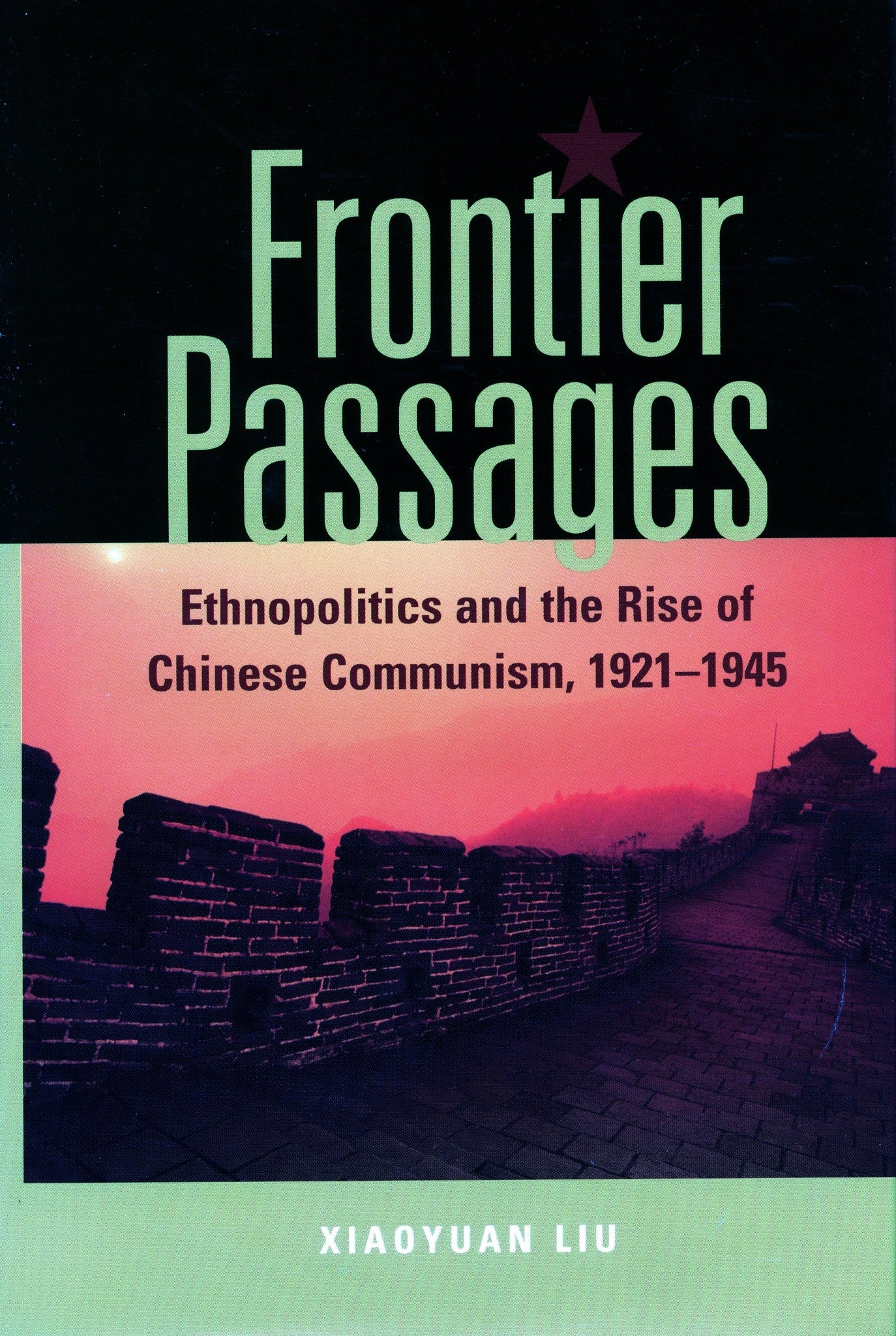
In this pathbreaking book, Xiaoyuan Liu establishes the ways in which the history of the Chinese Communist Party was, from the Yan’an period onward, intertwined with the ethnopolitics of the Chinese “periphery.” As a Han-dominated party, the CCP had to adapt to an inhospitable political environment, particularly among the Hui (Muslims) of northwest China and the Mongols of Inner Mongolia. Based on a careful examination of CCP and Soviet Comintern documents only recently available, Liu’s study shows why the CCP found itself unable to follow the Russian Bolshevik precedent by inciting separatism among the non-Han peoples as a stratagem for gaining national power. Rather than swallowing Marxist-Leninist dogma on “the nationalities question,” the CCP took a position closer to that of the Kuomintang, stressing the inclusiveness of the Han-dominated Chinese nation, “Zhongua Minzu.”


— Asian Studies Review
"This book makes good use of Communist Party documents recently made available and is a solid piece of scholarly work on a neglected aspect of the rise of Chinese Communism. It is a welcome addition to the burgeoning literature on the Chinese Communist Revolution."
— International History Review
" . . . The book is a significant contribution to our understanding of Chinese ethnopolitics."
— The Journal of Chinese Political Science
"This spare and elegant study is a singular contribution to the history of the Chinese Communist Party in particular and modern Chinese history more broadly speaking, in an area that has been relatively neglected by Western historical scholarship. Using an impressive array of Chinese documentary evidence, and grounding his work in the best recent scholarship on nationalism and ethnopolitics, Liu has focused on a dimension of Chinese Communist history that is too often overlooked, namely, the ethnopolitical dimension of the CCP's rise to power."
— Steven I. Levine
"This spare and elegant study is a singular contribution to the history of the Chinese Communist Party in particular and modern Chinese history more broadly speaking. . . . Liu has focused on a dimension of Chinese Communist history that is too often overlooked, namely, the ethnopolitical dimension of the CCP's rise to power."
— Steven I. Levine