


Some error occured while loading the Quick View. Please close the Quick View and try reloading the page.
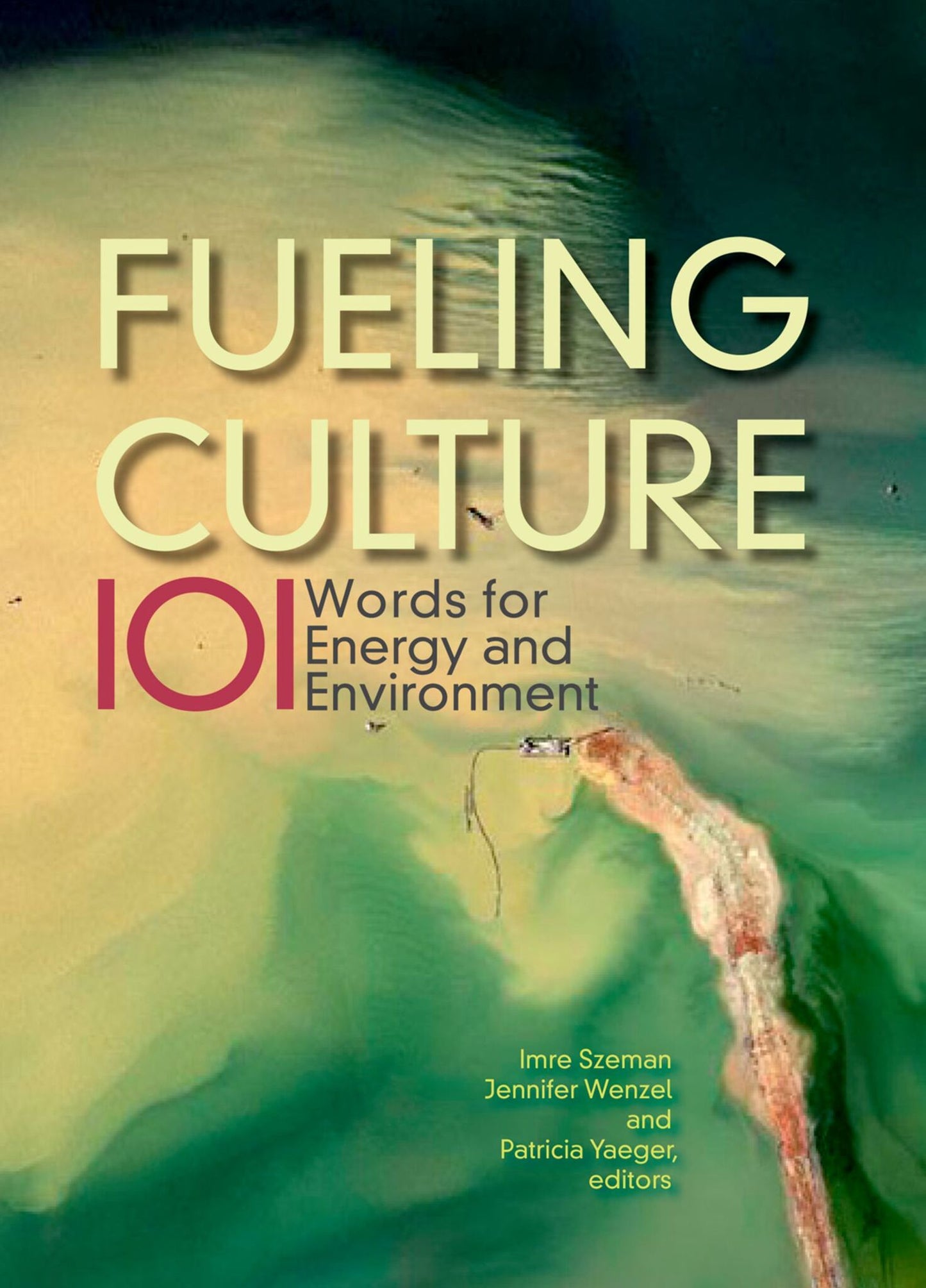
How has our relation to energy changed over time? What differences do particular energy sources make to human values, politics, and imagination? How have transitions from one energy source to another—from wood to coal, or from oil to solar to whatever comes next—transformed culture and society? What are the implications of uneven access to energy in the past, present, and future? Which concepts and theories clarify our relation to energy, and which just get in the way? Fueling Culture offers a compendium of keywords written by scholars and practitioners from around the world and across the humanities and social sciences. These keywords offer new ways of thinking about energy as both the source and the limit of how we inhabit culture, with the aim of opening up new ways of understanding the seemingly irresolvable contradictions of dependence upon unsustainable energy forms.
Fueling Culture brings together writing that is risk-taking and interdisciplinary, drawing on insights from literary and cultural studies, environmental history and ecocriticism, political economy and political ecology, postcolonial and globalization studies, and materialisms old and new.
Keywords in this volume include: Aboriginal, Accumulation, Addiction, Affect, America, Animal, Anthropocene, Architecture, Arctic, Automobile, Boom, Canada, Catastrophe, Change, Charcoal, China, Coal, Community, Corporation, Crisis, Dams, Demand, Detritus, Disaster, Ecology, Electricity, Embodiment, Ethics, Evolution, Exhaust, Fallout, Fiction, Fracking, Future, Gender, Green, Grids, Guilt, Identity, Image, Infrastructure, Innervation, Kerosene, Lebenskraft, Limits, Media, Metabolism, Middle East, Nature, Necessity, Networks, Nigeria, Nuclear, Petroviolence, Photography, Pipelines, Plastics, Renewable, Resilience, Risk, Roads, Rubber, Rural, Russia, Servers, Shame, Solar, Spill, Spiritual, Statistics, Surveillance, Sustainability, Tallow, Texas, Textiles, Utopia, Venezuela, Whaling, Wood, Work
For a full list of keywords in and contributors to this volume, please go to: http://ow.ly/4mZZxV


The compendium fuels the reader’s desire to consider and reconsider the ways in which we conceptualize the role of energy production and consumption in our work as much as our daily routines, and will likely prove an insightful and intellectually stimulating resource for scholars working in the area of energy and environment, regardless of discipline.---Matthew Heinz, Topia
Fueling Culture: 101 Words for Energy and Environment, edited by Imre Szeman, Jennifer Wenzel, and Patricia Yaeger, is perhaps the most generative and forward-looking collection in the first wave of energy humanities scholarship. Its wide and imaginative scope casts the field far beyond its origin in petroleum, with entries on such keywords as "tallow," "plastiglomerate," "off-grid," "superhero comics," and "shame." Working with very specific examples drawn from across multiple scales, energy sources, genres, and affects is a good way to ground energy, which is all too often reduced to a gauzy abstraction.
Imre Szeman is Canada Research Chair in Cultural Studies and Professor of English, Film Studies and Sociology at the University of Alberta.
Jennifer Wenzel (External Editor)
Jennifer Wenzel is Associate Professor in the Department of English and Comparative Literature and the Department of Middle Eastern, South Asian, and African Studies at Columbia University.
Patricia Yaeger (External Editor)
Patricia Yaeger was Henry Simmons Frieze Collegiate Professor of English and Women’s Studies at the University of Michigan.