


Some error occured while loading the Quick View. Please close the Quick View and try reloading the page.
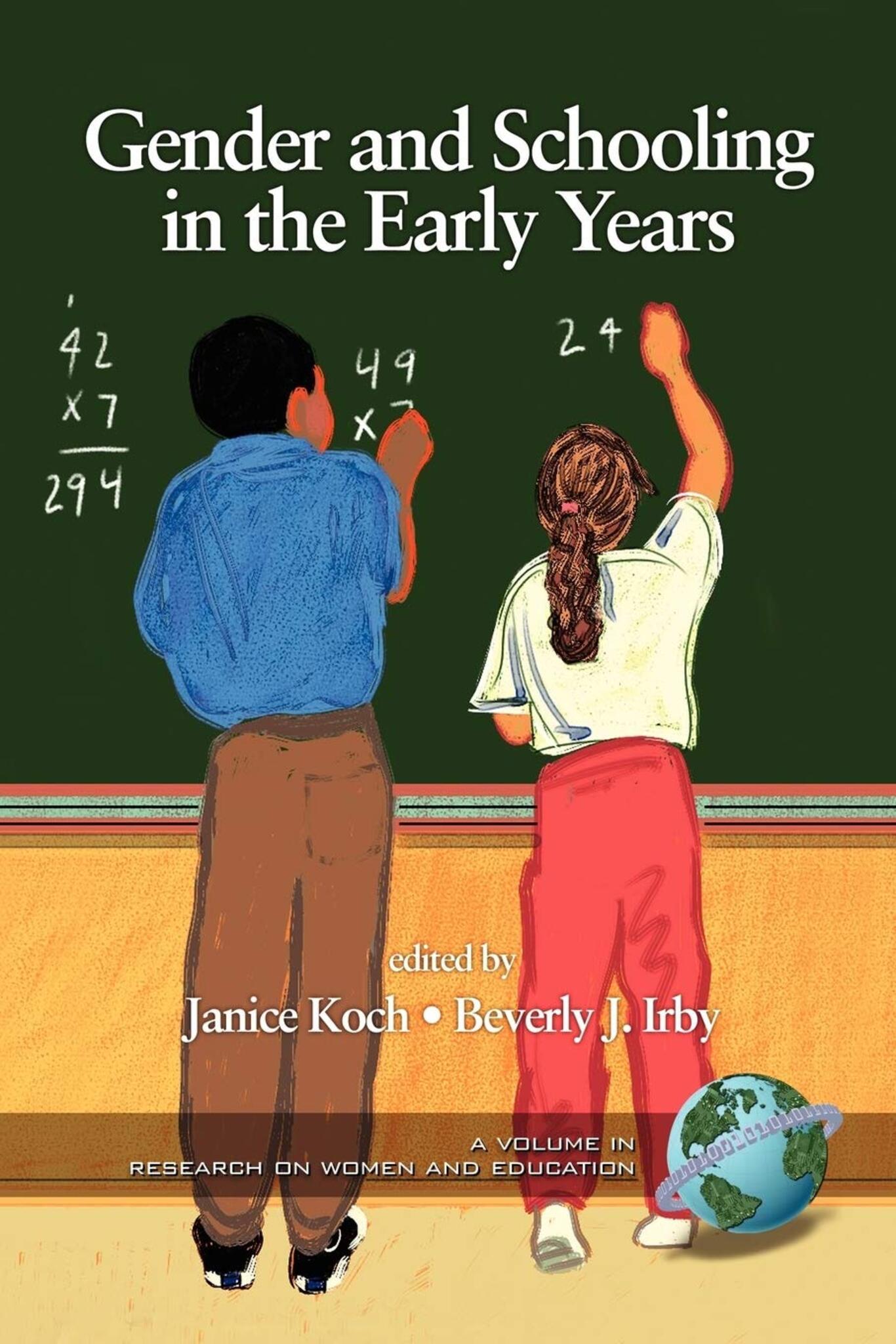
In this volume, gender and schooling in the early years addresses a broad range of issues including, but not limited, to gender equity in education. We explore, for example, the complex world of play in Fromberg's chapter and are reminded that for young children, play involves issues of power and hierarchy in ways that parallel the role of gender in society. Miletta's study of preschool children in northern Italy, at Reggio Emilia, reveals a story of classroom interactions where gender differences are not part of the equation for the youngsters. Her chapter begs the question, "How does this environment empower all children, regardless of gender?" Two chapters provide a lens to the Montessori setting for young children. Wilgus studies the gendered patterns of young women teaching at a Montessori school, while Irby, Rodriguez, and Lara-Alecio explore the intersections of culture and gender at a bilingual Montessori public school. Further examining the preschool years, Plaster and Schiller address the current brain research and examine the ways in which the adults that staff early child care programs, and the environments that they offer, play an important role in the development of our children.


Foreword
Introduction: The Early Childhood Environment: An Exploration of Gender Issues; Janice Koch and Beverly J. Irby
Chapter 1. The Power of Play: Gender Issues in Early Childhood Education; Doris Pronin Fromberg
Chapter 2. Gender Issues: Focusing on the Importance of Early Care and Education Programs in Center-Based Settings; Elizabeth Plaster and Pam Schiller
Chapter 3. Gender, Authority, and Montessori: Early Childhood Teachers’ Choices of Interactional and Disciplinary Styles; Guy Wilgus
Chapter 4. Prekindergarten Bilingual Montessori Education: A Gendered Perspective; Beverly J. Irby, Linda Rodriguez, and Rafael Lara-Alecio
Chapter 5. Managing Dilemmas: Uncovering Moral and Intellectual Dimensions of Life in a Reggio Emilia Classroom; Alexandra Miletta
Chapter 6. Early Mathematics: Learning in the Block Center; Barbara Polnick and Carole Funk
Chapter 7. Science Education and Gender: The Early Years; Linda Plevyak
Chapter 8. The Role of Educators in Communicating Gender Equity to Parents; Laverne Warner and John Barrera
Chapter 9. Gender Equity in Early Childhood Assessment; Genevieve Brown, Beverly J. Irby, and LingLing Yang
Chapter 10. Trajectory from Bullying to School Violence: A Gender Perspective; Rebecca A. Robles-Piña and Carrie H. Butler
Chapter 11. Emergent Leadership Through Mentoring in Early Childhood Education; Lee Turner-Muecke
Index