


Some error occured while loading the Quick View. Please close the Quick View and try reloading the page.
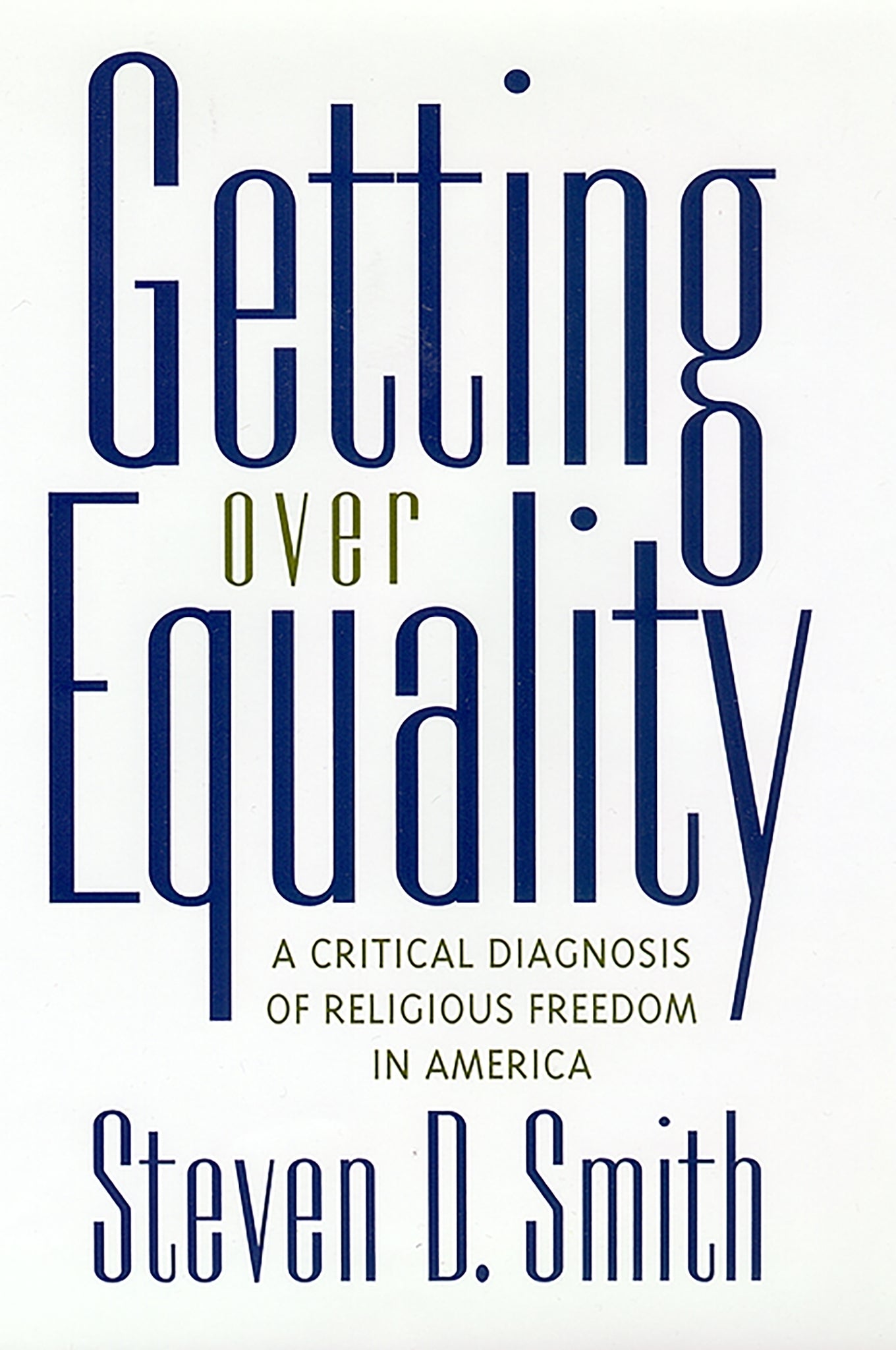
Questions of religious freedom continue to excite passionate public debate. Proposals involving school prayer and the posting of the Ten Commandments in schools and courtrooms perennially spur controversy. But there is also a sense that the prevailing discourse is exhausted, that no one seems to know how to think about religious freedom in a way that moves beyond our stale, counterproductive thinking on this issue.
In Getting over Equality, Steven D. Smith, one of the most important voices now writing about religious liberty, provocatively contends that we must get over our presumption mistakenly believed to be rooted in the Constitution that all religions are equally true and virtuous and "authentically American." Smith puts forth an alternative view, that the courts should promote an ideal of tolerance rather than equality and neutrality. Examining such controversial examples as the animal sacrifice case, the peyote case, and the problem of aid to parochial schools, Smith delineates a way for us to tolerate and respect contrary creeds without sacrificing or diluting our own beliefs and without pretending to believe in a spurious "equality" among the variety of diverse faiths.


— Richard John Neuhaus,Editor-in-Chief, First Things, and author of The Naked Public Square: Religion and Democracy in America
"Steve Smith is one of the most distinguished scholars now working in the field of religious liberty. His new book, Getting over Equality, makes it abundantly clear that Smith's perspective on religious liberty issuesand, indeed, on the whole field of religious liberty scholarshipis highly distinctive as well as very important. Not everyone will agree with everything that Smith argues in these essays. (I certainly don't.) But everyone who enters into conversation with Smith's essays will achieve thereby a deeper understanding of the complex issues that Smith so thoughtfully and gracefully addresses."
— Michael J. Perry,University Distinguished Chair in Law, Wake Forest University, and author of We the People: The Fourteenth Amendment and the Supreme Court
"Ambitious in scope, yet full of detailed and incisive criticisms of specific cases and theological principles, Getting Over Equality is an uncommon work of truly interdisciplinary scholarship. The provocative legal and theological theses make it a welcome addition to contemporary scholarship in both fields and a recommended text from any course that considers law and religion in the American context."