


Some error occured while loading the Quick View. Please close the Quick View and try reloading the page.
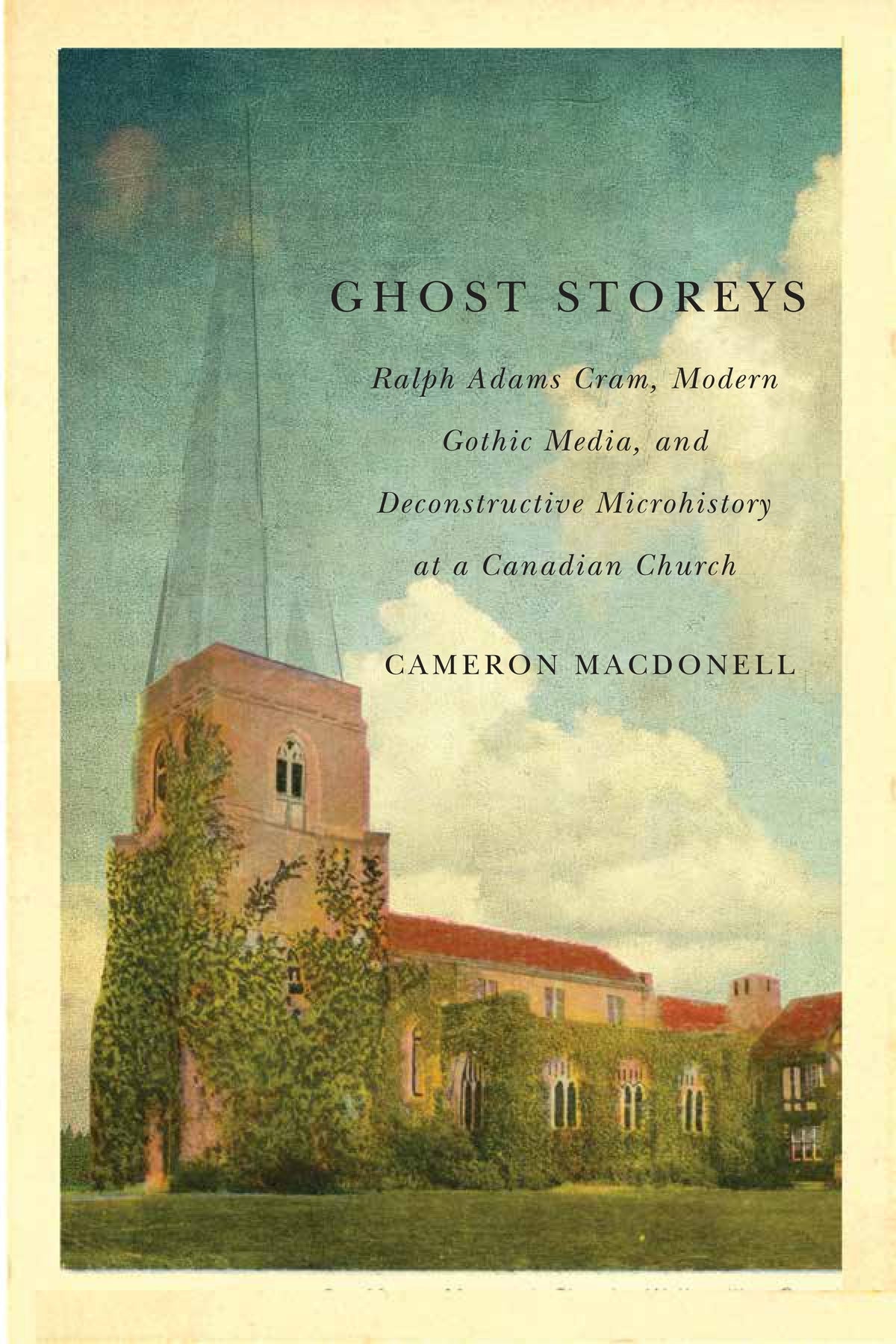
Most studies of modern Gothic media assume that, beyond the 1830s, modern Gothic architecture and literature had very little in common. The work of Ralph Adams Cram (1863-1942), America’s most prolific Gothic Revival architect and an author of ghost stories, challenges that assumption.
The first interdisciplinary study of Cram’s aesthetics, Cameron Macdonell’s Ghost Storeys deconstructs the boundaries of Gothic architecture and literature through a microhistory of St Mary’s Anglican Church in Walkerville, Ontario. Focusing on Cram and the church’s main patron, Edward Walker (1851-1915), Macdonell explores the intricate intersections of Gothic aesthetics, architectural ethics, literature, theology, cultural values, and community construction in an Edwardian-era company town. When Walker commissioned the church, he believed that its economy of salvation could save him from the syphilis that afflicted his body and stained his soul. However, while implementing that economy, Cram, whose architectural theory, social commentary, and ghost stories were pessimistic about reviving the Gothic in the modern world, also created an architecture haunted by the sickness of humanity.
Painstakingly researched and lavishly illustrated, Ghost Storeys redefines the allegorical relationship between a marginalized church and the Gothic Revival movement as a global interdisciplinary phenomenon.

