


Some error occured while loading the Quick View. Please close the Quick View and try reloading the page.
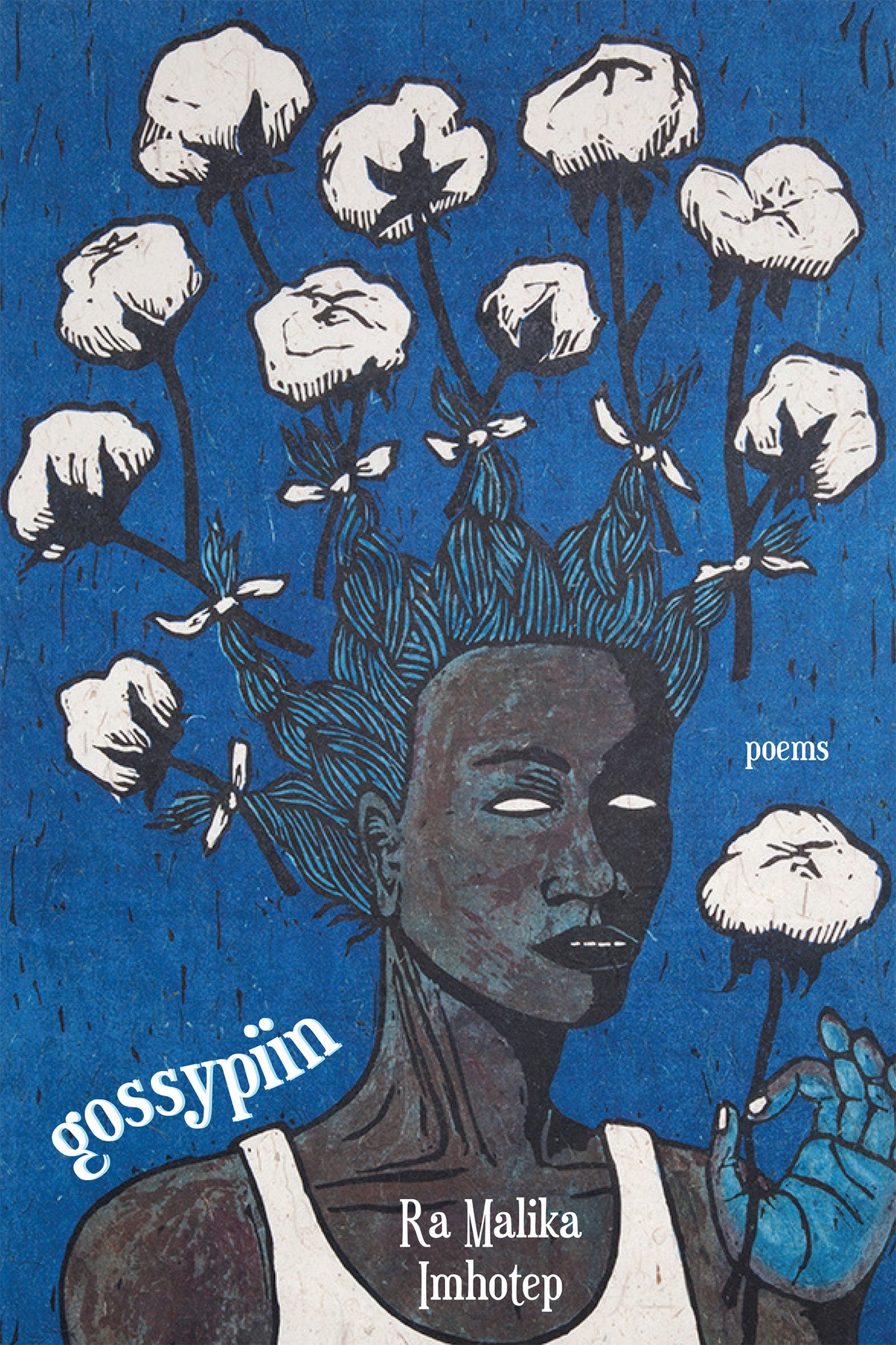
This harvest of poems is inspired by the plant medicine latent in Gossypium Herbeceum, or Cotton Root Bark, which was used by enslaved Black women to induce labor, cure reproductive ailments and end unwanted pregnancies. Through an arrangement of stories, secrets and memories experienced, read, heard, reimagined and remixed, gossypiin reckons with a peculiar yet commonplace inheritance of violation, survival and self-possession. In this way, Ra Malika Imhotep invites us to lean in and listen good as the text interrupts the narrative silence around sexual harm, sickness, and the marks they make on black femme subjectivity.
Within these pages, the poet is joined by a “sticky trickster-self” named Lil Cotton Flower who tells of their own origins and endings in the Black vernacular traditions of the griot and the gossip. Interspersed throughout the collection, Black feminist wisdoms and warnings meld with the poets own yearnings and Lil Cotton Flower’s tall tales.
Gossypiin is an offering towards the holding and healing of Black beings that exceed the confines of their own bodies.

