


Some error occured while loading the Quick View. Please close the Quick View and try reloading the page.
Winner of the 2020 Friends of ACUNS Biennial Book Award
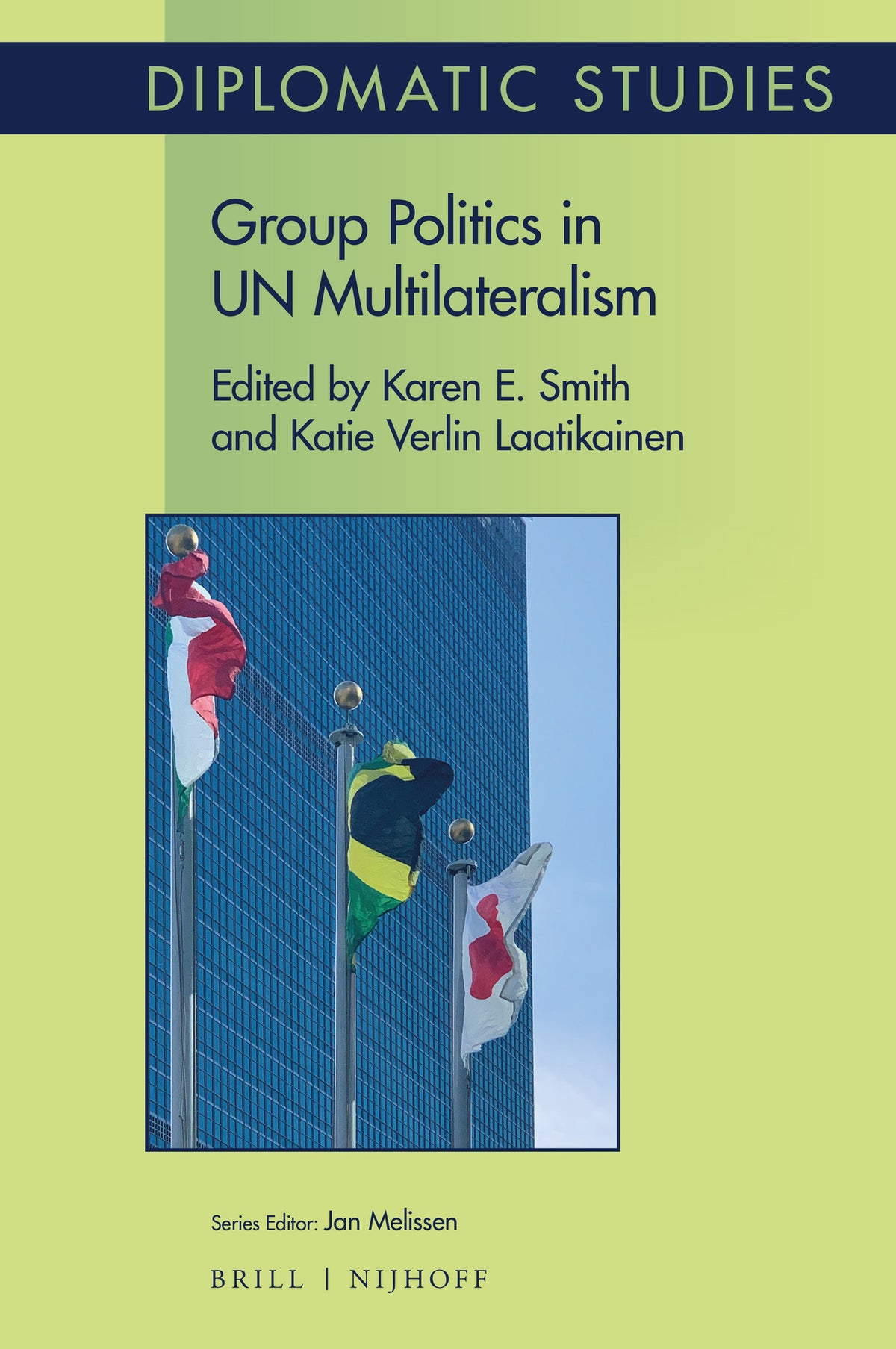
Group Politics in UN Multilateralism provides a new perspective on diplomacy and negotiations at the United Nations. Very few states ‘act individually’ at the UN; instead they often work within groups such as the Africa Group, the European Union or the Arab League. States use groups to put forward principled positions in an attempt to influence a wider audience and thus legitimize desired outcomes. Yet the volume also shows that groups are not static: new groups emerge in multilateral negotiations on issues such as climate, security and human rights. At any given moment, UN multilateralism is shaped by long-standing group dynamics as well as shifting, ad-hoc groupings. These intergroup dynamics are key to understanding diplomatic practice at the UN.
Group Politics in UN Multilateralism provides a new perspective on diplomacy and negotiations at the United Nations. Very few states ‘act individually’ at the UN; instead they often work within groups such as the Africa Group, the European Union or the Arab League. States use groups to put forward principled positions in an attempt to influence a wider audience and thus legitimize desired outcomes. Yet the volume also shows that groups are not static: new groups emerge in multilateral negotiations on issues such as climate, security and human rights. At any given moment, UN multilateralism is shaped by long-standing group dynamics as well as shifting, ad-hoc groupings. These intergroup dynamics are key to understanding diplomatic practice at the UN.

Price: $211.00
Pages: 326
Publisher: Brill
Imprint: Brill | Nijhoff
Publication Date:
09 April 2020
ISBN: 9789004384392
Format: Hardcover

Karen E. Smith, PhD (1996), London School of Economics and Political Science, is Professor of International Relations at that university. She has published extensively on EU foreign relations, EU human rights policy, and EU-UN relations.
Katie Verlin Laatikainen, Ph.D. (1996), is Professor of Political Science at Adelphi University. Her publications include The Routledge Handbook on the European Union and International Institutions (2013) and The European Union and the United Nations: Intersecting Multilateralisms (Palgrave 2006).
Katie Verlin Laatikainen, Ph.D. (1996), is Professor of Political Science at Adelphi University. Her publications include The Routledge Handbook on the European Union and International Institutions (2013) and The European Union and the United Nations: Intersecting Multilateralisms (Palgrave 2006).