


Some error occured while loading the Quick View. Please close the Quick View and try reloading the page.
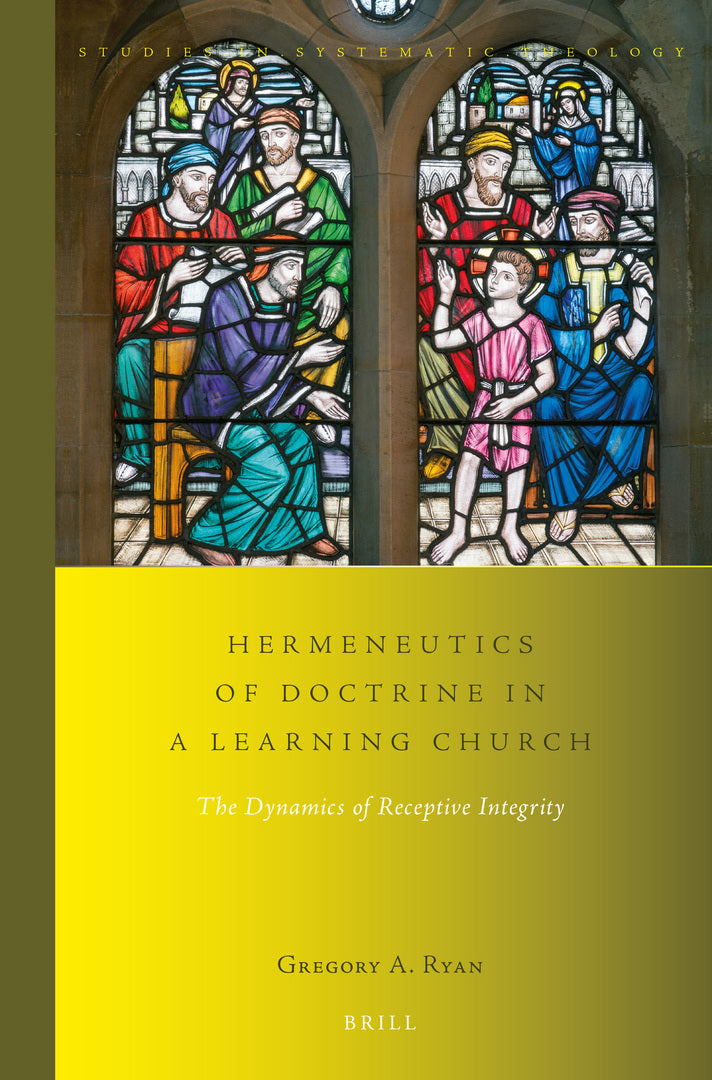
In Hermeneutics of Doctrine in a Learning Church, Gregory A. Ryan offers an account of the dynamic, multi-dimensional task of interpreting Christian tradition. He integrates doctrinal hermeneutics, the ‘pastorality of doctrine’ exemplified by Pope Francis, and a systematic appraisal of Receptive Ecumenism to provide an original perspective on this task. The book focuses on three contemporary Catholic theologians (Francis Schüssler Fiorenza, Ormond Rush, and Paul D. Murray), highlighting how each recognises the dynamic interaction of multiple perspectives involved in authentic ecclesial interpretation.
Christian tradition, whether passed on in teaching, scripture, practices, or structures, needs to be continually received and interpreted. This book offers theologians, ecumenists, and church workers a fresh model for receptive ecclesial learning in which doctrinal hermeneutics and pastoral realities are dynamically integrated.
Christian tradition, whether passed on in teaching, scripture, practices, or structures, needs to be continually received and interpreted. This book offers theologians, ecumenists, and church workers a fresh model for receptive ecclesial learning in which doctrinal hermeneutics and pastoral realities are dynamically integrated.

Price: $76.00
Pages: 286
Publisher: Brill
Imprint: Brill
Publication Date:
13 August 2020
ISBN: 9789004436398
Format: Paperback

"Ryan’s book is a scholarly treatment of the Catholic Church’s conciliarity (synodality) as it relates to the dynamics of local theology, within the Catholic community and beyond. I wholly recommend taking Gregory Ryan’s book on hermeneutics and dynamics into account."— Henk Bakker, Amsterdam, in: Journal of European Baptist Studies, Volume 21.2 (2021).
Gregory A. Ryan’s groundbreaking exploration of how doctrine can be received with integrity is distinctive for its careful exposition of the complex interrelations of reception theory and tradition, as much as for its painstaking examination of Pope Francis’s call for a dynamic re-appropriation of the fundamentals of doctrine that does justice to the world of today. But it may be that Ryan’s greatest contribution will be to add theological depth to the creative pastoral initiatives of receptive ecumenism. Receptive ecumenism as a movement has established the importance of listening and learning. Ryan brings extra theological sophistication, and hence greater intellectual spine, to receptive ecumenism by asking and beginning to answer the next question exactly how this ecumenical initiative is grounded in the best of contemporary religious reflection. — Paul Lakeland, Aloysius P. Kelley, S.J. Professor of Catholic Studies Center for Catholic Studies, Fairfield University.
Gregory Ryan’s book, Hermeneutics of Doctrine in a Learning Church, is a major work. It will impact not only ecumenical theology, but also the wider discipline of systematic theology. The author, in foregrounding the thought of three contemporary theologians, not only brings them into conversation, but shows how together they advance the debate on an appropriate theology of reception of the Gospel in general, and of ecumenical dialogue in particular as one element of that reception. From this convergence, the author advances the conversation further and makes his own contribution. In particular, Ryan’s key notion of “receptive integrity” is an original contribution to the field. Also valuable is the book’s continual reference to the vision of Pope Francis, which is shown to be both illuminated by the theological approaches under review and, in turn, a “warrant” for the fruitfulness of the approach the author is promoting. This book will be welcomed for the way it shows a way forward for the church today in its proclamation of the Gospel in a pluralistic world. — Ormond Rush, Rvd Associate Professor, Australian Catholic University.
During this difficult time in the church when many suffer from wounds caused by clerical transgressions and institutional dysfunctions, Gregory Ryan explores the promise of a receptive approach to the interpretation of doctrine, a judicious assessment of worldly wisdom, and pragmatic paths to discriminating praxis. He finds ways for churches to learn from their failures, embrace their dynamic traditions, with an openness to the gifts of other faith communities and religions. Ryan gives special attention to the contributions of Ormond Rush, Paul Murray, John Thiel, and Francis Schüssler Fiorenza to chart a way onward. — Bradford E. Hinze, Karl Rahner, S.J. Professor of Theology, Fordham University
This first major work by Gregory Ryan makes three significant contributions. First, it brings fresh perspective to bear on the respective theological writings of Francis Fiorenza, Ormond Rush, and myself by interpreting them in relation to each other. Second, it represents a quantum leap in the secondary literature pertaining to Receptive Ecumenism by going beyond mere commentary or application to make its own constructive contribution to the continuing development of the field. Third, it identifies and articulates with great deftness the dynamics of ‘receptive integrity’ which lie at the heart of current Catholic concerns and controversies. It is at once a work of the highest quality conceptual analysis, constructive endeavour, and pastoral relevance and sensitivity. As such, it is a model of the kind of ecclesially-rooted, ecumenically-engaged, critically-constructive Catholic theology that is required for a context marked by damaging divisions within the church and ineradicable pluralism without. — Paul D. Murray, Professor of Systematic Theology and Dean of Catholic Studies, Durham University
Gregory A. Ryan’s groundbreaking exploration of how doctrine can be received with integrity is distinctive for its careful exposition of the complex interrelations of reception theory and tradition, as much as for its painstaking examination of Pope Francis’s call for a dynamic re-appropriation of the fundamentals of doctrine that does justice to the world of today. But it may be that Ryan’s greatest contribution will be to add theological depth to the creative pastoral initiatives of receptive ecumenism. Receptive ecumenism as a movement has established the importance of listening and learning. Ryan brings extra theological sophistication, and hence greater intellectual spine, to receptive ecumenism by asking and beginning to answer the next question exactly how this ecumenical initiative is grounded in the best of contemporary religious reflection. — Paul Lakeland, Aloysius P. Kelley, S.J. Professor of Catholic Studies Center for Catholic Studies, Fairfield University.
Gregory Ryan’s book, Hermeneutics of Doctrine in a Learning Church, is a major work. It will impact not only ecumenical theology, but also the wider discipline of systematic theology. The author, in foregrounding the thought of three contemporary theologians, not only brings them into conversation, but shows how together they advance the debate on an appropriate theology of reception of the Gospel in general, and of ecumenical dialogue in particular as one element of that reception. From this convergence, the author advances the conversation further and makes his own contribution. In particular, Ryan’s key notion of “receptive integrity” is an original contribution to the field. Also valuable is the book’s continual reference to the vision of Pope Francis, which is shown to be both illuminated by the theological approaches under review and, in turn, a “warrant” for the fruitfulness of the approach the author is promoting. This book will be welcomed for the way it shows a way forward for the church today in its proclamation of the Gospel in a pluralistic world. — Ormond Rush, Rvd Associate Professor, Australian Catholic University.
During this difficult time in the church when many suffer from wounds caused by clerical transgressions and institutional dysfunctions, Gregory Ryan explores the promise of a receptive approach to the interpretation of doctrine, a judicious assessment of worldly wisdom, and pragmatic paths to discriminating praxis. He finds ways for churches to learn from their failures, embrace their dynamic traditions, with an openness to the gifts of other faith communities and religions. Ryan gives special attention to the contributions of Ormond Rush, Paul Murray, John Thiel, and Francis Schüssler Fiorenza to chart a way onward. — Bradford E. Hinze, Karl Rahner, S.J. Professor of Theology, Fordham University
This first major work by Gregory Ryan makes three significant contributions. First, it brings fresh perspective to bear on the respective theological writings of Francis Fiorenza, Ormond Rush, and myself by interpreting them in relation to each other. Second, it represents a quantum leap in the secondary literature pertaining to Receptive Ecumenism by going beyond mere commentary or application to make its own constructive contribution to the continuing development of the field. Third, it identifies and articulates with great deftness the dynamics of ‘receptive integrity’ which lie at the heart of current Catholic concerns and controversies. It is at once a work of the highest quality conceptual analysis, constructive endeavour, and pastoral relevance and sensitivity. As such, it is a model of the kind of ecclesially-rooted, ecumenically-engaged, critically-constructive Catholic theology that is required for a context marked by damaging divisions within the church and ineradicable pluralism without. — Paul D. Murray, Professor of Systematic Theology and Dean of Catholic Studies, Durham University
Gregory A. Ryan completed his Ph.D. at Durham University in 2018. He is Assistant Professor (Research) in Ecclesiology and Receptive Ecumenism at the Centre for Catholic Studies, Durham University.