


Some error occured while loading the Quick View. Please close the Quick View and try reloading the page.
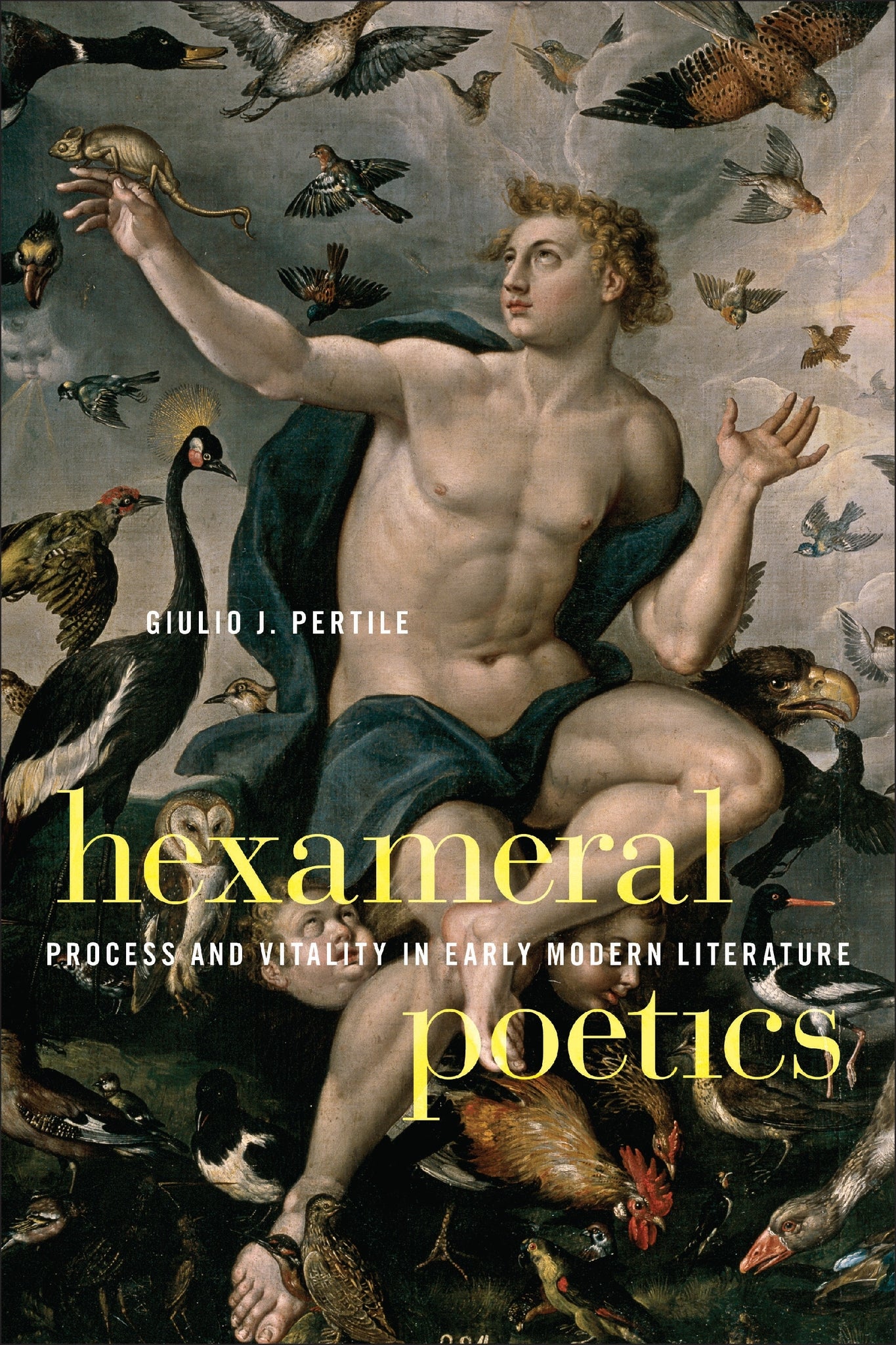
Hexameral Poetics tells the story of a forgotten genre: poetry about the creation of the world. The hexameral poems, as they are known, expand at length on the six days of Creation described in the first chapter of the Bible. Yet where we might expect such works to be conservative in nature, defending a traditional cosmos and ceding creative power to God, Pertile argues that they undertake an unprecedented investigation into the nature of our relationship to the universe. Foregrounding their own creative processes, they seek at the same time to reconcile their inescapable artifice with the world as already created. What follows from this attempt is a new model of creativity itself, incompatible with the traditional idea of creation ex nihilo.
Rather than emphasizing their absolute sovereignty, poets from Du Bartas to Milton thus seek out a poetics that would bridge the difference between human and divine creators without simply collapsing one into the other—a poetics free of domination and in alignment rather than in contest with the generative powers of the cosmos. In so doing they are not merely powerfully modern but may also lead us to revise our notions of modernity itself. Drawing on French, Italian, Spanish, and English poetry, Hexameral Poetics brings a transnational approach to urgent questions concerning the intersection of poetry, religion, and human impact on the planet at the origins of modernity.


Pertile’s brilliant and learned book reveals the intellectual depth and radical aesthetic possibilities of early modern European hexameral poetry. Hexameral Poetics shows how this neglected tradition provides the period’s most profound meditations on the relation between God’s acts of Creation and the ongoing human activity of creation. Pertile rewrites the prehistory of modernity’s fixation on creativity by recovering and, in effect, redeeming the powers of an all but forgotten genre.---Timothy Harrison, University of Chicago
Introduction: Powers of Creation | 1
1 Hexameral Poetics: From Du Bartas to Tasso and Beyond | 27
2 Creation without a Creator: Marino’s Adone as Cosmogonic Poem | 72
3 Apostrophe as Play in Seventeenth-Century Lyric | 108
4 Sovereign Creation: Marvell, Davenant, Hutchinson | 145
5 Paradise Lost and the Poetics of ex Deo | 180
Conclusion: Beyond the Hexameron | 209
Acknowledgments | 215
Notes | 217
Bibliography | 243
Index | 257