


Some error occured while loading the Quick View. Please close the Quick View and try reloading the page.
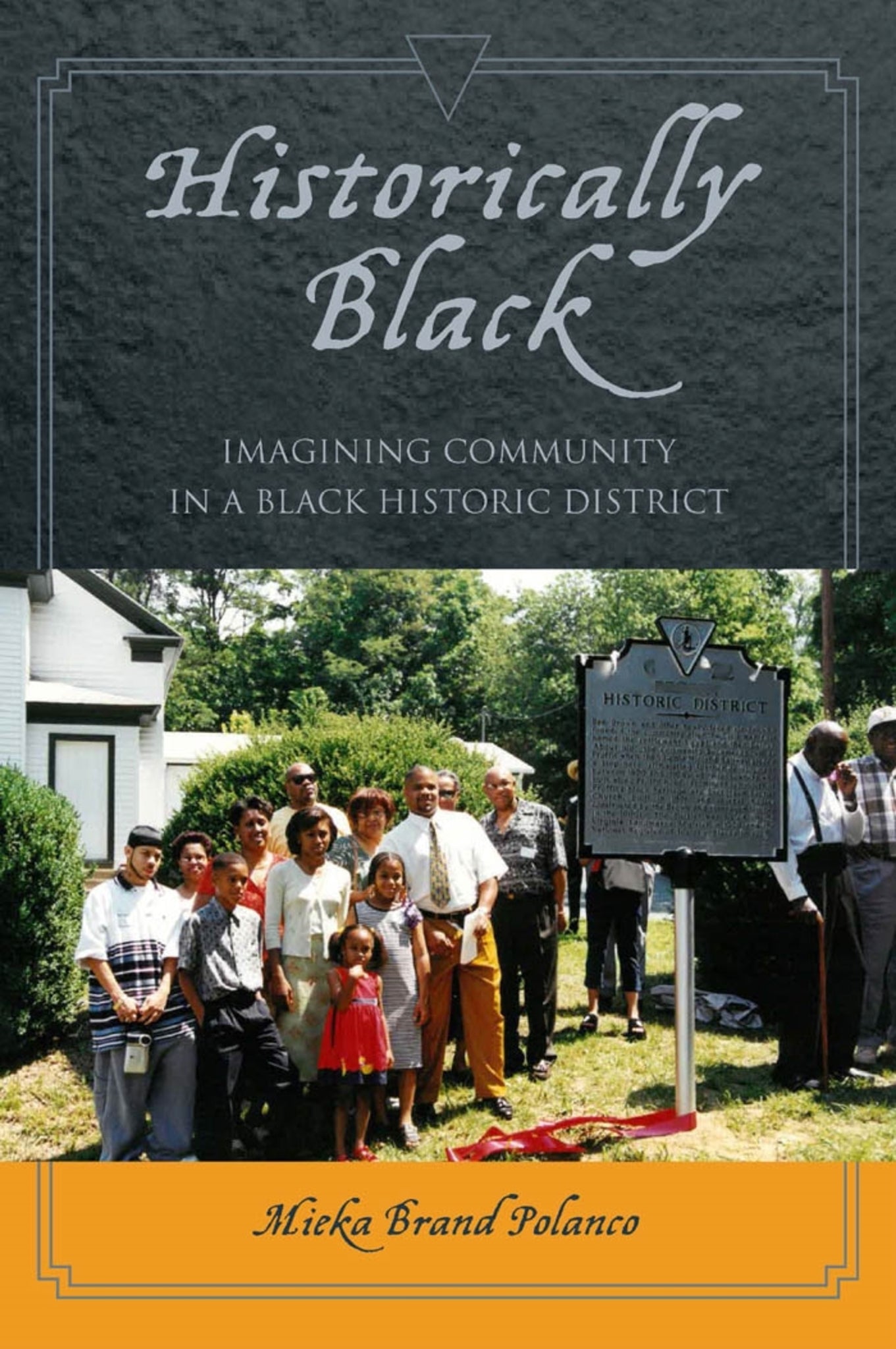
Questions the way we understand the idea of community through an investigation of the term "historically black"
In Historically Black, Mieka Brand Polanco examines the concept of community in the United States: how communities are experienced and understood, the complex relationship between human beings and their social and physical landscapes—and how the term “community” is sometimes conjured to feign a cohesiveness that may not actually exist. Drawing on ethnographic and historical materials from Union, Virginia, Historically Black offers a nuanced and sensitive portrait of a federally recognized Historic District under the category “Ethnic Heritage—Black.”
Since Union has been home to a racially mixed population since at least the late 19th century, calling it “historically black” poses some curious existential questions to the black residents who currently live there. Union’s identity as a “historically black community” encourages a perception of the town as a monochromatic and monohistoric landscape, effectively erasing both old-timer white residents and newcomer black residents while allowing newer white residents to take on a proud role as preservers of history.
Gestures to “community” gloss an oversimplified perspective of race, history and space that conceals much of the richness (and contention) of lived reality in Union, as well as in the larger United States. They allow Americans to avoid important conversations about the complex and unfolding nature by which groups of people and social/physical landscapes are conceptualized as a single unified whole. This multi-layered, multi-textured ethnography explores a key concept, inviting public conversation about the dynamic ways in which race, space, and history inform our experiences and understanding of community.


"This book provides a fine historically informed ethnography of Union, Virginia, and it also gives readers indispensable conceptual tools to better understand 'communities' in a non-essentialist way, both in terms of ongoing processes, and as products of specific histories that have unfolded in contexts always structured racially and spatially."
"Polanco delivers a powerful ethnography of community life among residents living in rural African American historic district in Central Virginia. . . . The text touches on many social aspects of community, and readers will feel as though they are part of the conversation as they read residents' narrative histories."
"There are so few current works on small black-identified communities that Polancos book is welcome reading for those of us who study such locales. The work is timely and should garner greater attention in anthropology."