


Some error occured while loading the Quick View. Please close the Quick View and try reloading the page.
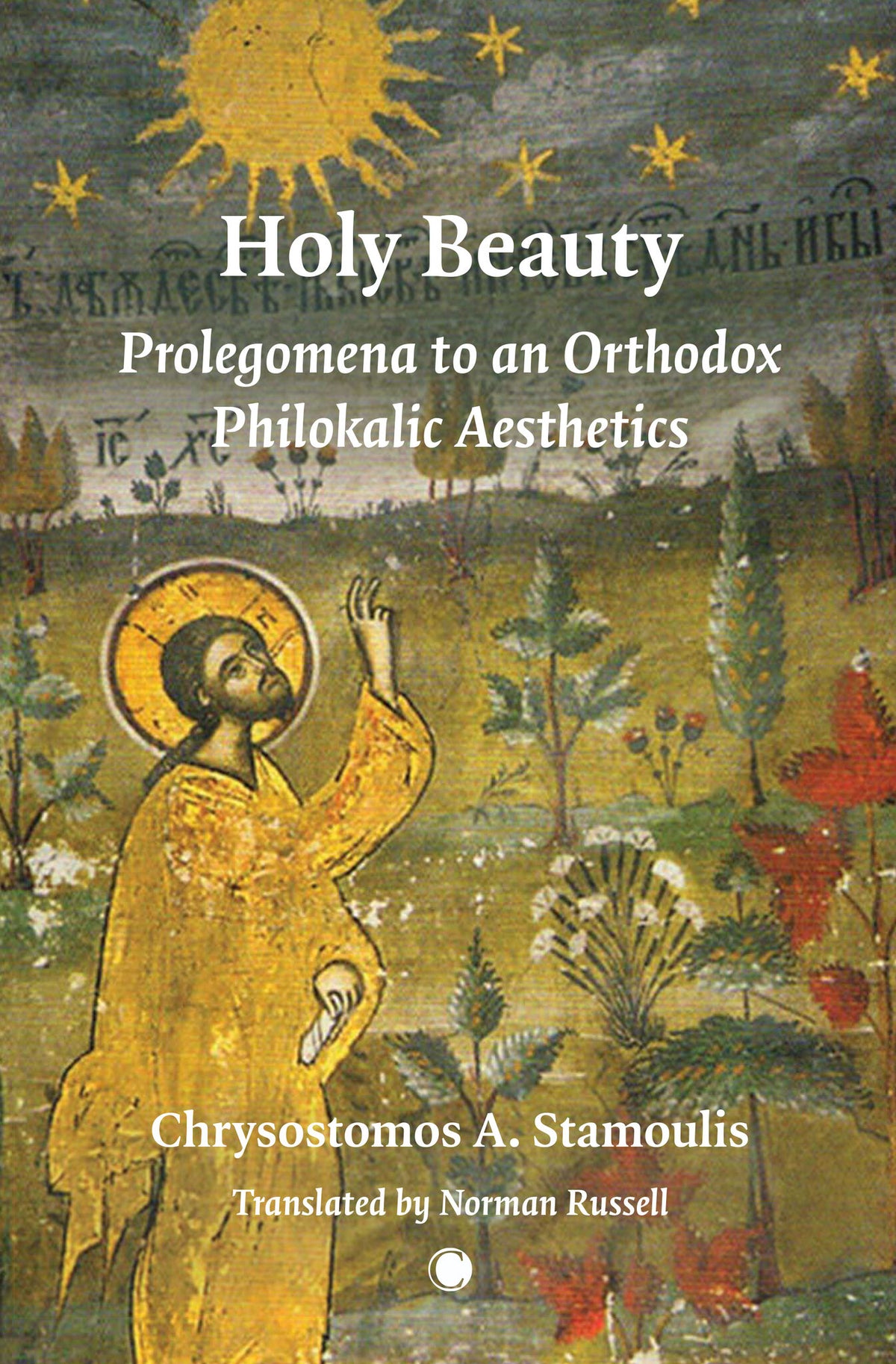
Reconciling contrasting philosophical strands to unify aesthetics and philokalia in Orthodox theology.
The philosophical and theological study of aesthetics has a long and rich history, stretching back to Plato’s identification of ultimate goodness and beauty, together representing the eternal form. Recent trends in aesthetic theory, however, characterised by a focus on the ‘beautiful’ at the expense of the ‘good’, have made it an object of suspicion in the Orthodox Church. In its place, Greek theologians have sought to emphasise philokalia as a truer theological discipline.
Seeking to reverse this trend, Chrysostomos Stamoulis brings into conversation a plethora of voices, from Church fathers to contemporary poets, and from a Marxist political theorist to a literary critic. Out of this dialogue, Stamoulis builds a model for the re-appropriation of Orthodoxy’s patristic and Byzantine past that is no longer defined in antithesis to the Western present. The openness he proposes allows us to perceive afresh the world ‘shot through with divinity’, if only we can lift our gaze to see it. Dismantling the false dichotomy, philokalia or aesthetics, is the first step.
The philosophical and theological study of aesthetics has a long and rich history, stretching back to Plato’s identification of ultimate goodness and beauty, together representing the eternal form. Recent trends in aesthetic theory, however, characterised by a focus on the ‘beautiful’ at the expense of the ‘good’, have made it an object of suspicion in the Orthodox Church. In its place, Greek theologians have sought to emphasise philokalia as a truer theological discipline.
Seeking to reverse this trend, Chrysostomos Stamoulis brings into conversation a plethora of voices, from Church fathers to contemporary poets, and from a Marxist political theorist to a literary critic. Out of this dialogue, Stamoulis builds a model for the re-appropriation of Orthodoxy’s patristic and Byzantine past that is no longer defined in antithesis to the Western present. The openness he proposes allows us to perceive afresh the world ‘shot through with divinity’, if only we can lift our gaze to see it. Dismantling the false dichotomy, philokalia or aesthetics, is the first step.

Price: $130.00
Pages: 260
Publisher: Boydell & Brewer Inc.
Imprint: James Clarke
Publication Date:
25 August 2022
Trim Size: 5.98 X 8.98 in
ISBN: 9780227178133
Format: Hardcover
BISACs:
PHILOSOPHY / General, RELIGION / Christian Living / Social Issues, RELIGION / General, RELIGION / Christian Church / History, RELIGION / Philosophy, RELIGION / Christian Theology / Ecclesiology

An important and very engaging book that reads as a deep intellectual dialogue. Stamoulis has re-aligned the philosophical and theological debate around aesthetics with a delightfully fresh stance re-presenting Byzantine Orthodox traditions in a way that is neither obscurantist or triumphalist but energised in a presentation that shows the Christian ancients as significant heirs of Aristotle, and the moderns as acute conversational partners with Marx.
— Prof. John A. McGuckin, Faculty of Theology, Oxford University
Stamoulis' work is a window into an Orthodox vision of philokalic aesthetics, in which beauty is tethered to dogmatic theology. He also, however, welcomes non-Orthodox theologians to the discussion table of ancient and modern voices. They, too, may pull up a chair and glean from observations regarding a beauty which is united to truth and goodness and is revealed in the grandeur of creation.
— Paul A. Hartog, Professor of Theology, Faith Baptist Seminary
Holy Beauty is a profound and intricate presentation of a holistic Eastern Orthodox understanding of aesthetics. Refusing false dialectics - aesthetics vs philokalia, East vs West - this study critically searches in the Fathers of the Church to rediscover a full picture of divine beauty, anchored in the goodness of creation, and presents a fascinating survey of contemporary writers and artists who exemplify how a theology of divine beauty may be expressed today. A precious gift to all.
— Dr. Daniel Keating, Professor of Theology, Sacred Heart Major Seminary, Detroit MI
— Prof. John A. McGuckin, Faculty of Theology, Oxford University
Stamoulis' work is a window into an Orthodox vision of philokalic aesthetics, in which beauty is tethered to dogmatic theology. He also, however, welcomes non-Orthodox theologians to the discussion table of ancient and modern voices. They, too, may pull up a chair and glean from observations regarding a beauty which is united to truth and goodness and is revealed in the grandeur of creation.
— Paul A. Hartog, Professor of Theology, Faith Baptist Seminary
Holy Beauty is a profound and intricate presentation of a holistic Eastern Orthodox understanding of aesthetics. Refusing false dialectics - aesthetics vs philokalia, East vs West - this study critically searches in the Fathers of the Church to rediscover a full picture of divine beauty, anchored in the goodness of creation, and presents a fascinating survey of contemporary writers and artists who exemplify how a theology of divine beauty may be expressed today. A precious gift to all.
— Dr. Daniel Keating, Professor of Theology, Sacred Heart Major Seminary, Detroit MI
Translator’s Introduction
Author’s Preface
Part I. Philokalia or Aesthetics? The ‘Dilemma’ of Contemporary Orthodoxy
1. Kostas Zouraris: ‘What We Call “Philokalia” Is Not the Same as Western Good Taste’
2. Father Alexander Schmemann: ‘One Cannot Banish the Senses’
3. Nikos Matsoukas: ‘Aesthetics Is a Lasting Victory over Distraction and Fragmentation’
Part II. Orthodoxy’s Philokalic Aesthetics: The ‘Both Together’ of Patristic Teaching
4. ‘Supra-Substantial Good’: Dionysius the Areopagite and the Church Fathers on the Holy Trinity
5. ‘Where Has Your Beauty Gone?’: Anthropological Notes on the Beauty Lost by the Fall
6. ‘The Heavens Tell of the Glory of God’: The Orthodox Doctrine of Creation and the Problem of the Environment
Part III. ‘Unutterable Beauty’: Examples of a Philokalic Reading of Ecclesial Life
7. Nikos Gabriel Pentzikis: A Walk ‘by the Seashore’ and the Boundaries of the Church
8. The Elder Sophrony of Essex: The Remembrance of Death and the ‘Conflict’ with a Passion for Painting
9. The Elder Porphyrios, the Nightingale and the Current Debate on Aesthetics: Parallel Readings of the Elder’s Discourses and Theodor W. Adorno’s Aesthetic Theory
Afterword: Saints and Poets Perhaps …
Who’s Who
Select Bibliography
Index
Author’s Preface
Part I. Philokalia or Aesthetics? The ‘Dilemma’ of Contemporary Orthodoxy
1. Kostas Zouraris: ‘What We Call “Philokalia” Is Not the Same as Western Good Taste’
2. Father Alexander Schmemann: ‘One Cannot Banish the Senses’
3. Nikos Matsoukas: ‘Aesthetics Is a Lasting Victory over Distraction and Fragmentation’
Part II. Orthodoxy’s Philokalic Aesthetics: The ‘Both Together’ of Patristic Teaching
4. ‘Supra-Substantial Good’: Dionysius the Areopagite and the Church Fathers on the Holy Trinity
5. ‘Where Has Your Beauty Gone?’: Anthropological Notes on the Beauty Lost by the Fall
6. ‘The Heavens Tell of the Glory of God’: The Orthodox Doctrine of Creation and the Problem of the Environment
Part III. ‘Unutterable Beauty’: Examples of a Philokalic Reading of Ecclesial Life
7. Nikos Gabriel Pentzikis: A Walk ‘by the Seashore’ and the Boundaries of the Church
8. The Elder Sophrony of Essex: The Remembrance of Death and the ‘Conflict’ with a Passion for Painting
9. The Elder Porphyrios, the Nightingale and the Current Debate on Aesthetics: Parallel Readings of the Elder’s Discourses and Theodor W. Adorno’s Aesthetic Theory
Afterword: Saints and Poets Perhaps …
Who’s Who
Select Bibliography
Index