


Some error occured while loading the Quick View. Please close the Quick View and try reloading the page.
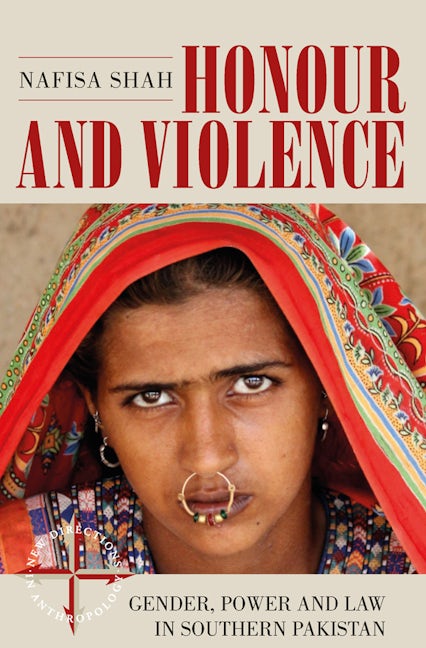
The practice of karo kari allows family, especially fathers, brothers and sons, to take the lives of their daughters, sisters and mothers if they are accused of adultery. This volume examines the central position of karo kari in the social, political and juridical structures in Upper Sindh, Pakistan. Drawing connections between local contests over marriage and resources, Nafisa Shah unearths deep historical processes and power relations. In particular, she explores how the state justice system and informal mediations inform each other in state responses to karo kari, and how modern law is implicated in this seemingly ancient cultural practice.


“By examining the circumstances of the violence itself, Shah offers insights into the complex factors motivating honour violence. This study is therefore a significant and welcome addition to the anthropology of honour that, I believe, will change the way we understand honour killings, not only in Pakistan but in any place where people cover up their violence by resorting to arguments of honour.” • Anthropos
“As the first sustained ethnographic analysis of accusations and killings in the name of honour, it is an important work that will be of interest, not just to legal anthropologists, but also to gender studies and the anthropology of the state.” • South Asia: Journal of South Asian Studies
“This is an extremely impressive achievement that makes a significant and substantial contribution to the ethnography of Pakistan and to the broader field of legal anthropology.” • Hastings Donnan, Queen's University of Belfast
“This landmark study offers a new perspective for understanding and dealing with honour-related violence, demonstrating that honour does not lead to violence but that such violence is strategy ‘masked in honour’.” • Alison Shaw, University of Oxford
“[Shah] presents her argument with fluency, creativity, and a rare humanistic sensitivity. This has all of the elements that allow a study to age into a classic.” • Mohammad Talib, Oxford Centre for Islamic Studies
Nafisa Shah is a member of the National Assembly, the Lower House of the Parliament of Pakistan. Shah began her public life as a journalist, later studying social and cultural anthropology at the Institute of Social and Cultural Anthropology, Oxford, where she received her D.Phil in 2011.
List of Figures, Maps and Tables
Preface
Acknowledgements
Note on Sindhi Language and Transliteration
List of Abbreviations
Introduction: Honour Violence, Law and Power in Upper Sindh
PART I: A FRONTIER OF HONOUR VIOLENCE - THE PROBLEM OF KARO KARI IN UPPER SINDH
Chapter 1. Ghairat, Karo kari and the Spectacles of Violence: How Men and Women Become Black
Chapter 2. Honour Violence, Law and Moral Power in Colonial Sindh
PART II: HONOUR, MORAL POWER AND LAW - MIRRORING OF LAW IN THE FORMS OF VIOLENCE
Chapter 3. Karo kari, Wali and Family Violence: Cultural Violence Mirroring Law
Chapter 4. Violence, Kin Groups and the Feud: The Making of Frontier Justice
PART III: NORMALISING VIOLENCE - THE EVERY DAY WORLD OF UPPER SINDH
Chapter 5. Mediations on the Frontier: Ceremonies of Justice, Ceremonies of Faislo and the Ideology of Kheerkhandr
Chapter 6. The Criminal Justice and ‘Legal’ Contests of Honour: Two Case Studies
Chapter 7. The Sound of the Silence: Lives, Narratives and Strategies of Runaway and Missing Women of Upper Sindh
Conclusion
Appendices
Appendix I: The Sindh Frontier Regulation, 1872
Appendix II: Text of the Provisions of Qisas and Diyat including subsequent Amendments
Appendix IIIa: Disposal of Karo Kari Cases from 1995–2004
Appendix IIIb: A Sample with Details Showing Relationship of the Victim, Accused and Complainant
Glossary
Bibliography