


Some error occured while loading the Quick View. Please close the Quick View and try reloading the page.
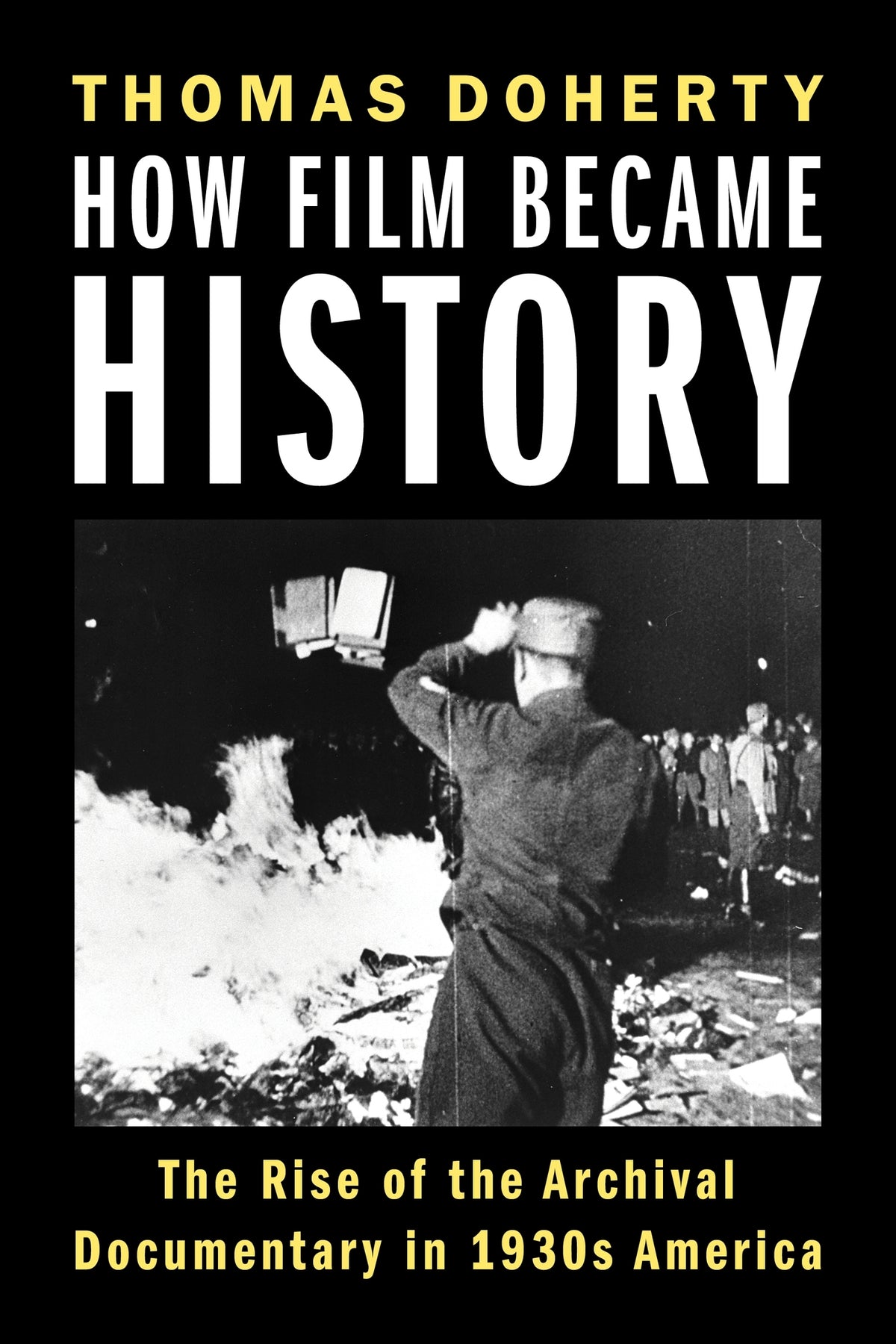
By the 1930s, filmmakers had access to a backlog of footage from nearly forty years of motion pictures, allowing them to create a new kind of film stitched together from the raw material of older films. At around the same time, the transition to synchronous sound added a transformative new element to the grammar of cinema: the voiceover narration. Together, the film inventory and offscreen commentary gave rise to the archival documentary, the motion picture genre that preserves and rewinds history.
Thomas Doherty tells the story of the archival documentary, spotlighting the first films that set out deliberately to preserve history on screen. He shows how newsreels and documentaries challenged the era’s restrictive censorship and how film began to engage with the great political issues of the day. Doherty considers a range of films—some well-known, others obscure—including J. Stuart Blackton’s The Film Parade (1933), Laurence Stallings and Truman Talley’s The First World War (1934), Cornelius Vanderbilt Jr.’s Hitler’s Reign of Terror (1934), Max Eastman and Herbert Axelbank’s Tsar to Lenin (1937), and the March of Time screen magazine. Tracing the creation of the archival documentary, How Film Became History illuminates how motion pictures have come to shape our vision of the past.


Thomas Doherty is a first-rate historian and an entertaining writer—an unusual and enviable skillset. How Film Became History tells a series of fascinating, little-known stories that promise to reshape our understanding of 1930s American film and culture.
— Jon Lewis, professor of film studies, Oregon State University
A richly detailed excavation of the forgotten documentaries of the 1930s—films that shaped culture, politics, and history in ways still felt today. Thomas Doherty once again proves himself a master historian of American cinema.
— Chris Yogerst, author, columnist, and media historian
Anyone interested in documentary filmmaking, cinema history, and the politics of propaganda should enjoy How Film Became History.
Doherty shows us that we have much more to learn than we had previously realized.
Acknowledgments and Author’s Notes
Prologue: Archival Apparitions
1. The Newsreels in the Morgue
2. Four Years of Visible Hell in Seventy-Seven Minutes: Laurence Stallings and Truman Talley’s The First World War
3. The Search for Cornelius Vanderbilt Jr.’s Hitler’s Reign of Terror (1934)
4. Max Eastman and Herman Axelbank’s Tsar to Lenin (1937): A Visible History of the Russian Revolution
5. The Movies Turn Introspective
6. A Good Deal of Newsreel Content Belongs on the Marquee
Notes
Index