


Some error occured while loading the Quick View. Please close the Quick View and try reloading the page.
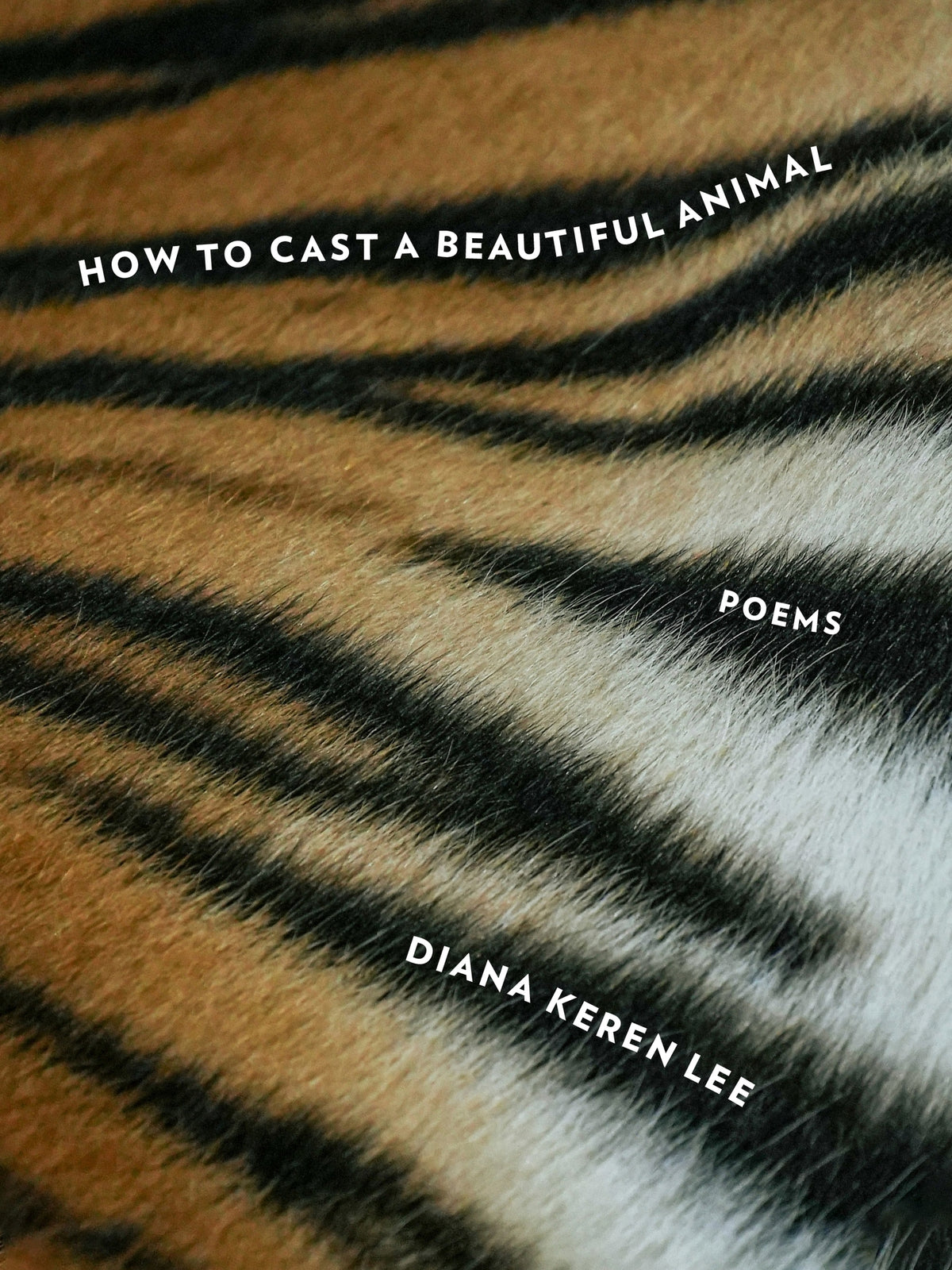
Winner of the 2024–2025 Poetic Justice Institute Editor’s Prize, an Asian American actress’s journey through landscape, language, and lineage
How to Cast a Beautiful Animal is Diana Keren Lee’s debut full-length poetry collection. Witty, perceptive, and emotionally resonant, these poems accompany a struggling actress from childhood to middle age, from Texas to New York, Los Angeles, and South Korea, while tracing the lives of her working-class immigrant parents and the effects of displacement. Set against the backdrop of the 1980s, when Asian American performers were largely confined to outdated roles, through the present moment and into imagined futures, this book features the layered experience of a second-generation Korean American life that resists stereotype and easy narrative.
How to Cast a Beautiful Animal navigates between stage and home, English and Korean, autobiography and invention. Lee examines the loss and recovery of language, the trauma of war and migration, and the shifting terrains of relationships, labor, and art. From the financial crises of the early twenty-first century to moments of joy and creative discovery, this collection balances sharp social observation with lyric intimacy.
Using a wide range of styles and forms, Lee moves beyond immigrant tragedy and the model minority myth to create a multifaceted portrait of family, American dream versus reality, humor, and resilience. With a lens both sweeping and precise, these poems consider the limits, and possibilities, of language while honoring lives and histories often relegated to the margins. How to Cast a Beautiful Animal marks the arrival of a distinctive and compelling new voice in contemporary American poetry.


There is a sentient economy to Diana Keren Lee’s How to Cast a Beautiful Animal. The beauty lies in how these poems navigate so much of the world, as the manuscript is structured into a world of seasons; we “meet the person / who will listen with one ear / tilted to your only secret / the same repeated season” and continue to grasp the eloquence of this poet, who listens closely to the “secret” world of the iteration of lives as they unfold, understanding that “every unhappy family is happy in its own way too.” The life of the speaker casts itself into poignant staging of the selves in language, cultural comprehension, memory, landscape, and the deep fervor of both lucidity and bewilderment.---Prageeta Sharma
From the opening poem, the concept of han runs through Diana Keren Lee’s How to Cast a Beautiful Animal. Untranslatable from Korean into English, more complex than grief, han infuses the tensile pieces that make up this elegant collection. “The poem is a tributary in which I swim toward other poems.” In this way Lee resembles South Korea’s legendary female free-divers, the haenyeo, who hold their breath as they plumb the depths of the sea in search of food. How to Cast a Beautiful Animal illuminates the challenges inherent in living one’s life instead of performing it.---JoAnne McFarland
Season 1
American Anagrams | 3
The One | 4
First Language | 6
Spirals I Have Admired | 7
[In the scenes from my childhood] | 10
Neighborhood Watch | 11
Self-Portrait as Asian American Actress | 12
My Brother Was My Father | 13
Ode to the ’90s | 14
Country Dinner Playhouse | 16
Ferment | 18
1984 | 19
Self-Portrait as Asian American Actress | 21
Self-Portrait as Asian American Actress | 23
Naming These Things | 25
Season 2
Trip | 29
Where Are You From? | 30
Haenyeo of Jeju Island | 31
Artemisia | 33
Lessons in Korean | 34
Han | 36
grief | 37
Anniversary | 38
Land of the Morning Calm | 39
An Unfinished History | 40
Season 3
Say Something About Yourself | 47
Two Suitcases and a Map | 49
Fortune Favors the Patient | 51
At the Wheel | 52
Self-Portrait as Asian American Actress | 54
Pearl & Ash | 55
Office Sun | 56
Walking in Koreatown, Los Angeles | 57
I Realize I Need New Music | 58
Self-Portrait as Asian American Actress | 60
Insta Sonnet | 61
In the Morning Light | 62
Living Alone | 64
Monologue for a Peach | 65
Mother Stays Over | 66
Last Audition | 67
Season 4
There Is an Opening | 71
Frame | 72
Returning to Austin | 73
To Be Seen, To Be Heard | 79
My Father’s Love Language | 81
Living Together | 82
Not Quite the Apocalypse | 83
Visiting the Ucross Chapel | 85
On Their First Date | 86
How to Cast a Beautiful Animal | 87
Acknowledgments | 89