Skip to product information
1 of 1

How to Fix the Welfare State

Regular price $41.95
Regular price $41.95 Sale price $41.95
Sold out
The British welfare state is traditionally understood to be comprised of five main services: health, housing, social security, education and the ‘personal social services’, such as social care and ...
Read More
  • 01 March 2022
View Product Details

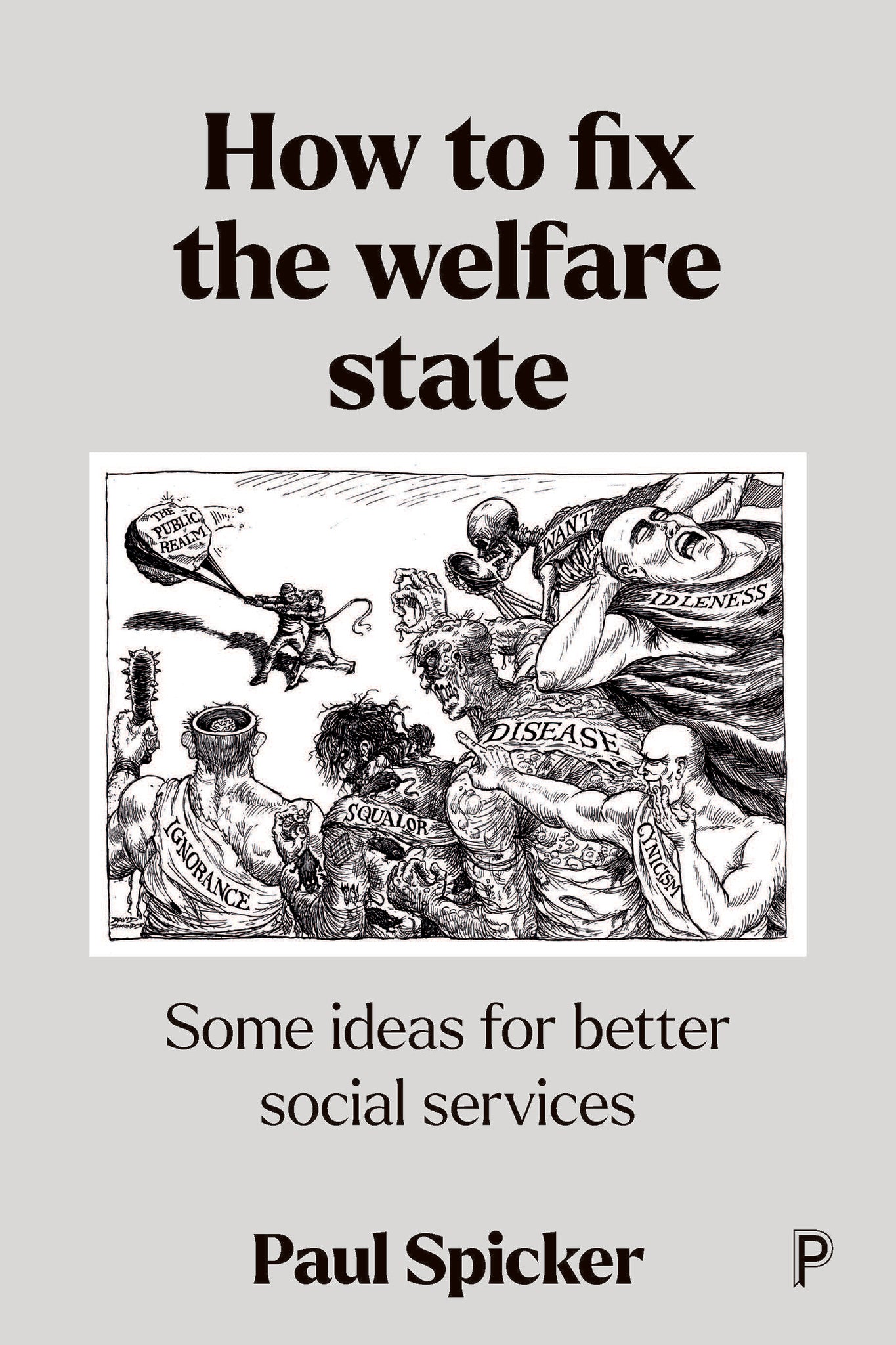
The British welfare state is traditionally understood to be comprised of five main services: health, housing, social security, education and the ‘personal social services’, such as social care and child protection.

In this book, Paul Spicker offers an original take on the role of the state in relation to these services, along with three other areas where institutional services have been developed: employment services, equalities and public services, such as roads, parks, libraries and rescue services.

Dismissing false and misleading narratives, this book profiles the real problems that need to be addressed and offers inspiration for a better path forward.

files/i.png Icon
Price: $41.95
Pages: 168
Publisher: Bristol University Press
Imprint: Policy Press
Publication Date: 01 March 2022
ISBN: 9781447364603
Format: Paperback
BISACs: POLITICAL SCIENCE / Public Policy / Social Policy, Social welfare, social policy and social services, POLITICAL SCIENCE / Public Policy / Social Services & Welfare, POLITICAL SCIENCE / Public Policy / Social Security, Public administration / Public policy, Poverty and precarity
REVIEWS Icon
"This is a slim volume with a large remit. It is also refreshing." Journal of Social Policy
Paul Spicker is Emeritus Professor of Public Policy at Robert Gordon University. His research has included studies of poverty, need, disadvantage and service delivery. His books on social policy for Policy Press have discussed the poverty, social security and the theory of social policy, and a leading textbook, 'Social Policy: Theory and Practice'.

1. The welfare state

2. Social security

3. The National Health Service

4. Social care

5. Education

6. Child protection

7. Housing

8. Employment services

9. Equalities and human rights

10. The public services

11. Towards a stronger welfare state

Afterword: a personal note