


Some error occured while loading the Quick View. Please close the Quick View and try reloading the page.
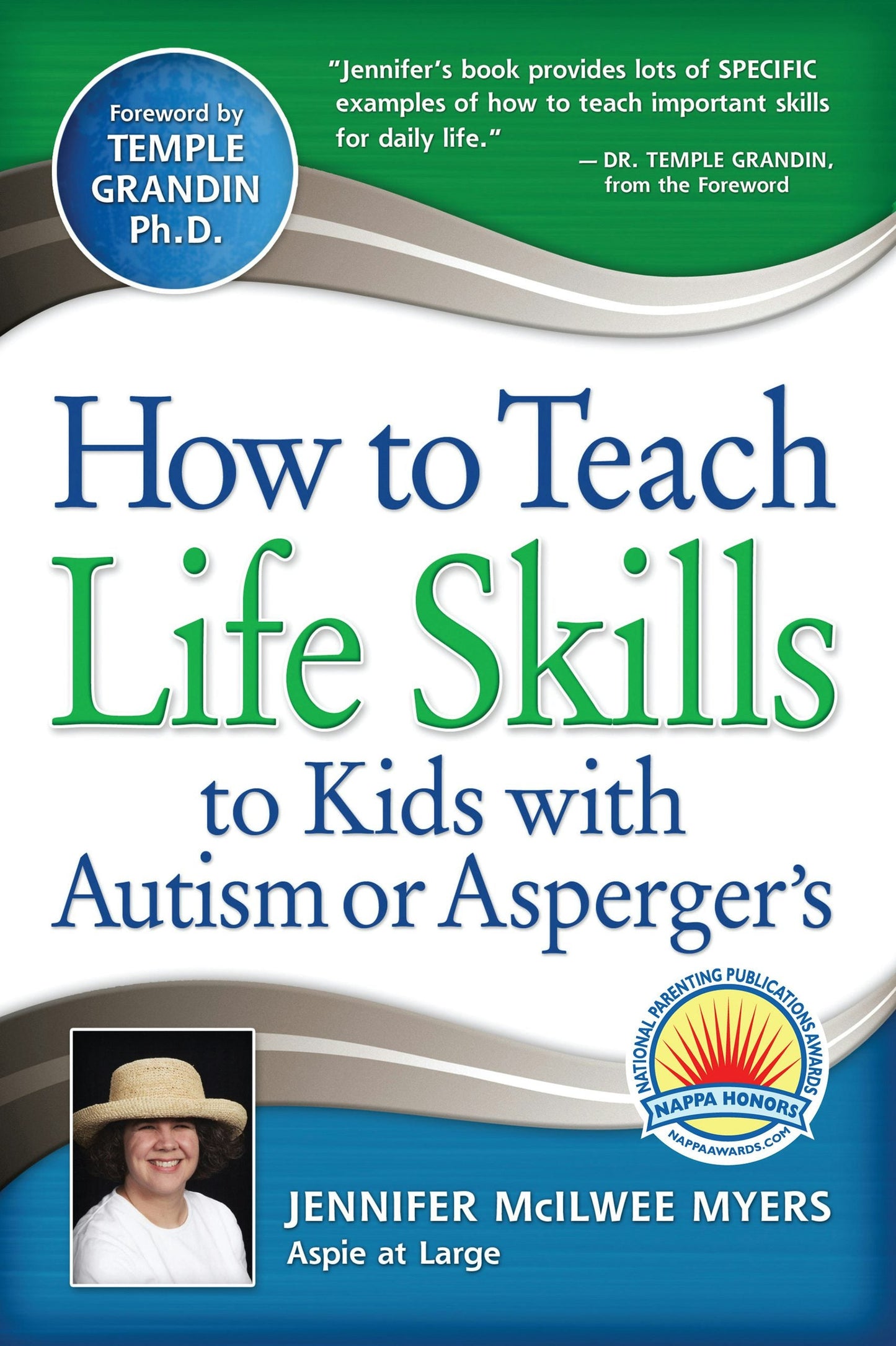
In the real world, people on the autism spectrum need the same kinds of day-to-day skills everyone else needs to be functional!
It's true. No matter how high-functioning children with autism or Asperger's may be or may become, they function better as adults if they’ve had the chance to learn basic skills, from being on time to good personal hygiene. Many reach adulthood without those skills; enter Jennifer McIlwee Myers, Aspie at Large!
Co-author of the groundbreaking book Asperger's and Girls, Jennifer's personal experience with Asperger's Syndrome and having a brother with autism makes her perspective doubly insightful.
Jennifer can show you how to:
and much more!
Jennifer's straightforward and humorous delivery will keep you eagerly turning the page for her next creative solution!


Coauthor of the award-winning book Asperger’s and Girls, Jennifer McIlwee Myers is a terrific writer and speaker with Asperger’s Syndrome—she is funny, eloquent, and to the point. Her brother has autism, but she wasn't diagnosed with Asperger’s until 2002. She has taught herself many unique, innovative ways to navigate the world of “normal” people over her lifetime. Jennifer earned a Bachelor’s degree in Computer Science and currently lives in California with her husband Gary.
Foreword by Dr. Temple Grandin
Section I: Read Me First
Chapter 1: Why Me? Why You? Why Life Skills?
Chapter 2: Frames of Reference
Chapter 3: Success Comes From Life Skills
Chapter 4: The Wacky World of Autism Terminology
Section II: Teaching Life Skills to the Spectrum Child: Ideas and Examples
Chapter 5: Learning How We Can Learn
Chapter 6: Say What You Need to Say
Chapter 7: Transmit Information in More Than One Way
Chapter 8: Information In Translation: Speak the Language Your Child Understands
Chapter 9: Repetition and Persistence
Chapter 10: Opportunities to Teach, Opportunities for Success
Chapter 11: Tap Into Your Child’s Interests!
Chapter 12: Attitudes that Win (and One That Doesn’t)
Section III: Specific Life Skills
Chapter 13: Intro to the Specific Skills
Chapter 14: Chores and More
Chapter 15: Chores Part Deux – How to Tell Your Child What to Do
Chapter 16: Chores Part Tres – More on Teaching Chores
Chapter 17: Punctuality
Chapter 18: Appropriate Attire
Chapter 19: Manners, Manners, Manners
Chapter 20: Kindness Is a Life Skill
Chapter 21: Teach the Specifics of Kindness
Chapter 22: Outings Teach Life Skills
Chapter 23: Teach Special Skills Needed by People with Autism
Chapter 24: Life Skills for the Spectrum: Task Switching
Chapter 25: Learning to Spend Time
Chapter 26: Coping With Sensory Issues
Section IV: Really Really Big Skills That Everyone Needs 282
Chapter 27: The First Really Big Skill: Exercise for Mental and Physical Health
Chapter 28: The Second Really Big Skill: Good Sleep Habits
Chapter 29: The Third Really Big Skill: Dealing With Mistakes and Failures
Chapter 30: The Fourth and Final Really Big Skill: Understanding Cognitive Behavioral Therapy Concepts
A Mini-Glossary
Recommended Resources