


Some error occured while loading the Quick View. Please close the Quick View and try reloading the page.
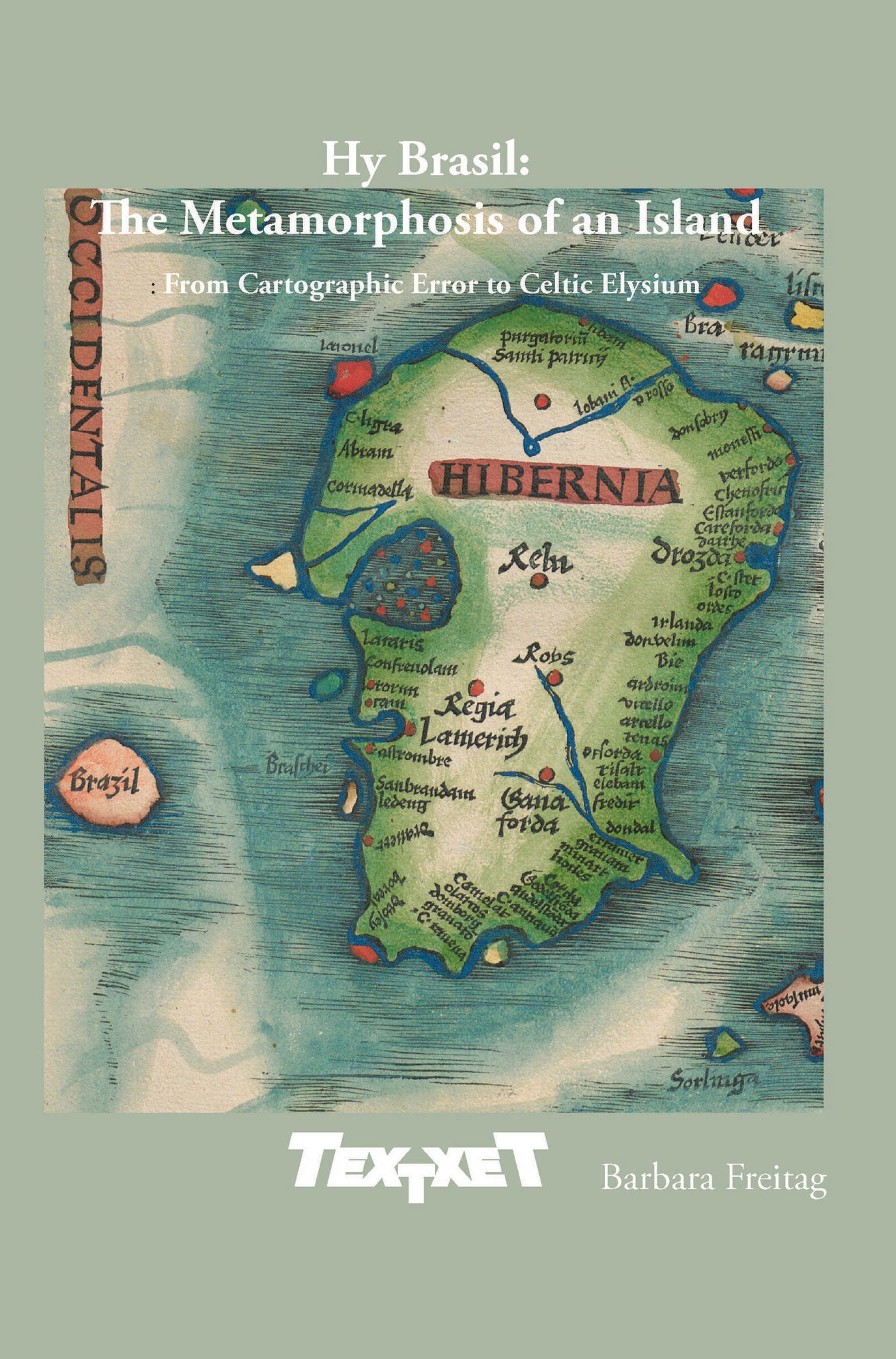
Brasil Island, better known as Hy Brasil, is a phantom island. In the fourteenth century Mediterranean mapmakers marked it on nautical charts to the west of Ireland, and its continued presence on maps over the next six hundred years inspired enterprising seafarers to sail across the Atlantic in search of it. Writers, too, fell for its lure. While English writers envisioned the island as a place of commercial and colonial interest, artists and poets in Ireland fashioned it into a fairyland of Celtic lore.
This pioneering study first traces the cartographic history of Brasil Island and examines its impact on English maritime exploration and literature. It investigates the Gaelicization process that the island underwent in nineteenth century and how it became associated with St Brendan. Finally, it pursues the Brasil Island trope in modern literature, the arts and popular culture.

Price: $152.00
Pages: 352
Publisher: Brill
Imprint: Brill
Publication Date:
01 January 2013
ISBN: 9789042036413
Format: Paperback

"This work provides a very good, well-rounded documentation on Hy-Brasil [Hy-Brasil is an island, reputed to lie off the Irish Coast, or maybe off the American coast, or somewhere in between] that is enjoyable to read, filled with compelling concepts and details, and that will be useful in studies from a variety of disciplines and to a wide audience [including historians, map historians, cultural anthropologists, as well as to those engaged in medieval or seventeenth century studies … The writing is interesting and each point is developed well." – David J. Bertuca, Map and GIS Librarian, University at Buffalo, in: The Globe (Journal of The Australian and New Zealand Map Society Inc.) 74 (2014)
"… voor wie wil weten hoe een kartografische vergissing een rol kan spelen in de vorming van een nationale identiteit, en hoe de wens daarbij soms de vader van de gedachte kan zijn, is dit boek fascinerende lectuur." [".. This book is a fascinating read for those interested to know how cartographic mistakes can play a role in the creation of a national identity, showing how the wish can be father to the thought."] – Pieter Jan Klapwijk, in: Caert-Thresoor 33/1 (2014), pp. 28-29
"The great merit of Freitag’s study lies in disentangling and transparently representing the various narratives [of Brasil Island] which turned a cartographic error into a cultural icon. […] Because of their sober and lucid – but never dismissive – deconstruction, Freitag’s study deserves to be read." – Jürgen Kramer, Dortmund, in: International Journal of Maritime History XXV/2 (2013), pp. 300-2
"… voor wie wil weten hoe een kartografische vergissing een rol kan spelen in de vorming van een nationale identiteit, en hoe de wens daarbij soms de vader van de gedachte kan zijn, is dit boek fascinerende lectuur." [".. This book is a fascinating read for those interested to know how cartographic mistakes can play a role in the creation of a national identity, showing how the wish can be father to the thought."] – Pieter Jan Klapwijk, in: Caert-Thresoor 33/1 (2014), pp. 28-29
"The great merit of Freitag’s study lies in disentangling and transparently representing the various narratives [of Brasil Island] which turned a cartographic error into a cultural icon. […] Because of their sober and lucid – but never dismissive – deconstruction, Freitag’s study deserves to be read." – Jürgen Kramer, Dortmund, in: International Journal of Maritime History XXV/2 (2013), pp. 300-2