


Some error occured while loading the Quick View. Please close the Quick View and try reloading the page.
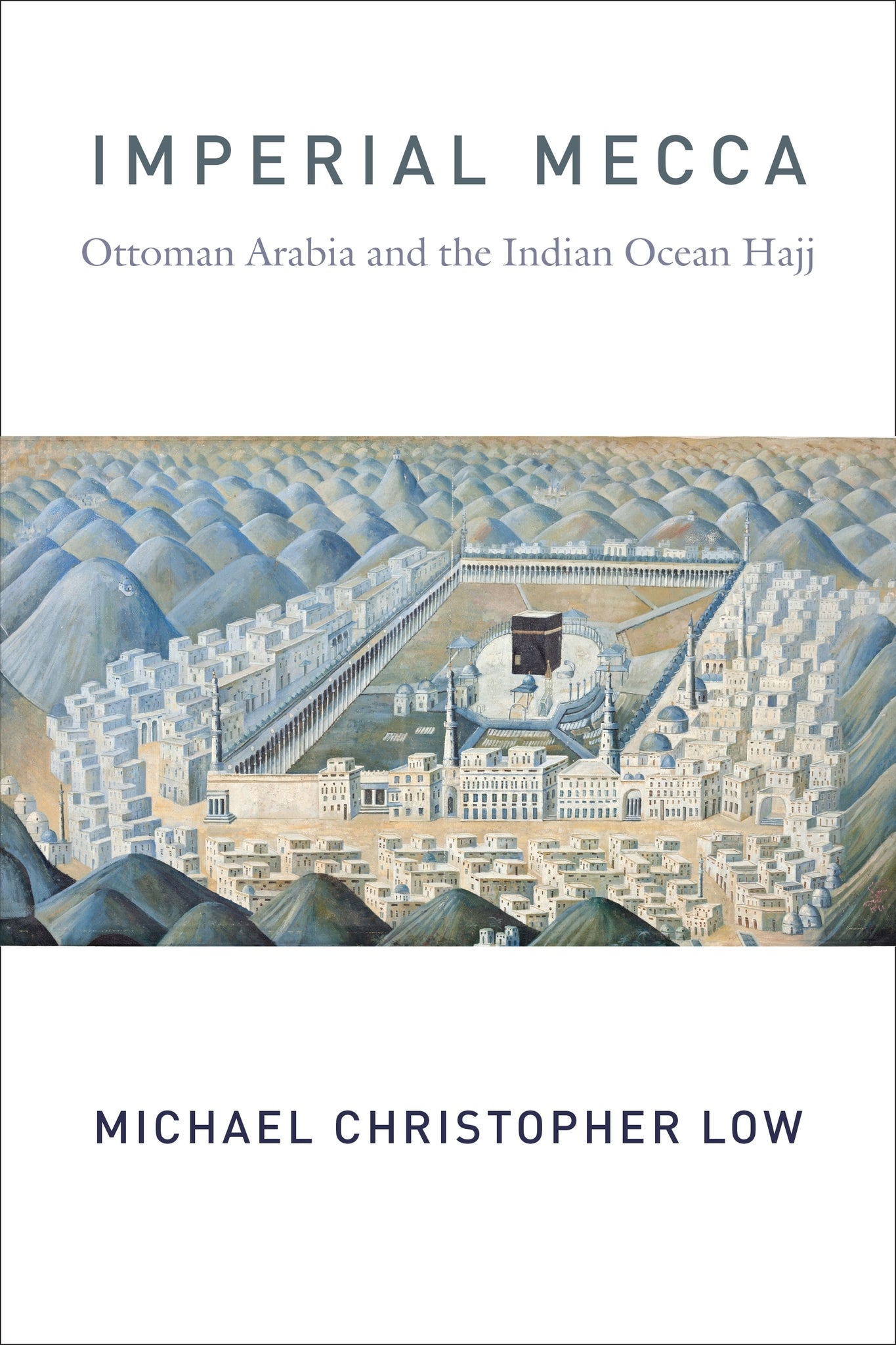
With the advent of the steamship, repeated outbreaks of cholera marked oceanic pilgrimages to Mecca as a dangerous form of travel and a vehicle for the globalization of epidemic diseases. European, especially British Indian, officials also feared that lengthy sojourns in Arabia might expose their Muslim subjects to radicalizing influences from anticolonial dissidents and pan-Islamic activists. European colonial empires’ newfound ability to set the terms of hajj travel not only affected the lives of millions of pilgrims but also dramatically challenged the Ottoman Empire, the world’s only remaining Muslim imperial power.
Michael Christopher Low analyzes the late Ottoman hajj and Hijaz region as transimperial spaces, reshaped by the competing forces of Istanbul’s project of frontier modernization and the extraterritorial reach of British India’s steamship empire in the Indian Ocean and Red Sea. Imperial Mecca recasts Ottoman Arabia as a distant, unstable semiautonomous frontier that Istanbul struggled to modernize and defend against the onslaught of colonial steamship mobility. As it turned out, steamships carried not just pilgrims, passports, and microbes, but the specter of legal imperialism and colonial intervention. Over the course of roughly a half century from the 1850s through World War I, British India’s fear of the hajj as a vector of anticolonial subversion gradually gave way to an increasingly sophisticated administrative, legal, and medical protectorate over the steamship hajj, threatening to eclipse the Ottoman state and Caliphate’s prized legitimizing claim as protector of Islam’s most holy places. Drawing on a wide range of Ottoman and British archival sources, this book sheds new light on the transimperial and global histories traversed along the pilgrimage to Mecca.


— Alan Mikhail, author of God’s Shadow: Sultan Selim, His Ottoman Empire, and the Making of the Modern World
Imperial Mecca illuminates the making of the modern Hajj and technocratic regimes in turn-of-the-twentieth-century Arabia. Dislodging conventional emphases such as European fears of the Ottoman caliphate, ‘Pan-Islamism’, or other forms of Muslim exceptionalism, Low vividly depicts how new travel, communication, and surveillance technologies, interlaced with related environmental and epidemiological factors, shaped the opportunities and limits of Ottoman and British imperial power. A tour de force on the Indian Ocean Hajj.
— Faiz Ahmed, author of Afghanistan Rising: Islamic Law and Statecraft between the Ottoman and British Empires
Imperial Mecca is an exciting contribution to the literature on the international history of the Hajj. Far beyond its religious significance, Low demonstrates on the basis of meticulous archival work that Hajj management provided the entry point for the development of a modern Ottoman governmental rationality that operated through the management of mobility, disease, environment, and the law.
— John M. Willis, author of Unmaking North and South: Cartographies of the Yemeni Past
Provides an innovative analysis of how Istanbul maintained the Hajj during the 19th century...Recommended.
A highly engaging and readable account, this is the sort of book that could be assigned to undergraduates to give them a glimpse into the late Ottoman Empire.
In addition to being a remarkable work on Hajj and the relationship between empires, the book is a
notable addition to the literature on Indian Ocean studies. For those looking to understand how the littorals of the Indian Ocean occupied the center stage in the evolving political contestations between the two Empires and how the outcomes in the region redefined the roles and future of these Empires, Imperial Mecca is a
must-read.
List of Illustrations
A Note on Sources, Transliteration, and Dates
Acknowledgments
Introduction: Between Two Worlds: An Ottoman Island Adrift on a Colonial Ocean
Part I: Extraterritorial Frontiers
1. Blurred Vision: The Hijaz and the Hajj in the Colonial Imagination
2. Legal Imperialism: Foreign Muslims and Muslim Consuls
Part II: Ecologies of Empire
3. Microbial Mecca and the Global Crisis of Cholera
4. Bedouins and Broken Pipes
Part III: Managing Mobility
5. Passports and Tickets
6. The Camel and the Rail
Epilogue: Legacies and Afterlives
Notes
Index